American watchmaking changed the world not by inventing the watch, but by transforming how precision timepieces were manufactured, distributed and used. During the nineteenth century, American factories applied specialized machinery, standardized gauges and interchangeable parts to watch production. The result was a new industrial model that made accurate watches available to railroad workers, soldiers, professionals and ordinary families.
Before the American factory system
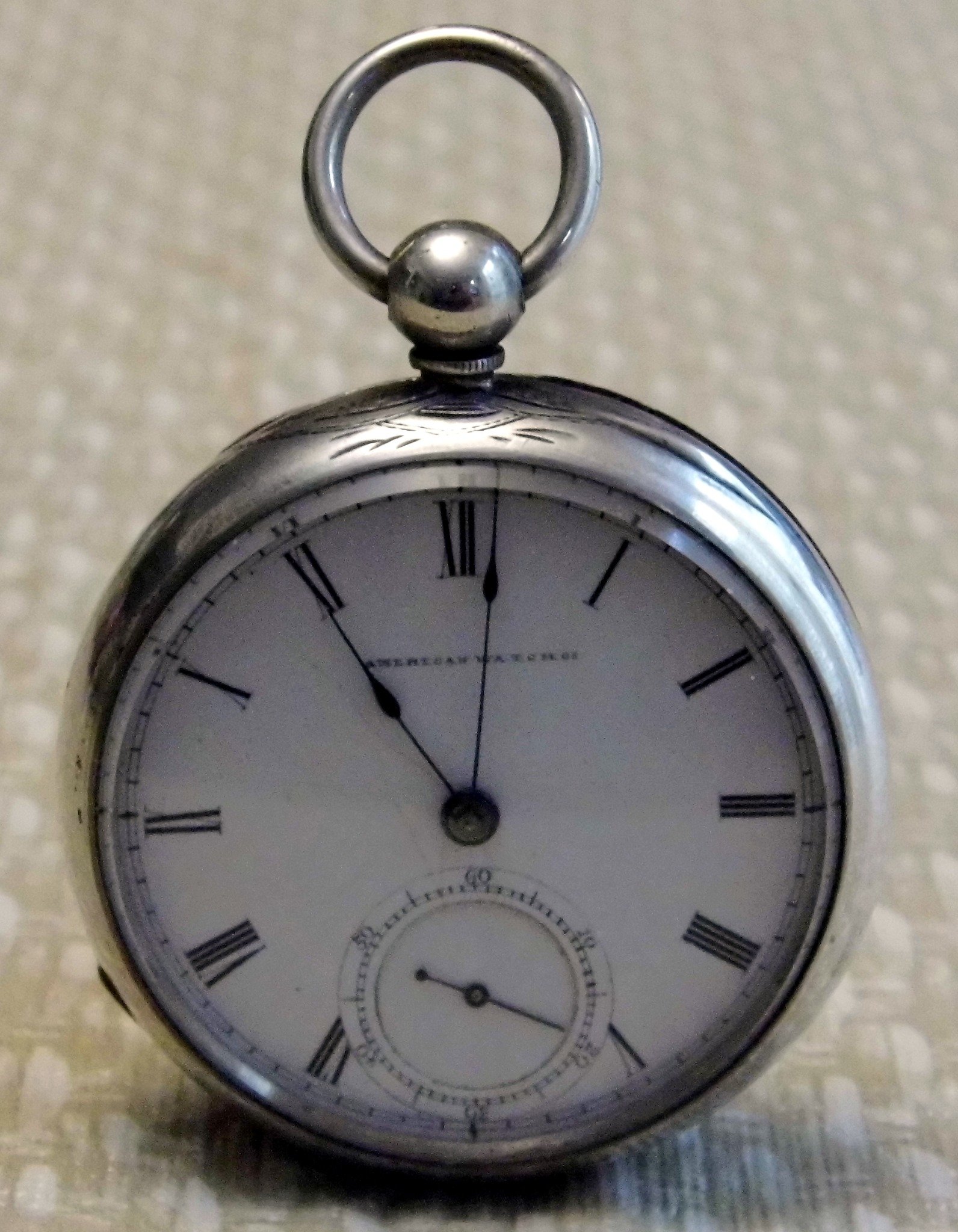
Colonial America depended heavily on imported watches, while local craftspeople concentrated mainly on clocks, repair work and the finishing of imported movements. Early makers demonstrated considerable skill, but production remained small and labor-intensive. The decisive change came in the nineteenth century, when American entrepreneurs began asking whether a watch could be built by machine with parts made to common measurements.
Waltham and interchangeable parts
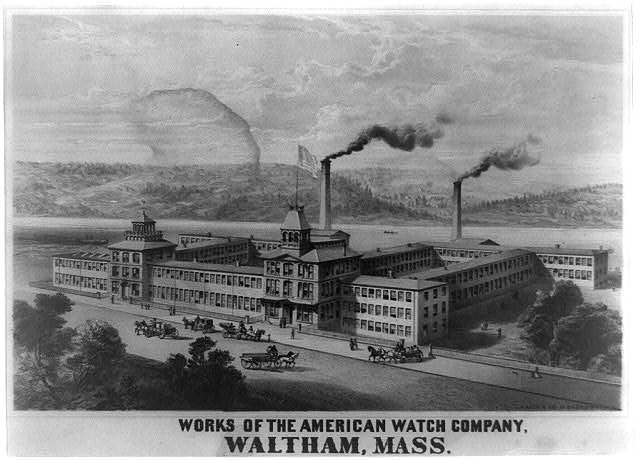
In 1850, Aaron Lufkin Dennison joined Edward Howard and David Davis in Roxbury, Massachusetts, to develop machine-made watches. The enterprise eventually moved to Waltham and became the American Watch Company, later known as the Waltham Watch Company. Its engineers redesigned the watch movement around interchangeable components manufactured on specialized machinery and checked against master gauges. The Smithsonian describes these efforts as the development of the world’s first machine-made watches.
Waltham’s system reduced dependence on individually fitted parts, accelerated production and lowered costs. Its William Ellery model was mass-produced during the Civil War, demonstrating that dependable personal timekeeping could be manufactured on a large scale. The “American system of watch manufacturing” influenced factories at home and abroad and became one of the country’s most important contributions to horology.
Elgin and the expansion of industrial watchmaking
The National Watch Company was founded in Elgin, Illinois, in 1864 to compete with Waltham. Elgin grew into one of the largest American watch manufacturers, producing movements across a wide range of grades and prices. Other important centers followed, including the Illinois Watch Company in Springfield, Hampden in Ohio, Rockford in Illinois and South Bend in Indiana. Together these companies created a national industry built around large factories, skilled toolmakers and extensive distribution networks.
Railroads, standard time and the railroad watch
Railroad expansion made accurate portable timekeeping a matter of public safety. North American railroads adopted standardized time zones in 1883. After the 1891 collision at Kipton, Ohio, Webb C. Ball developed organized inspection practices and demanding performance standards for railroad employees’ watches. Railroad-grade watches were expected to be highly legible, carefully adjusted and regularly inspected.
Waltham, Elgin, Illinois, Hamilton and other makers produced movements that met railroad requirements. The railroad watch became a distinctive American object: robust, precise and tied to a system of scheduled inspection. It also gave watch companies a powerful reputation for reliability.
Hamilton and the watch of railroad accuracy
Hamilton was established in Lancaster, Pennsylvania, in 1892. Its accurate pocket watches quickly became associated with railroad service, and the company promoted itself as the “Watch of Railroad Accuracy.” Models such as the 992 and 950 became celebrated examples of American precision manufacturing. Hamilton later supplied military watches, marine chronometers and aviation instruments, showing how the skills developed for railroad timing could serve national defense and transportation.
Waterbury, Ingersoll and timekeeping for everyone
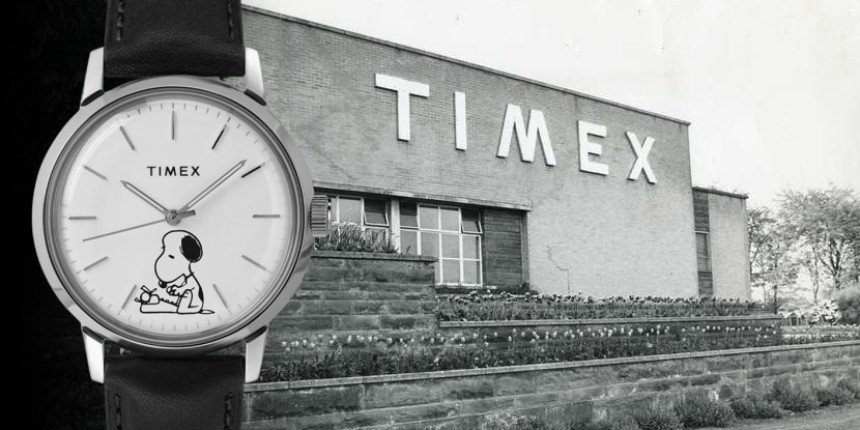
American watchmaking also pursued affordability. The Waterbury Clock Company began in Connecticut in 1854 with the goal of making timekeeping accessible to a broad public. Inexpensive movements, simplified construction and mass distribution helped transform the watch from a luxury into an everyday tool. The Ingersoll “dollar watch” carried this idea to an enormous audience. Waterbury’s corporate descendants eventually developed the Timex name, one of the most familiar names in affordable American watches.
From pocket watches to wristwatches
The First World War accelerated the transition from pocket watches to wristwatches. Soldiers needed to read the time without occupying both hands, and manufacturers adapted small movements to practical wrist-worn cases. During the Second World War, American companies produced military wristwatches, navigation watches, timers, fuzes and marine chronometers. Wartime requirements strengthened the connection between American horology, engineering and mass production.
Bulova, advertising and electronic time
Joseph Bulova opened his business in New York in 1875. Bulova combined standardized production with modern branding and advertising. The company sponsored an early radio time announcement in 1926 and, in 1941, aired a landmark television commercial. In 1960, Bulova introduced the Accutron, a tuning-fork electronic watch whose exceptional accuracy made it an icon of the Space Age. Accutron technology was also used in instruments connected with the American space program.
Hamilton Electric and postwar innovation
Hamilton introduced the battery-powered Electric 500 in 1957, accompanied by the dramatically shaped Ventura. Although early electric movements were soon overtaken by electronic and quartz technology, the Ventura demonstrated that American watchmaking could combine engineering experimentation with bold industrial design.
Decline, survival and revival
After the Second World War, American manufacturers faced rising competition from Swiss and later Japanese imports, changing labor costs and rapid technological shifts. Many historic factories closed, merged or moved production abroad. Waltham ended American watch production, Elgin closed its principal factory, and Hamilton eventually transferred watch manufacturing to Switzerland. Timex survived by emphasizing durable, affordable watches, while Bulova continued as a major American-rooted brand.
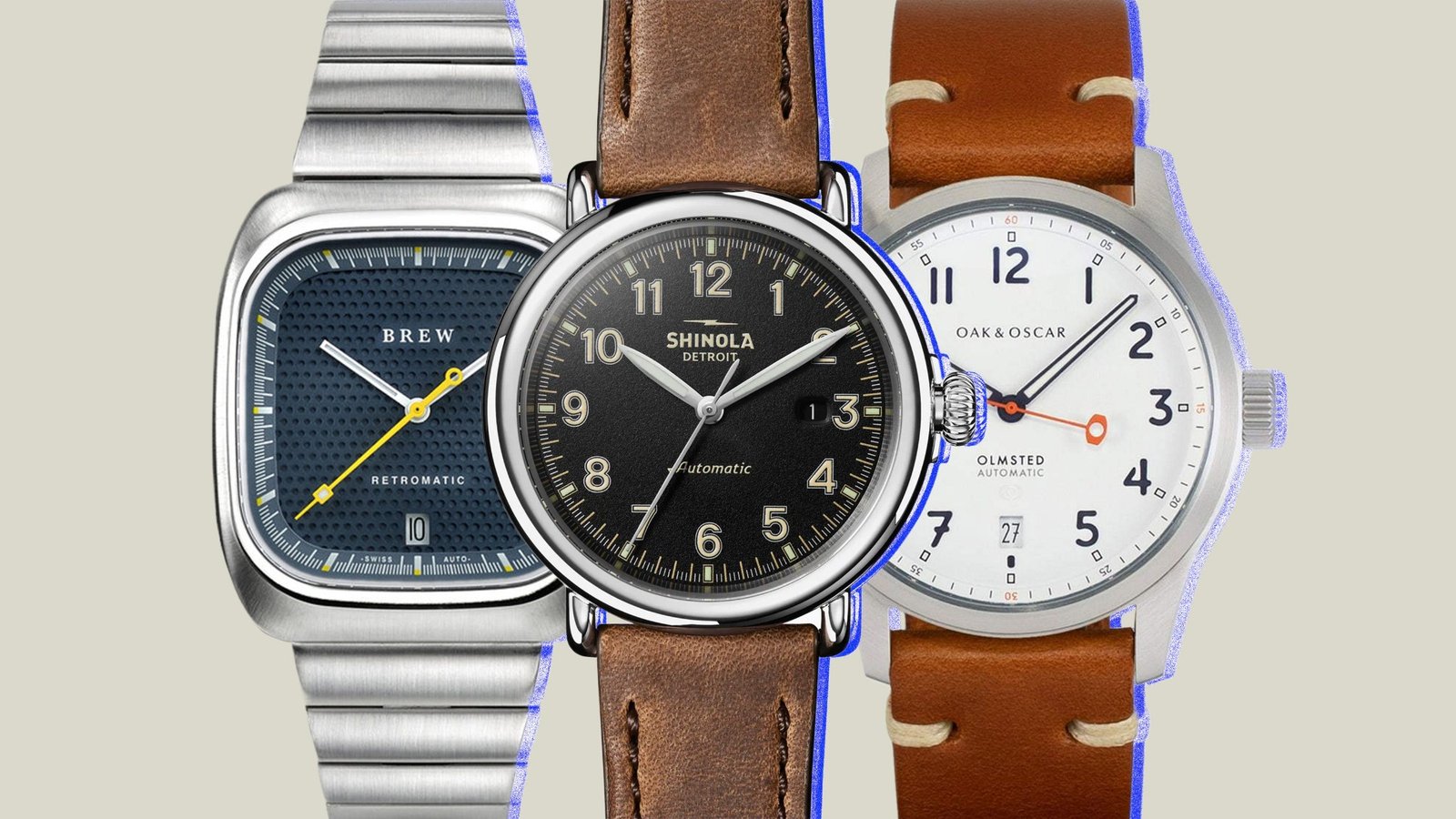
Today, the American tradition continues through heritage brands, specialist workshops, independent makers and renewed interest in domestic assembly and component manufacturing. Modern American watchmaking is smaller than its nineteenth-century industrial peak, but its historic influence remains enormous. Interchangeable parts, factory organization, railroad accuracy, affordable mass-market watches and electronic innovation all reshaped global horology.
Why American watchmaking matters
The central American achievement was the union of precision and scale. European watchmaking had developed extraordinary hand craftsmanship, but American factories demonstrated that accurate mechanisms could be produced systematically in large quantities. The American watch became an instrument of industrial society—regulating railroads, organizing work, supporting military operations and placing dependable time in millions of pockets and on millions of wrists.
Milestones
1850 — Dennison, Howard and Davis begin the enterprise that develops into Waltham.
1854 — The Waterbury Clock Company is established in Connecticut.
1864 — The National Watch Company, later Elgin, is founded in Illinois.
1875 — Joseph Bulova opens his New York business.
1883 — North American railroads adopt standardized time zones.
1891 — The Kipton collision prompts stronger railroad watch inspection systems.
1892 — Hamilton is established in Lancaster, Pennsylvania.
1910s — Wristwatches gain practical importance during the First World War.
1926 — Bulova sponsors an early radio time commercial.
1941 — Bulova airs a landmark television advertisement.
1950 — The Timex name begins appearing on watches.
1957 — Hamilton introduces the Electric 500 and Ventura.
1960 — Bulova introduces the Accutron tuning-fork watch.
Sources and further reading
Smithsonian National Museum of American History — Mechanizing Time: https://americanhistory.si.edu/ontime/mechanizing/machine.html
Smithsonian — American Watch Company Prototype: https://americanhistory.si.edu/collections/object/nmah_1204764
Smithsonian — Waltham Watch Movement: https://americanhistory.si.edu/collections/object/nmah_851193
Smithsonian — Elgin National Watch Company: https://americanhistory.si.edu/collections/object/nmah_851417
Smithsonian — Hamilton Model 950 Railroad Watch: https://americanhistory.si.edu/collections/object/nmah_852417
Hamilton — History of Hamilton: https://www.hamiltonwatch.com/en-int/company/hamilton-watches-history
Timex Group — About Us: https://timexgroup.com/about-us/
Bulova — About Us and Historical Timeline: https://www.bulova.com/us/en/about-us
National Association of Watch & Clock Collectors: https://www.nawcc.org/