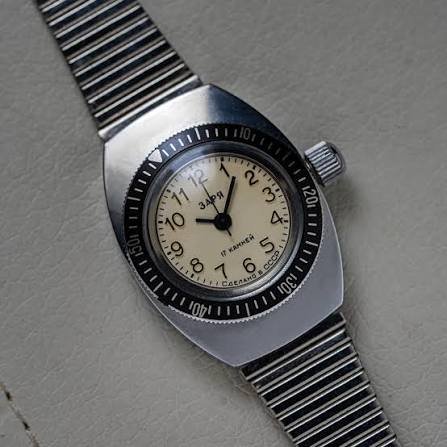
Few watches are as instantly recognizable as the dive watch. Its rotating bezel, luminous markings, strong case and highly legible dial were developed for practical reasons rather than decoration. Each feature helped divers measure elapsed time and operate safely in a dark, pressurized underwater environment.
Today, dive watches are worn far more often on land than beneath the sea. Nevertheless, their popularity remains closely connected to their history as genuine professional instruments.
Before the Modern Dive Watch
The development of the dive watch began with a fundamental problem: protecting a mechanical movement from water, moisture and dust.
Early wristwatches were vulnerable because water could enter through the crown, crystal and joints in the case. Watchmakers experimented with screw-down case backs, sealed crystals, protective covers and improved crown designs.
A major advance arrived in 1926 when Rolex patented its Oyster case. The design used a screw-down crown, bezel and case back to create a sealed wristwatch case. In 1927, British swimmer Mercedes Gleitze wore a Rolex Oyster during a widely publicized English Channel swim, helping demonstrate the practical possibilities of a water-resistant wristwatch.
The Oyster was not yet the modern dive watch, but its sealed construction was an important foundation for watches designed for underwater use.
The Omega Marine of 1932
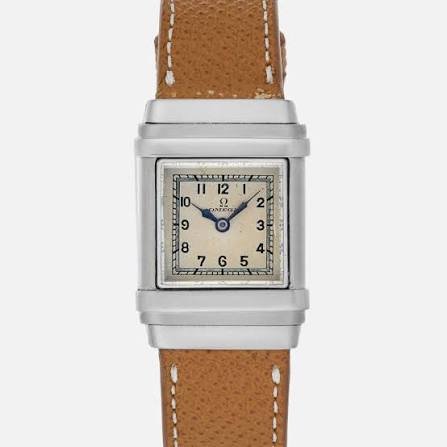
In 1932, Omega introduced the Marine, one of the earliest wristwatches specifically created and tested for diving.
The Omega Marine had an unusual rectangular construction. Its watch case fitted inside a second protective outer case, creating a seal when the two sections were locked together. The design was very different from the familiar round dive watches that appeared later.
The Marine was worn underwater by diver and explorer Charles William Beebe. It was also subjected to pressure and temperature testing. Omega identifies it as the company’s first diving watch and an important early commercially available watch designed for underwater use.
Although the Marine did not establish the visual design of the modern dive watch, it demonstrated that a wristwatch could be purpose-built and tested for underwater activity.
Military Divers and the Second World War
Military requirements accelerated the development of underwater watches during the 1930s and 1940s.
The Italian Navy needed highly visible underwater timepieces for its combat swimmers. Panerai supplied large luminous watches based on waterproof Rolex cases and movements. These early Radiomir watches had oversized cushion-shaped cases and strongly luminous dials that could be read in extremely low light.
During the Second World War, military divers also used watches fitted with protective screw-down caps over their crowns. American manufacturers including Hamilton, Elgin and Waltham produced water-resistant military watches of this general type.
These watches were specialized military equipment. Most lacked the rotating timing bezel that would become one of the defining features of the modern dive watch.
The Birth of the Modern Dive Watch in 1953
The year 1953 was a turning point. Blancpain introduced the Fifty Fathoms, while Rolex developed the Submariner.
Blancpain Fifty Fathoms
Blancpain’s Fifty Fathoms was developed under company executive and recreational diver Jean-Jacques Fiechter. French combat-diving officers Captain Robert “Bob” Maloubier and Lieutenant Claude Riffaud were also searching for a dependable watch for their underwater missions.
The resulting Fifty Fathoms combined several features that now define the modern dive watch:
- A rotating bezel for measuring elapsed time
- A dark dial with highly luminous hands and hour markers
- Automatic winding, reducing the need to operate the crown
- Strong water-resistant construction
- Antimagnetic protection
- Excellent visibility in dark or murky water
The bezel allowed a diver to align its zero marker with the minute hand at the beginning of a dive. The elapsed time could then be read directly from the bezel.
Blancpain presented the Fifty Fathoms in 1953. It was subsequently adopted by French military divers and associated with other naval and underwater organizations. Its combination of features created an influential blueprint for the modern professional dive watch.
Rolex Submariner
Rolex also introduced the Submariner in 1953 and presented it publicly at the Basel watch fair in 1954.
The early Submariner used Rolex’s established Oyster case and an automatic movement. It offered a rotating timing bezel, luminous markings and water resistance to 100 meters. Its simple black dial and durable construction made it suitable for professional and recreational diving.
Rolex worked with underwater photographer and explorer Dimitri Rebikoff during the Submariner’s development. According to Rolex, Rebikoff conducted 132 dives during testing in 1953, reaching depths between approximately 12 and 60 meters.
The Submariner evolved through numerous references, adding crown guards, improved depth ratings, safer luminous materials, a date display on certain models and more advanced movements. It also became one of the most recognizable watches in popular culture.
Expansion During the 1960s
Recreational scuba diving expanded rapidly during the 1950s and 1960s. This created demand for dependable underwater watches from both professional divers and the general public.
Many manufacturers introduced purpose-built models, including:
- Omega Seamaster 300
- Zodiac Sea Wolf
- Doxa SUB 300
- Longines Skin Diver
- Enicar Sherpa Dive
- Certina DS diving models
- Tudor Submariner
- Universal Genève Polerouter Sub
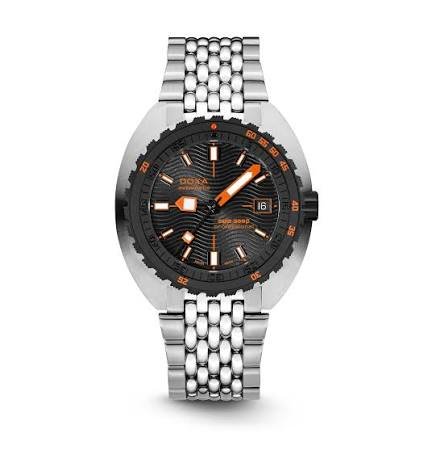
The Doxa SUB 300, introduced in 1967, became particularly notable for its highly visible orange dial and bezel designed to help calculate decompression information. Doxa worked with professional divers, and the brand became closely connected with ocean explorer Jacques-Yves Cousteau and the diving community.
Dive watches were no longer unusual pieces of military equipment. They had become an established and competitive category of sports watch.
Saturation Diving and the Helium Problem
Commercial saturation diving introduced another engineering challenge.
Saturation divers live and work for extended periods inside pressurized environments containing helium. Helium atoms can penetrate a watch case. During decompression, trapped gas may create pressure inside the watch and force the crystal away from the case.
Watchmakers developed two primary solutions.
One was the helium escape valve, which allowed excess internal gas to leave the watch during decompression. Rolex and Doxa worked on early helium-valve watches, and the Rolex Sea-Dweller became an important professional example.
The other solution was to construct a case and gasket system that greatly restricted helium penetration. Seiko pursued this approach with its Professional Diver’s 600m.
Japanese Dive-Watch Innovation
Seiko introduced Japan’s first dive watch in 1965. Now commonly known among collectors as the 62MAS, it used an automatic movement and provided water resistance to 150 meters.
Seiko followed it with a 300-meter model in 1968. In 1975, after years of development inspired by a professional diver’s letter, Seiko released its Professional Diver’s 600m.
The 1975 watch introduced several important features:
- A one-piece titanium case
- A protective outer shroud
- An L-shaped gasket designed to resist helium penetration
- A highly legible dial
- A strap capable of accommodating changes in pressure and diving-suit size
Its distinctive cylindrical appearance later earned this family of watches the collector nickname “Tuna.”
In 1978, Seiko introduced a quartz version of its 600-meter professional saturation-diving watch. Quartz movements offered excellent accuracy and resistance to some of the practical difficulties associated with mechanical movements.
Citizen also became an important Japanese manufacturer of professional diving instruments. Its Aqualand, introduced in 1985, combined a quartz watch with an electronic depth sensor. This represented an important step toward the modern wrist-mounted dive computer.
The Importance of the Unidirectional Bezel
Earlier dive-watch bezels could rotate in both directions. A unidirectional bezel became the preferred safety design because it rotates only counterclockwise.
If the bezel is accidentally moved during a dive, it indicates that more time has passed rather than less. This gives the diver a conservative reading instead of falsely suggesting that additional underwater time remains.
A dependable dive bezel should have clear markings, secure rotation and a prominent zero marker visible in darkness.
ISO 6425 and the Definition of a Diver’s Watch
The International Organization for Standardization published the original ISO 6425 standard in 1982. The standard helped establish consistent requirements and testing methods for watches identified as diver’s watches.
The current ISO 6425:2018 standard applies to watches designed to withstand diving at depths of at least 100 meters and equipped with a secured system for measuring dive time that remains visible in darkness.
Testing and design considerations include water resistance, legibility, time-preselection equipment and resistance appropriate for underwater use. Saturation-diving watches are subject to additional requirements.
A watch displaying a water-resistance rating is not automatically an ISO-compliant diver’s watch. The complete design and testing requirements distinguish a genuine diving instrument from an ordinary water-resistant watch.
From Essential Instrument to Cultural Icon
Mechanical dive watches are no longer the principal timing instruments used by most professional divers. Electronic dive computers can monitor depth, duration, ascent rate, decompression status and other critical information.
Yet the traditional dive watch has not disappeared.
Many divers wear one as a dependable backup. Collectors value dive watches for their robust construction, functional design and historical associations. The same characteristics that worked underwater—strong cases, clear dials, luminous markings and durable bracelets or straps—also make them practical everyday watches.
Models such as the Blancpain Fifty Fathoms, Rolex Submariner, Omega Seamaster, Doxa SUB, Tudor diving watches and Seiko professional divers have moved beyond their original utilitarian purpose. They are now important parts of both horological history and modern watch culture.
What Defines a Modern Dive Watch?
Although specifications vary, a traditional modern dive watch normally includes:
- Water resistance of at least 100 meters
- A secured, usually unidirectional, timing bezel
- A highly legible dial
- Luminous hands, markers and bezel indication
- A durable case and secure crown
- A strap or bracelet suitable for active use
- Clear indication that the watch is operating
Additional features may include a helium escape valve, depth gauge, electronic sensor, solar-powered movement or professional saturation-diving construction.
A Lasting Example of Functional Design
The dive watch is one of the clearest examples of form following function.
Its rotating bezel was created to measure elapsed time. Its luminous dial was designed for underwater visibility. Its large crown and strong case were intended to survive difficult conditions. Even the familiar black dial and contrasting markers developed from practical safety requirements.
Those functional choices produced a design that remains appealing decades later.
Whether worn by a military diver, an ocean explorer, a recreational swimmer or a collector who rarely enters the water, the dive watch carries a history of experimentation, adventure and continuing technical progress.
Suggested image captions
- Early waterproof watches: Early sealed cases established the foundation for the purpose-built dive watch.
- Omega Marine: Introduced in 1932, the rectangular Omega Marine used a protective double-case construction.
- Blancpain Fifty Fathoms: The 1953 Fifty Fathoms helped establish the design language of the modern professional dive watch.
- Rolex Submariner: Introduced in 1953, the Submariner combined an Oyster case, automatic movement and rotating timing bezel.
- Seiko 62MAS: Seiko’s first dive watch arrived in 1965 with an automatic movement and 150-meter water resistance.
- Professional saturation diver: Deep commercial diving encouraged the development of helium-management systems and stronger cases.
- Modern dive watch: Today’s dive watches preserve the legibility and functionality developed for professional underwater use.