Origins and period
Roxbury and Waltham, Massachusetts, United States
Company established in 1850; Waltham factory opened in 1854
Abbady Watches A–Z archive · Research page
This page has been created in the permanent archive and is ready for verified history, watch photographs, model identification, and collector information.
Abbady photographic archive
Archive photographs are captioned only from details visible in the image. Exact references and production dates remain open until case, movement, and serial markings can be compared.
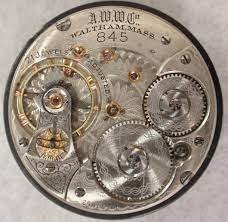
Roxbury and Waltham, Massachusetts, United States
Company established in 1850; Waltham factory opened in 1854
The enterprise later known as the American Waltham Watch Company pioneered the mechanized manufacture of watches with interchangeable parts. Its factory system brought precision watchmaking to an industrial scale, supplied widely used railroad and military watches, and influenced manufacturers in the United States and abroad.
The American System of Watch Manufacturing, Model 1857 movements, railroad-grade pocket watches, Riverside and Vanguard grades, and the historic Waltham factory.
Calibres, escapements, case construction, water resistance, electronic or quartz development, manufacturing methods, patents, and specialist suppliers.
Service considerations, originality, replacement parts, water-resistance assumptions, safe storage, and details that should be documented before restoration.
Official manufacturer history, museum or archive sources, technical sheets, books, catalogues, advertisements, image credits, and provenance notes.