A New York jeweler’s company became a pioneer in mass production, broadcasting, electronic timekeeping, and space-age accuracy.
From the Abbady Watches image archive
Object history
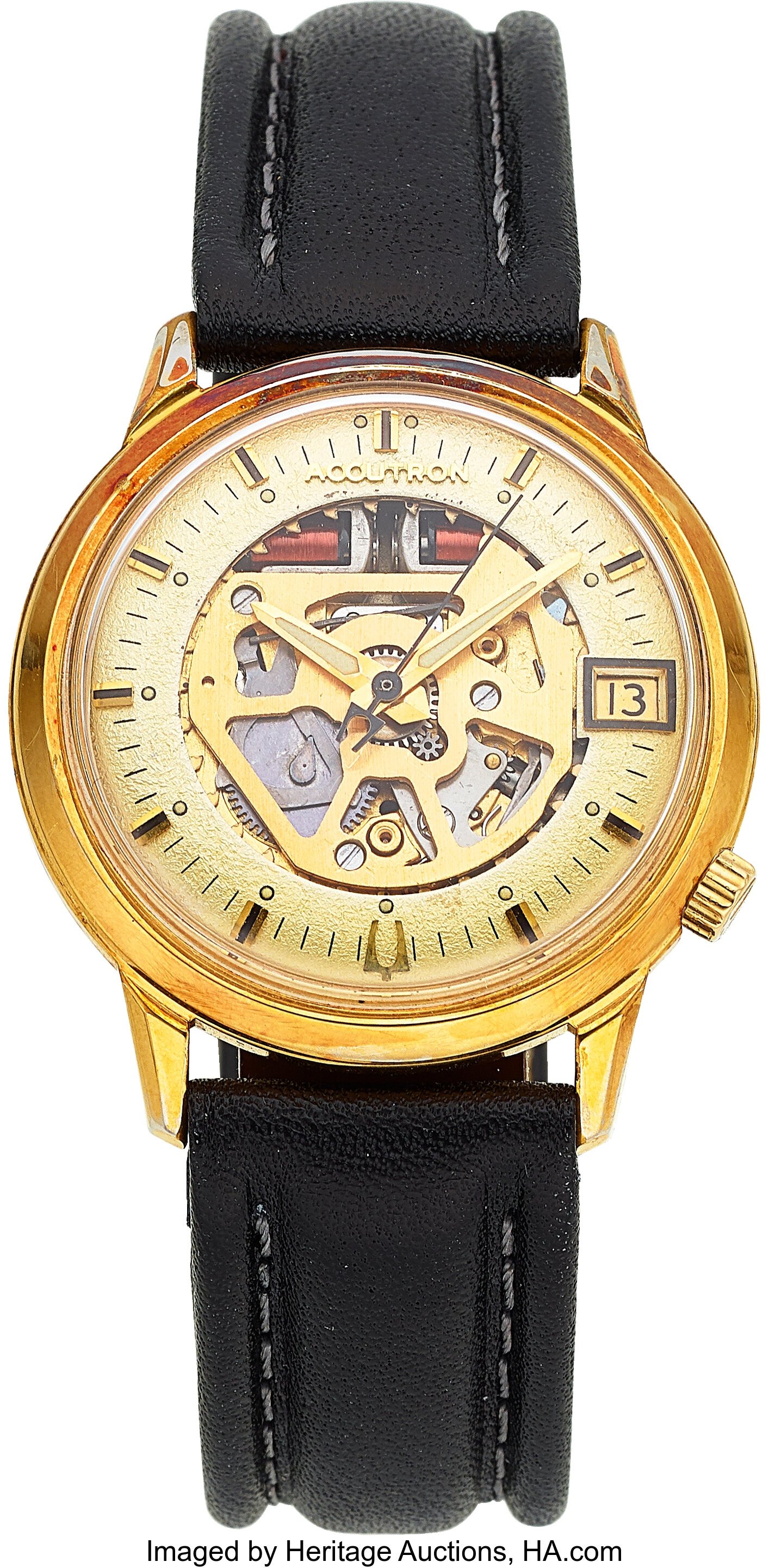
The pictured watch: Bulova Accutron Spaceview
Introduced with Accutron in 1960, the tuning-fork watch replaced the familiar mechanical tick with an electronic hum and made its movement part of the visual experience.
Identification noteThe exposed green-and-gold architecture identifies this as an Accutron Spaceview-style watch. The exact case reference and production year require photographs of the caseback and movement number.
Historic debut
1960
Technology
Battery-powered tuning fork
Visual signature
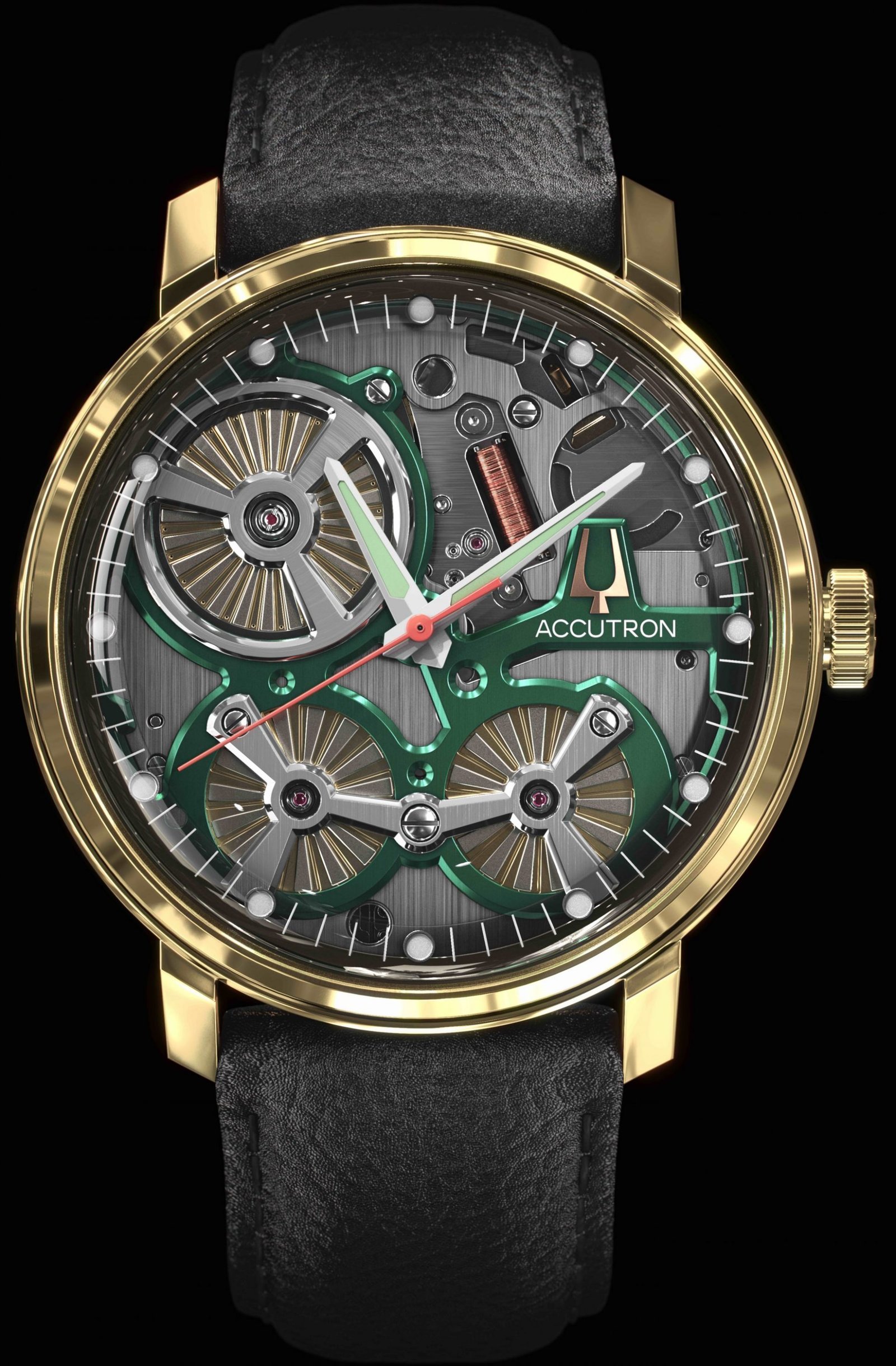
Exposed movement and green circuitry
Historic accuracy claim
Within one minute per month
Sound
A steady hum rather than a conventional tick
Reference status
Exact number not yet confirmed
Why Accutron changed wristwatches
Traditional mechanical watches regulate time with a balance wheel oscillating only a few times per second. Accutron used an electrically energized tuning fork vibrating at 360 hertz. A microscopic index mechanism converted that vibration into rotation of the hands, producing the unusually smooth seconds-hand motion collectors associate with the watch. Bulova presented Accutron as the first fully electronic watch, with accuracy remarkable for a mass-market wristwatch before quartz became widespread.
How the Spaceview appearance began
The open dial was originally an effective way to demonstrate unfamiliar technology. With the conventional dial removed, viewers could see the coils, tuning fork, transistorized circuit, gear train, and jeweled movement. The demonstration look became so popular that it developed into the Spaceview identity. The green components made the electronic mechanism instantly recognizable, while gold-toned bridges gave the futuristic engineering the appearance of fine jewelry.
A watch of the Space Age
Accutron technology was used in instruments and timing equipment associated with the American space program. That association helps explain the watch’s lasting appeal: it belongs to the brief period between traditional mechanical horology and the quartz revolution, when electronics were new, visible, and exciting.
What to examine on this example
A complete identification should record the caseback date code, case reference, movement calibre, serial markings, case material, crown, crystal, handset, chapter ring, and bracelet or strap. Original Spaceviews, authorized conversions, later conversions, and modern reinterpretations can look similar in one frontal photograph. The caseback and movement are therefore essential.
A vintage gold-tone Accutron reveals the coils and tuning-fork architecture.
Collector’s checklist
What to document and preserve
Do not force the hands or crown if the watch has stopped.
The original mercury battery is obsolete; replacement voltage and regulation should be handled by an Accutron specialist.
Photograph the caseback and movement before restoration.
Preserve original hands, crystal, chapter ring, and movement parts whenever possible.
A modern Accutron interpretation turns electronic engineering into the entire dial composition.
Founded by Joseph Bulova in New YorkEarly leader in national broadcastingAccutron replaced the tick with a tuning-fork hum
New York beginnings
Joseph Bulova established his jewelry business in 1875. Quality, standardized production, and strong design helped the name grow into a national watch brand.
The Accutron era
Accutron used an electronically activated tuning fork vibrating at 360 hertz rather than a conventional balance. Its characteristic hum symbolized a new approach to precision.
A watch of the Space Age
Accutron technology served in transportation and aerospace applications, securing a defining place in twentieth-century American watchmaking.
Archive note
This chronicle was edited from documents in the Abbady Watches research collection. It is an independent historical reference that will continue to be reviewed and expanded.