Railroad precision, military wristwatches, electric innovation, and bold design shaped an enduring American name.
From the Abbady Watches image archive
Object history
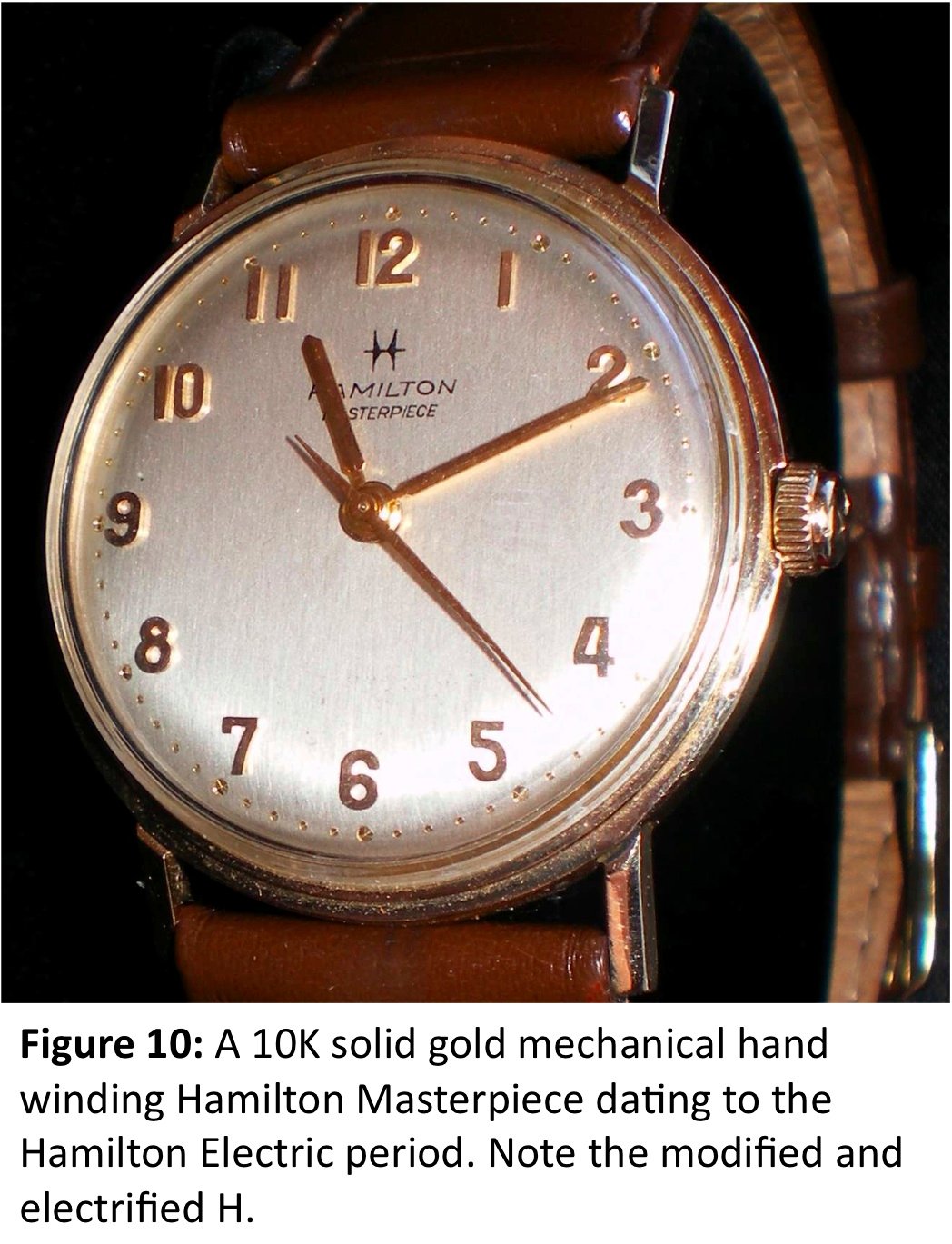
The pictured watch: Hamilton Masterpiece
Masterpiece was used on refined Hamilton presentation and dress watches, connecting the company’s American precision heritage with mid-century recognition, service, and formal style.
Identification noteThe archive photograph identifies the watch as a Hamilton Masterpiece. The exact reference, calibre, case material, and production year cannot be established from the front alone.
Brand founded
1892, Lancaster, Pennsylvania
Watch type
Dress or presentation wristwatch
Display
Hours, minutes, and small seconds
Movement
Likely mechanical; calibre unconfirmed
Design language
Slim case, restrained dial, formal proportions
Reference status
Exact number not yet confirmed
From railroad precision to the wrist
Hamilton built its American reputation with accurate railroad pocket watches at a time when dependable timekeeping was a matter of transportation safety. That culture of adjustment, legibility, and precision later carried into the company’s wristwatches. During the twentieth century Hamilton expanded from utilitarian watches into elegant dress models, combining American industrial organization with high-grade mechanical finishing.
What the Masterpiece name represented
Hamilton used the Masterpiece name on many presentation watches rather than one single, continuously defined model. Employers, professional organizations, and civic groups often selected such watches as retirement, service, or achievement gifts. An inscription is therefore not automatically damage: a caseback dedication can be central to the watch’s provenance.
Reading the pictured design
The small-seconds layout, applied hour markers, thin hands, and understated round case place the watch within the classic dress-watch tradition. The design emphasizes clarity and proportion rather than complications. Reliable identification still depends on inside caseback markings and the calibre and serial number on the movement.
How to document it correctly
Record every inscription before service. Photograph the dial, crown, all sides of the case, external and internal caseback, movement, calibre stamp, serial number, and any presentation engraving. A conservation-minded service should prioritize mechanical stability and originality over making the watch look new.
A gold hand-winding Hamilton Masterpiece exemplifies the formal presentation-watch tradition.
Collector’s checklist
What to document and preserve
Never polish away a presentation inscription or sharp case edges.
Avoid repainting the dial unless it is beyond conservation; originality strongly affects historical interest.
Have the case opened by a watchmaker to avoid scratches and bent covers.
Store the watch dry and away from magnets; assume a vintage dress watch is not water resistant.
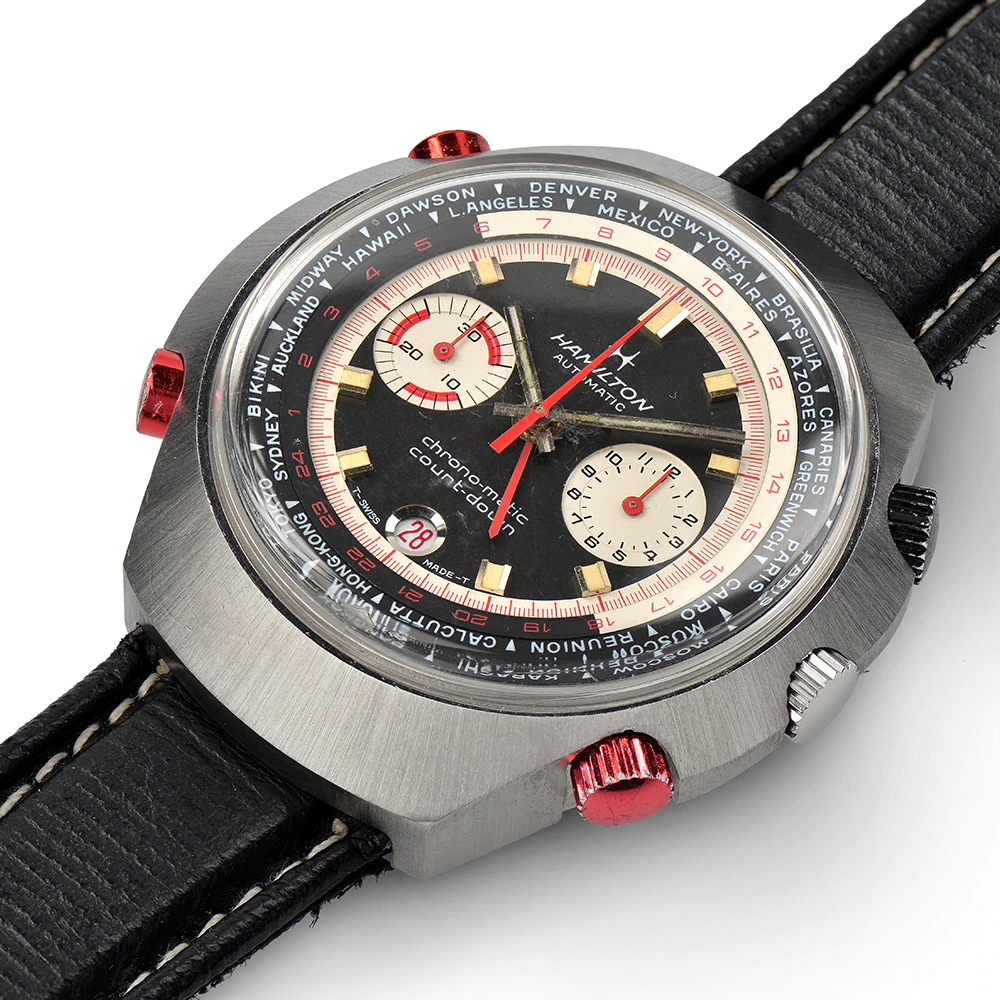
The Chrono-Matic Count-Down illustrates Hamilton’s adventurous design beyond its formal presentation watches.
Founded in Lancaster, PennsylvaniaBuilt a reputation through railroad accuracyIntroduced the electric Ventura in 1957
The railroad watch
Railroad operations depended on synchronized, reliable time. Hamilton’s accurate pocket watches became closely associated with railroad service.
From pocket to wrist
Military requirements encouraged the shift toward wristwatches, while Hamilton later balanced service watches with expressive designs.
Electric design and the screen
The asymmetric Ventura became an icon of mid-century design; Hamilton later developed a lasting connection with cinema.
Archive note
This chronicle was edited from documents in the Abbady Watches research collection. It is an independent historical reference that will continue to be reviewed and expanded.