Swiss railway-clock design, the red seconds hand and functional modernism
Mondaine
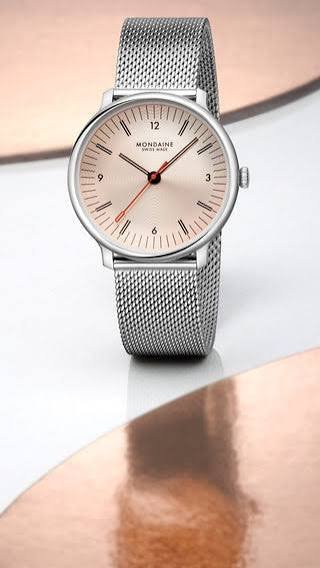
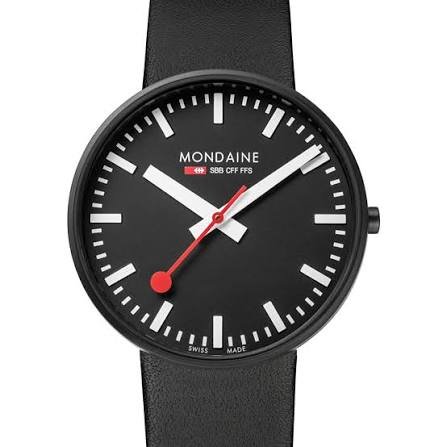
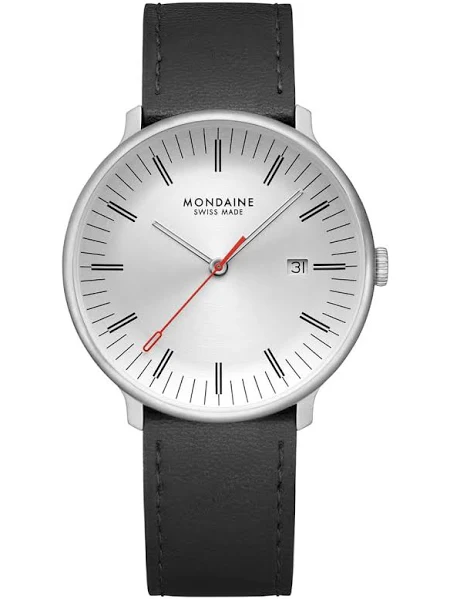
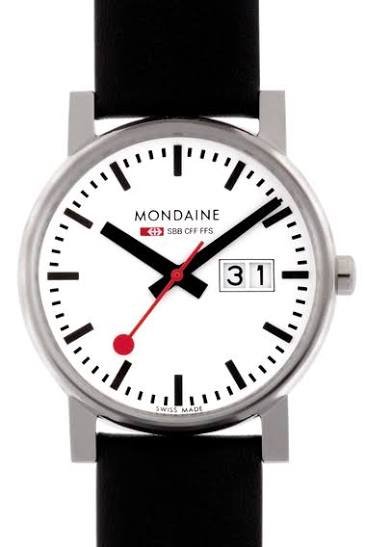
Mondaine was founded in Switzerland in 1951 by Erwin Bernheim. Its defining achievement came in 1986, when the company translated the famous Swiss Federal Railways station-clock design into a wristwatch under official license. The clock itself had been designed in 1944 by Swiss engineer Hans Hilfiker, with the instantly recognizable red seconds hand added in the early 1950s. Mondaine watches preserve that highly legible visual language while the wider collection includes minimalist dress models, date and big-date watches, chronographs, Stop2Go movements and designs using more sustainable materials.
Abbady photographic archive
Mondaine photographs



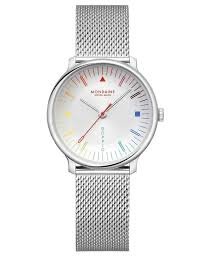
Origins and period
Switzerland; company associated with Zürich and Biberist
Mondaine founded in 1951; official Swiss railway watch introduced in 1986
Mondaine in watchmaking
Mondaine was founded in Switzerland in 1951 by Erwin Bernheim. Its defining achievement came in 1986, when the company translated the famous Swiss Federal Railways station-clock design into a wristwatch under official license. The clock itself had been designed in 1944 by Swiss engineer Hans Hilfiker, with the instantly recognizable red seconds hand added in the early 1950s. Mondaine watches preserve that highly legible visual language while the wider collection includes minimalist dress models, date and big-date watches, chronographs, Stop2Go movements and designs using more sustainable materials.
Landmark dates
1944 — Hans Hilfiker designs the Swiss Federal Railways station clock.
1953 — The station clock gains its famous red, disc-tipped seconds hand.
1951 — Erwin Bernheim establishes Mondaine in Switzerland.
1986 — Mondaine introduces the officially licensed Swiss railway-clock wristwatch.
1990s–2000s — The railway design expands into wall clocks, table clocks and numerous wristwatch formats.
2013 — Mondaine introduces the Stop2Go wristwatch interpretation of the station clock’s pause-and-jump action.
2010s–today — The brand broadens its design language through Helvetica-inspired and sustainability-focused collections.
Known for
Official Swiss Railways watch design; SBB CFF FFS markings; bold black rectangular hands; red seconds hand with circular tip; clean white or black dials; Stop2Go movement that recreates the station-clock pause; minimalist Helvetica and Classic collections; accessible Swiss design.
Movements and innovation
Most Mondaine watches use Swiss quartz movements chosen for practicality and accuracy. The Stop2Go mechanism is the brand’s most characteristic technical feature: its seconds hand completes a rotation in 58 seconds, pauses at 12, and then the minute hand advances, echoing the synchronization ritual of Swiss station clocks. The catalogue has also included automatic, chronograph, date and big-date executions. Exact movement identification requires the case reference.
Identification checklist
For official railway-design models, confirm the Mondaine name where applicable, the SBB CFF FFS mark, the licensed dial proportions, thick black hands and red disc-tipped seconds hand. Record the case reference and movement code. Because many copies imitate the railway-clock design—and some licensed or promotional dials emphasize SBB rather than Mondaine—front photographs alone cannot establish authenticity. Compare the case back, crown, typography and packaging with official records.
Preservation guidance
Protect quartz watches from battery leakage by replacing depleted cells promptly. Pressure-test water-resistant models whenever the case is opened. Avoid scratching printed dials or the distinctive red seconds hand, and clean mesh bracelets and straps gently. Stop2Go watches should be serviced by technicians familiar with the special movement. Preserve licensed SBB packaging, manuals, receipts and reference numbers.
Historical development
Erwin Bernheim founded Mondaine in 1951. The company became internationally recognizable after translating Hans Hilfiker’s Swiss Federal Railways station-clock design—with its bold markers and red seconds hand—into a licensed wristwatch collection in 1986.