Automata, Art and Horology Since 1738
Pierre Jaquet-Droz
Pierre Jaquet-Droz was a celebrated Swiss watchmaker and mechanician whose clocks, musical objects, singing birds, and lifelike automata were shown to courts across Europe and Asia. His workshop combined precision mechanics with decorative art and theatrical presentation.
Abbady photographic archive
Pierre Jaquet-Droz photographs
Origins and period
La Chaux-de-Fonds, Switzerland
Pierre Jaquet-Droz, 1721–1790
Pierre Jaquet-Droz in watchmaking
Pierre Jaquet-Droz was a celebrated Swiss watchmaker and mechanician whose clocks, musical objects, singing birds, and lifelike automata were shown to courts across Europe and Asia. His workshop combined precision mechanics with decorative art and theatrical presentation.
Landmark dates
1721 — Pierre Jaquet-Droz is born in La Chaux-de-Fonds, Switzerland.
1738 — He establishes his watchmaking workshop and begins building clocks of exceptional mechanical and decorative sophistication.
1750s — His clocks gain royal and international patrons as he travels to present his work.
1768 — His son Henri-Louis Jaquet-Droz and Jean-Frédéric Leschot join the enterprise.
1773 — Jaquet-Droz and Leschot begin perfecting and marketing increasingly sophisticated automata.
1774 — The Writer, the Draughtsman and the Musician are presented in La Chaux-de-Fonds.
1775 — The three humanoid automata are shown in Paris to Louis XVI and Marie-Antoinette.
1780s — The family’s creations are exhibited across Europe and reach clients in China, India and Japan through international trade networks.
1790 — Pierre Jaquet-Droz dies, leaving a legacy joining horology, mechanical animation and decorative art.
2000 — The Swatch Group acquires Montres Jaquet-Droz and develops the historic name as a luxury watch and automata brand.
2018 — The Signing Machine is unveiled, extending the founder’s tradition of programmable mechanical writing.
2022 — Jaquet Droz emphasizes unique, highly personalized art pieces and automata for individual collectors.
Known for
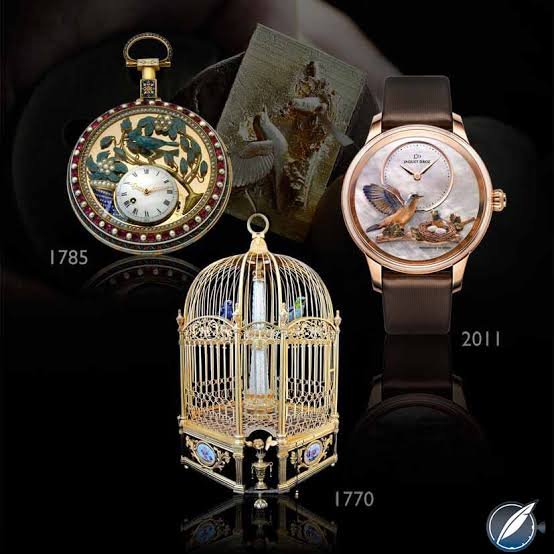
The Writer, Draughtsman and Musician automata, singing-bird mechanisms, elaborate clocks, and artistic watchmaking.
Movements and innovation
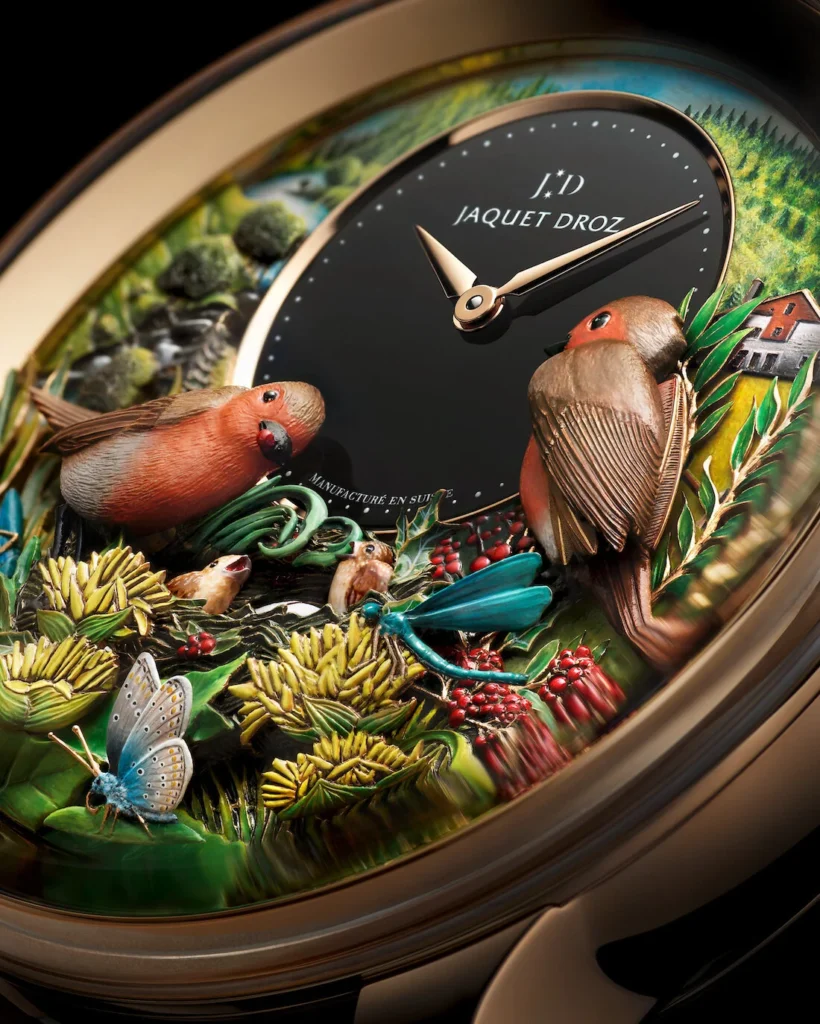
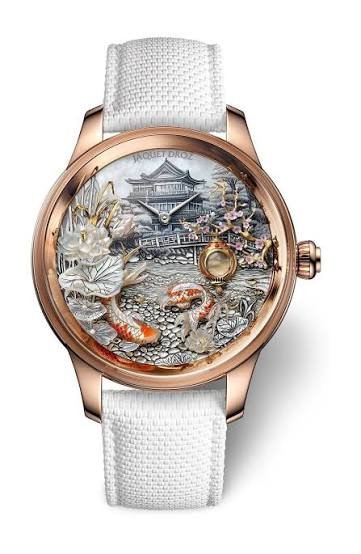
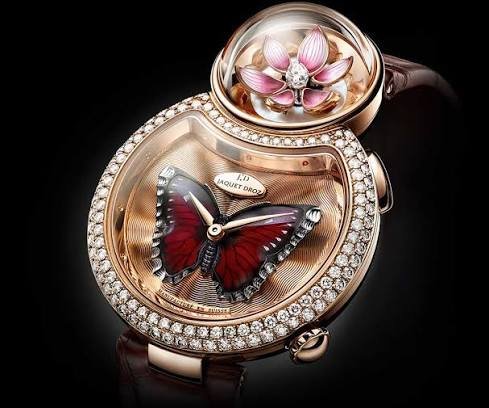
Pierre Jaquet-Droz used sophisticated clockwork not only to measure time but also to create movement, music and illusion. Cam systems, mechanical memory, miniature linkages, bellows and precisely coordinated trains animated writing, drawing, music and singing birds. Modern Jaquet Droz translates this heritage into high-complication wristwatches, tourbillons, minute repeaters and animated scenes, combining mechanical engineering with métiers d’art such as miniature painting, engraving, paillonné enamel, sculpting and gem-setting.
Identification checklist
Distinguish historic Jaquet-Droz workshop objects from modern Jaquet Droz wristwatches. For antique clocks, watches, snuff boxes and automata, document every signature, movement number, inscription, case mark and provenance record; attribution often depends on specialist archival comparison. For modern pieces, record the full reference and individual number, inspect dial and movement signatures, and compare the case, hands, movement calibre and decorative technique with official records. Complex automata and artistic dials should never be authenticated from photographs alone.
Preservation guidance
Historic automata and musical mechanisms require a conservator experienced with eighteenth-century horology; never force an actuator or operate a mechanism that binds. Preserve original surfaces, paint, enamel, feathers, bellows, textiles and papers, and avoid aggressive polishing or cleaning. Keep objects stable, dry and protected from vibration, dust and direct sunlight. Modern automata and complicated watches should be serviced by Jaquet Droz or a qualified specialist, with all replaced components and service documentation retained.
Historical development
Pierre Jaquet-Droz was a celebrated Swiss watchmaker and mechanician whose clocks, musical objects, singing birds, and lifelike automata were shown to courts across Europe and Asia. His workshop combined precision mechanics with decorative art and theatrical presentation.