Invenit et Fecit — Independent Geneva Watchmaking
F. P. Journe
François-Paul Journe built his reputation by restoring historic mechanisms and making unique complicated watches before establishing his own Geneva manufacture. His watches unite traditional chronometer ideas with original movement architecture and a recognizable contemporary style.
Abbady photographic archive
F. P. Journe photographs
Origins and period
Geneva, Switzerland
Independent brand established 1999
F. P. Journe in watchmaking
François-Paul Journe built his reputation by restoring historic mechanisms and making unique complicated watches before establishing his own Geneva manufacture. His watches unite traditional chronometer ideas with original movement architecture and a recognizable contemporary style.
Landmark dates
1957 — François-Paul Journe is born in Marseille, France.
1970s — He trains in watchmaking and develops expertise restoring historic clocks and complicated mechanisms.
1982 — Journe applies a remontoire system while constructing his second pocket watch.
1983 — He begins investigating resonance through an experimental pocket watch.
1991 — A prototype tourbillon wristwatch with remontoire is completed.
1994 — Journe begins designing the aesthetic and technical language of his future wristwatch collection.
1996 — Subscription watches help finance the creation of his independent series.
1999 — Montres Journe SA and the F.P.Journe collection are launched under the signature “Invenit et Fecit.”
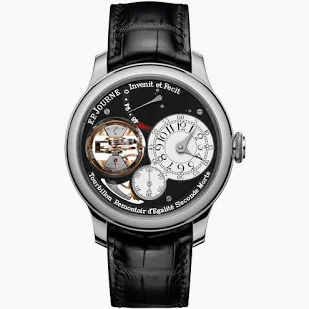
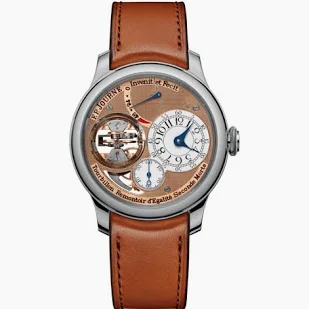
1999 — The Tourbillon Souverain introduces a remontoire d’égalité in a wristwatch.
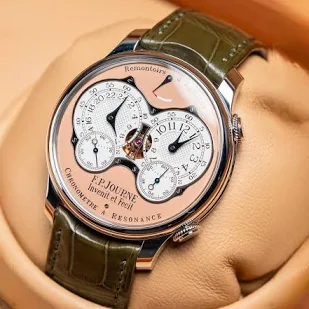
2000 — The Chronomètre à Résonance is presented, using two balances influenced by resonance.
2001 — The automatic Octa calibre establishes a platform for multiple complications with a long power reserve.
2004 — The manufacture begins producing its mechanical movements in 18-karat rose gold.
2008 — The Centigraphe Souverain expands the collection’s high-speed chronograph innovations.
2014 — The quartz-regulated élégante introduces a mechanical-motion standby system designed for long autonomy.
2020 — A redesigned Chronomètre à Résonance introduces a remontoire distributing energy to both gear trains.
Known for
The Tourbillon Souverain, Chronomètre à Résonance, Octa collection, movement construction in precious metals, and independent haute horlogerie.
Movements and innovation
F.P.Journe develops and manufactures original calibres in Geneva under the signature “Invenit et Fecit”—invented and made. Signature ideas include the Tourbillon Souverain’s constant-force remontoire, the twin-balance Chronomètre à Résonance, the modular automatic Octa architecture, the Sonnerie Souveraine and the high-speed Centigraphe. Many modern mechanical calibres use plates and bridges made from 18-karat rose gold. The designs draw on marine chronometers and classical precision watchmaking while solving contemporary problems of stability, autonomy, wear and legibility.
Identification checklist
Record the exact dial signature, model name, case reference, individual number and calibre engraving. Verify “F.P.Journe Invenit et Fecit” typography, dial layout, hand shapes, crown, case dimensions and movement architecture against official documentation. Early brass-movement and subscription-era watches require especially careful serial and provenance research. Confirm case metal and movement material from hallmarks and movement evidence rather than dial appearance. Because values are high and replicas exist, authentication should include physical inspection by F.P.Journe or a recognized independent-watch specialist.
Preservation guidance
Service only through F.P.Journe or a specialist experienced with the exact calibre, particularly resonance, remontoire, tourbillon, striking and chronograph mechanisms. Do not polish cases or refinish dials without understanding the effect on originality and value. Keep the watch dry and protected from impact and magnetism, operate complications only according to the manufacturer’s instructions, and never force a crown or pusher. Preserve boxes, certificates, purchase documents, service records and every replaced original component.
Historical development
François-Paul Journe built his reputation by restoring historic mechanisms and making unique complicated watches before establishing his own Geneva manufacture. His watches unite traditional chronometer ideas with original movement architecture and a recognizable contemporary style.