The Soviet “Flight” marque of the First Moscow Watch Factory and its later namesakes
Poljot
Poljot—Russian for “flight”—was the principal marque of the First Moscow Watch Factory, an institution established in 1930 with machinery, designs and technical assistance purchased from the bankrupt Dueber-Hampden operation in the United States. The factory became a foundation of Soviet industrial watchmaking, producing military, civilian and specialist timepieces under names including Kirovskie, Pobeda, Shturmanskie and Strela. A Shturmanskie made by the factory was worn by Yuri Gagarin during the first human spaceflight in 1961, and Alexei Leonov wore a Strela chronograph during the first spacewalk in 1965. In 1964 the factory adopted Poljot as its principal export and domestic trademark. Later achievements included alarms, automatic watches, marine chronometers and the hand-wound calibre 3133 chronograph derived from Valjoux tooling acquired in the 1970s. The original Moscow enterprise declined and fragmented after the Soviet era, with equipment and trademarks passing to successor businesses. Poljot International, founded in Germany in the 1990s, draws on this heritage but is legally and industrially distinct from the original First Moscow Watch Factory.
Abbady photographic archive
Poljot photographs
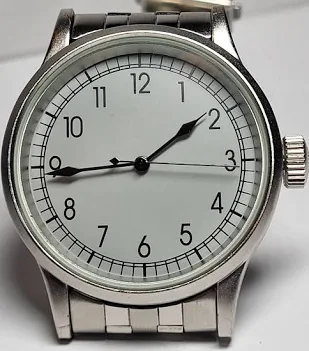
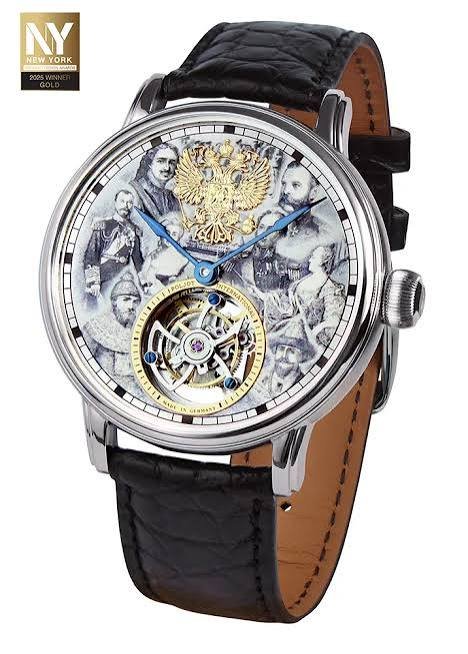
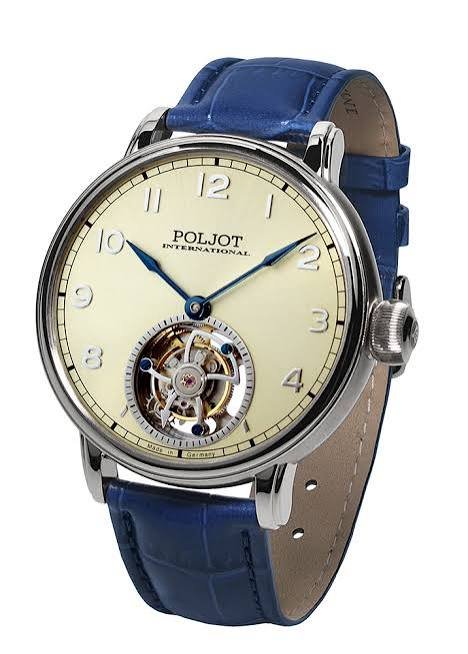
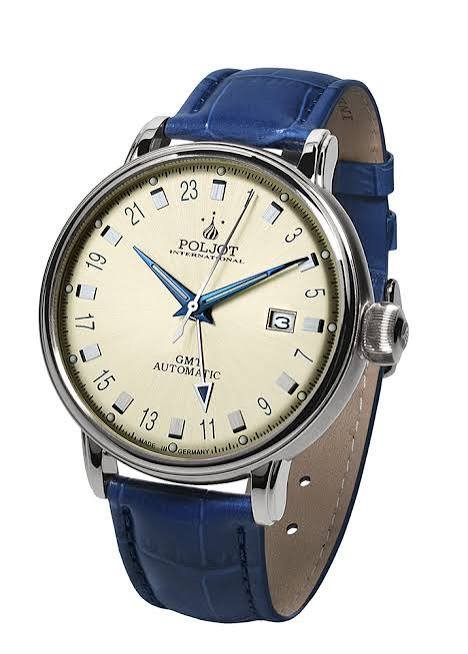
Origins and period
Moscow, Soviet Union/Russia; Poljot International later established in Germany
First Moscow Watch Factory founded in 1930; Poljot name adopted in 1964; original factory fragmented in the 2000s
Poljot in watchmaking
Poljot—Russian for “flight”—was the principal marque of the First Moscow Watch Factory, an institution established in 1930 with machinery, designs and technical assistance purchased from the bankrupt Dueber-Hampden operation in the United States. The factory became a foundation of Soviet industrial watchmaking, producing military, civilian and specialist timepieces under names including Kirovskie, Pobeda, Shturmanskie and Strela. A Shturmanskie made by the factory was worn by Yuri Gagarin during the first human spaceflight in 1961, and Alexei Leonov wore a Strela chronograph during the first spacewalk in 1965. In 1964 the factory adopted Poljot as its principal export and domestic trademark. Later achievements included alarms, automatic watches, marine chronometers and the hand-wound calibre 3133 chronograph derived from Valjoux tooling acquired in the 1970s. The original Moscow enterprise declined and fragmented after the Soviet era, with equipment and trademarks passing to successor businesses. Poljot International, founded in Germany in the 1990s, draws on this heritage but is legally and industrially distinct from the original First Moscow Watch Factory.
Landmark dates
1930 — The First State Watch Factory opens in Moscow using machinery and technical assets acquired from Dueber-Hampden in Ohio.
1935 — The factory is named in honor of Sergei Kirov and expands Soviet movement production.
1940s — Military production and postwar Pobeda watches broaden the factory’s role in Soviet timekeeping.
1949 — Shturmanskie watches are produced for Soviet aviation personnel.
1961 — Yuri Gagarin wears a First Moscow Watch Factory Shturmanskie during the first human spaceflight.
1964 — The factory adopts Poljot—meaning “flight”—as its principal watch trademark.
1965 — Alexei Leonov wears a Strela chronograph during the first spacewalk.
1970s — The factory acquires Swiss Valjoux 7734 tooling and develops the higher-frequency calibre 3133 chronograph.
1976 — Poljot 3133 chronographs enter production for military and professional applications.
1980s — Poljot expands exports of mechanical chronographs, alarms, dress watches and specialized instruments.
1990s — The post-Soviet factory faces privatization and fragmentation; Poljot International is established in Germany as a separate heritage-inspired company.
2000s — The original First Moscow Watch Factory’s assets, equipment and brands are divided among successor firms.
Today — Vintage Soviet Poljot remains collectible, while Poljot International markets German-made watches under a distinct company.
Known for
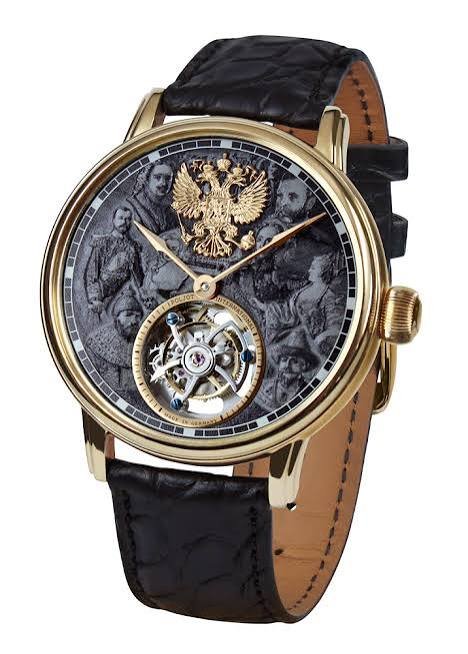
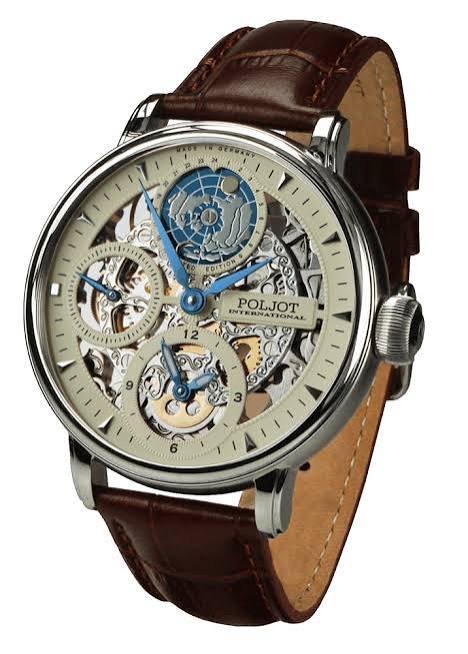
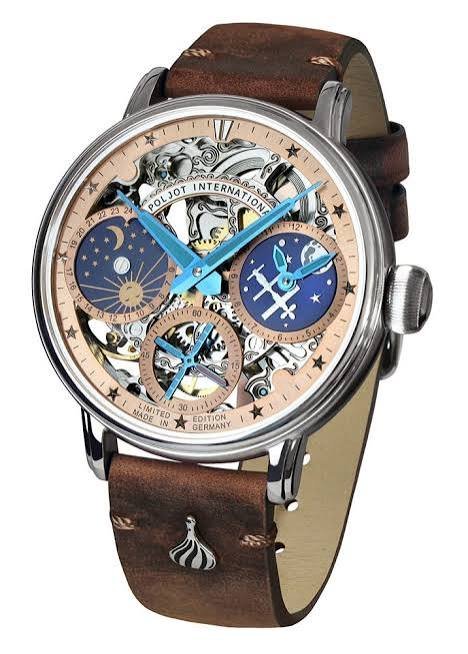
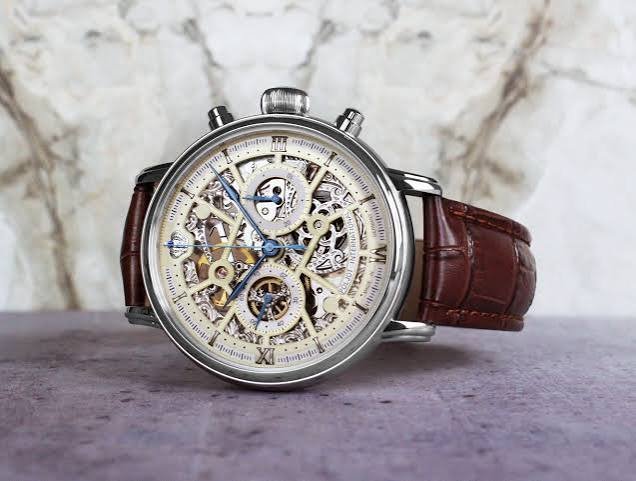
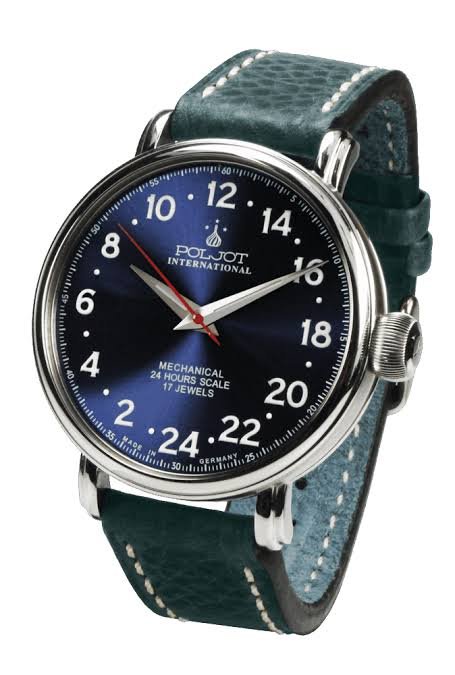
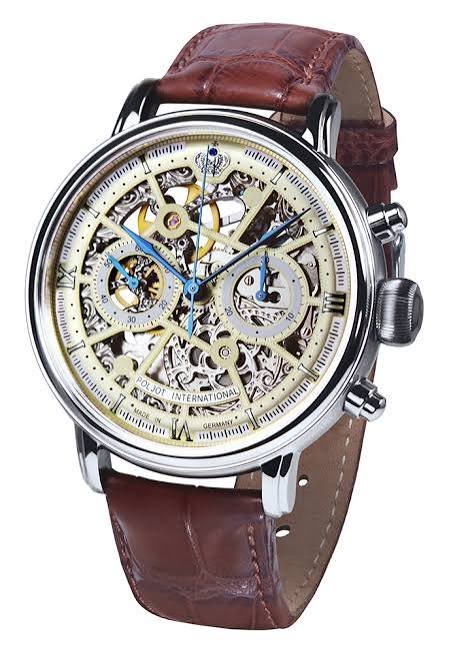
First Moscow Watch Factory; Shturmanskie and Yuri Gagarin; Strela chronographs and Alexei Leonov; Poljot calibre 3133; Okean and military chronographs; Signal alarm watches; deck and marine chronometers; 24-hour and world-time displays; Soviet aerospace associations; later Poljot International skeletons, tourbillons and complicated watches made in Germany.
Movements and innovation
The First Moscow Watch Factory produced hand-wound, automatic, alarm and chronograph calibres. Common families include simple 24xx and 26xx movements, the 2612.1 alarm and the celebrated 3133 column-wheel chronograph. The 3133 was developed after the Soviet purchase of Valjoux 7734 machinery and was modified to run at 21,600 vibrations per hour with additional jewels and revised components. It powered Poljot, Okean, Sturmanskie and many post-Soviet chronographs. Modern Poljot International watches may use Russian, German, Swiss or Asian base movements depending on model, often extensively decorated, skeletonized or fitted with additional modules. Exact origin must be verified from the movement and reference rather than inferred from the dial name.
Identification checklist
Separate three categories: original Soviet First Moscow Watch Factory pieces, post-Soviet Russian successor watches, and German Poljot International models. Inspect Cyrillic or Latin dial signatures, country-of-origin text, movement calibre and factory markings, case-back engravings and date codes where present. Soviet watches were frequently repaired with interchangeable parts, and commemorative redials or fantasy dials are common. For a claimed space or military model, require period-correct movement, dial, case and documentation; the Poljot name alone does not prove issued use. Modern Poljot International watches marked Made in Germany should be researched under that company’s reference system.
Preservation guidance
Service vintage Soviet movements through a watchmaker experienced with Russian calibres, especially the 3133 chronograph and 2612.1 alarm. Never force stiff pushers, alarm crowns, date correctors or 24-hour mechanisms. Treat untested cases as non-water-resistant and protect old luminous material and dial printing from cleaning or disturbance. Preserve original cases, bezels, hands, crowns and movement parts, and avoid aggressive polishing of plated surfaces. For modern skeleton, tourbillon or modular Poljot International watches, follow the specific manufacturer’s instructions and obtain parts through the appropriate company rather than assuming interchangeability with Soviet Poljot.
Historical development
The First Moscow Watch Factory became a central institution in Soviet watchmaking, producing military, aviation, scientific, and civilian timepieces. After Yuri Gagarin’s 1961 spaceflight wearing a factory-made watch, the Poljot—“flight”—name was adopted and later appeared on chronographs, alarms, and export models.