Biel manufacture remembered for unconventional in-house chronographs and practical wristwatches
Pierce
Pierce was founded in Biel/Bienne in 1883 by Léon Lévy and his brothers, initially trading as Léon Lévy Frères. The company grew into a substantial vertically organized manufacturer and produced watches under several names before Pierce became its best-known marque. During the interwar period it invested in proprietary movements rather than relying entirely on outside ébauches. Its most important achievement was a family of in-house wrist chronographs, beginning with calibre 130 in the 1930s and followed by calibre 134. Their unusual architecture used a vertical friction clutch and proprietary components, making them distinctive but challenging to service. Pierce also produced everyday hand-wound watches, waterproof and shock-protected models, unusual automatic movements, alarms and the externally adjustable Correctomatic. The original company declined during the restructuring and quartz-era pressures that transformed Swiss watchmaking. The Pierce name was later revived, but its historical reputation rests primarily on the Biel manufacture and its inventive mid-century mechanical watches.
Abbady photographic archive
Pierce photographs
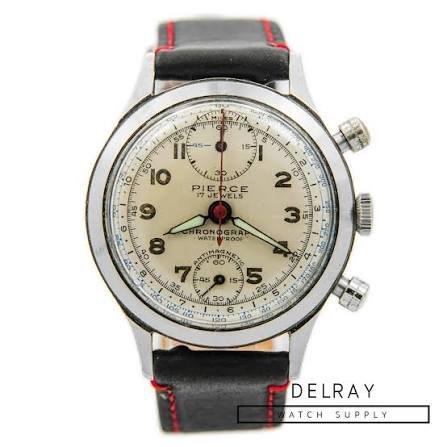
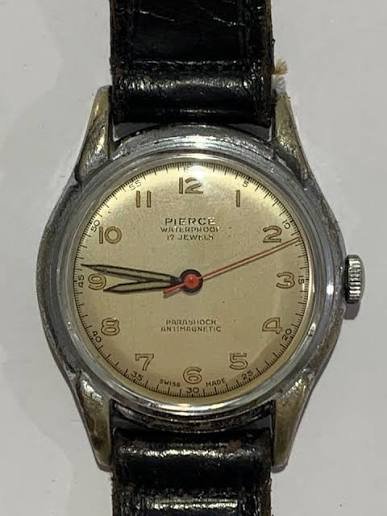
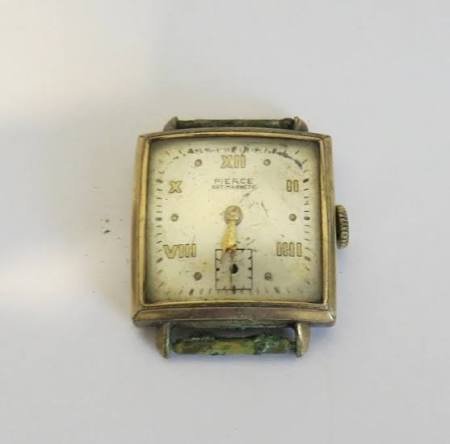
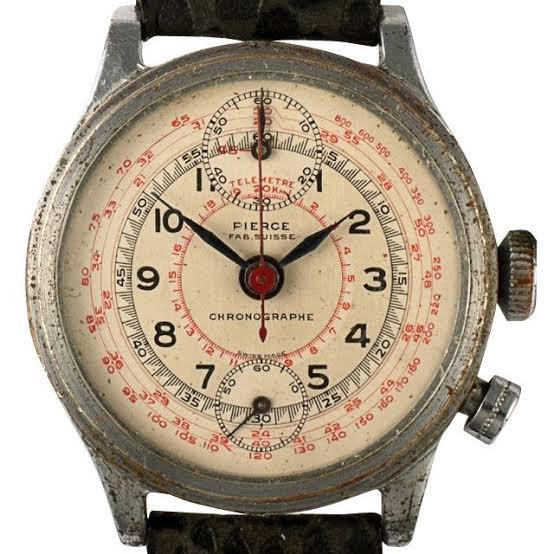

Origins and period
Biel/Bienne, Switzerland
Founded in 1883; major production through the mid-20th century; later discontinued and intermittently revived
Pierce in watchmaking
Pierce was founded in Biel/Bienne in 1883 by Léon Lévy and his brothers, initially trading as Léon Lévy Frères. The company grew into a substantial vertically organized manufacturer and produced watches under several names before Pierce became its best-known marque. During the interwar period it invested in proprietary movements rather than relying entirely on outside ébauches. Its most important achievement was a family of in-house wrist chronographs, beginning with calibre 130 in the 1930s and followed by calibre 134. Their unusual architecture used a vertical friction clutch and proprietary components, making them distinctive but challenging to service. Pierce also produced everyday hand-wound watches, waterproof and shock-protected models, unusual automatic movements, alarms and the externally adjustable Correctomatic. The original company declined during the restructuring and quartz-era pressures that transformed Swiss watchmaking. The Pierce name was later revived, but its historical reputation rests primarily on the Biel manufacture and its inventive mid-century mechanical watches.
Landmark dates
1883 — Léon Lévy and his brothers establish the Biel watch company later known as Pierce.
Early 1900s — The business expands into a large manufacturer producing movements and complete watches.
Circa 1910 — Pierce’s predecessor operation employs a substantial workforce in Biel and serves international markets.
1920s — The company increasingly develops its own movement designs rather than modifying standard ébauches.
1930s — Pierce develops its proprietary wrist-chronograph system around calibre 130.
Late 1930s–1940s — Calibres 130 and 134 appear in monopusher and two-pusher chronographs with a vertical friction clutch.
1940s — Pierce produces military-style chronographs and practical Parashock water-resistant wristwatches.
1940s–1950s — The company experiments with a distinctive automatic winding mechanism using a sliding weight and rack system.
1950s — The Duofon alarm watch offers selectable alarm-volume settings.
1959 — Pierce introduces the Correctomatic, allowing limited rate correction from outside the case.
1960s–1970s — Competition, industry consolidation and the quartz transition weaken the independent manufacturer.
Late 20th century — Original Pierce production ceases and the historic marque becomes primarily a collector interest.
2005 onward — The Pierce name is revived for modern watches, although continuity with the original manufacture should be assessed carefully.
Known for
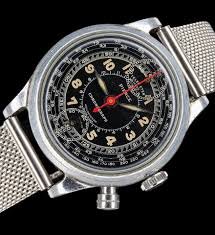
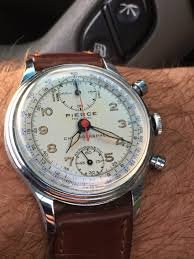
Pierce calibre 130 and 134 chronographs; vertical friction-clutch chronograph architecture; monopusher and two-pusher configurations; Parashock water-resistant watches; proprietary automatic movements; Duofon alarm watch; Correctomatic external rate adjustment; military-style and civilian chronographs; telemeter and tachymeter scales.
Movements and innovation
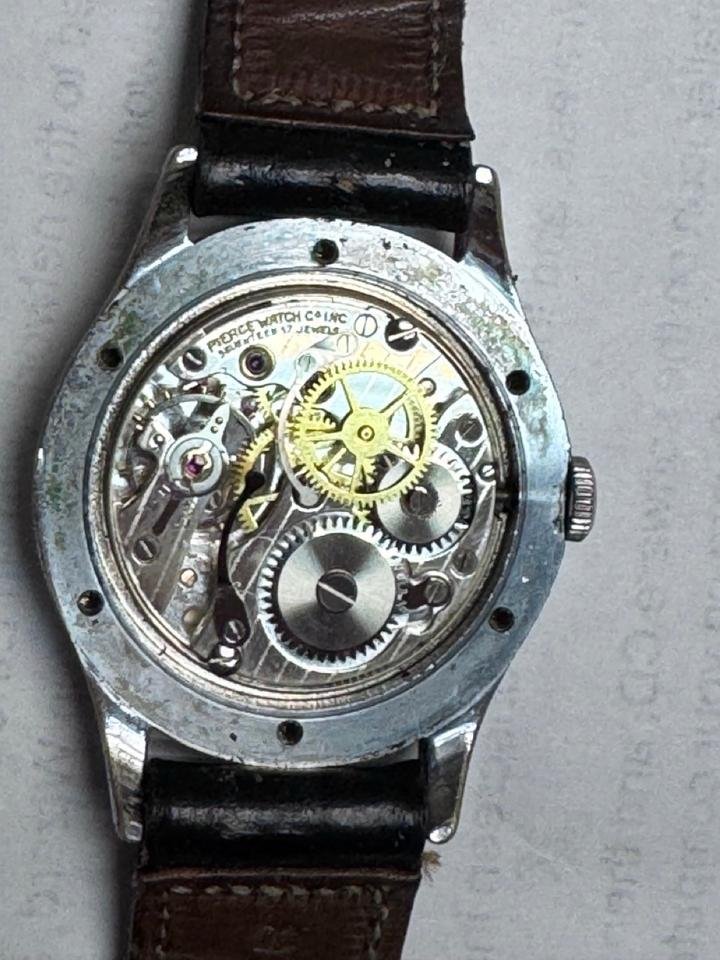
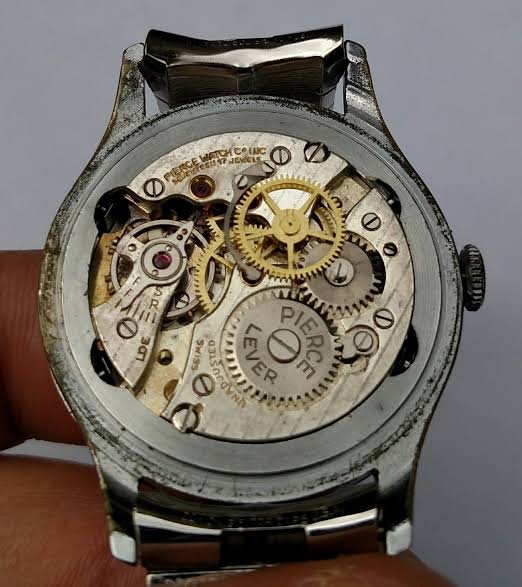
Pierce produced a range of proprietary hand-wound, automatic, alarm and chronograph movements. The best-known are calibres 130 and 134, column-wheel-controlled chronographs using an unusual vertical friction clutch. Their architecture differs markedly from conventional lateral-clutch chronographs and requires specialized knowledge and properly fitted parts. Pierce also developed a rare automatic system in which a moving weight traveled along guide rods and wound through a rack. Simpler manual calibres powered Parashock and dress watches, while the Duofon incorporated an alarm. Movement markings and calibre architecture are more reliable for identification than the dial alone.
Identification checklist
Inspect the movement for a Pierce Watch Co. signature, calibre number, jewel count and the distinctive architecture expected for the model. On chronographs, verify the column wheel, vertical friction clutch, pusher arrangement and register layout against known calibre 130 or 134 examples. Compare dial scales, typography, hands and case dimensions with period references; redials, replacement hands and recased movements are common. “Waterproof” and “Parashock” are historical claims, not evidence of present water resistance. A modern Pierce-branded watch may come from a later revival and should not automatically be attributed to the original Biel manufacture.
Preservation guidance
Have vintage Pierce watches serviced only by a watchmaker familiar with obsolete Swiss calibres and, for chronographs, the Pierce 130/134 system. Do not repeatedly operate a stiff pusher, alarm or crown. Original chronograph friction components and wheels can be difficult to replace, so unnecessary disassembly should be avoided. Treat every untested vintage case as non-water-resistant despite waterproof dial text. Preserve original dials, scales, hands, crowns, pushers and case geometry; avoid refinishing aged dials or heavily polishing plated cases. Photograph the movement before service and retain all replaced parts.
Historical development
Pierce grew from the Lévy family’s Biel watch enterprise into an integrated manufacturer serving international markets. It became known for inventive, economical movement construction and for distinctive chronographs, automatic watches, alarms, and military-related wristwatches.