Swiss material innovator · Founded 1917 · Rado name introduced 1957
Rado
Founded as Schlup & Co. in Lengnau in 1917, Rado introduced watches under its present name in 1957. The brand transformed modern watch design through the scratch-resistant DiaStar of 1962, ergonomic shaped watches and pioneering use of high-tech ceramic. Rado later joined SMH, now the Swatch Group, and continues to combine Swiss movements with material and industrial-design innovation.
Abbady photographic archive
Rado photographs

Origins and period
Lengnau, Bern, Switzerland
Schlup & Co. founded 1917; Rado watches introduced 1957; material innovation from 1962 to the present
Rado in watchmaking
Founded as Schlup & Co. in Lengnau in 1917, Rado introduced watches under its present name in 1957. The brand transformed modern watch design through the scratch-resistant DiaStar of 1962, ergonomic shaped watches and pioneering use of high-tech ceramic. Rado later joined SMH, now the Swatch Group, and continues to combine Swiss movements with material and industrial-design innovation.
Landmark dates
1917 — Fritz, Ernst and Werner Schlup establish Schlup & Co. in Lengnau, Switzerland
1957 — Watches are introduced under the Rado name
1962 — Rado launches the scratch-resistant DiaStar and the original Captain Cook
1983 — The curved Anatom advances ergonomic watch design
1986 — Integral introduces a landmark high-tech ceramic design; Rado joins SMH
1990s — Ceramica, Sintra and Ceramos expand Rado’s material vocabulary
2002 — V10K demonstrates a surface hardness of 10,000 Vickers
2011 — True Thinline advances ultra-slim ceramic monobloc construction
2017 — Captain Cook is relaunched in a modern interpretation of the 1962 original
2021 — Captain Cook High-Tech Ceramic combines historic styling with Rado’s signature material
Known for
DiaStar hardmetal cases; sapphire crystal; the Captain Cook; Anatom; Integral; Ceramica; Sintra and Ceramos; high-tech ceramic; the V10K; True Thinline; rotating anchor emblem; and design-led Swiss watches.
Movements and innovation
Rado has used mechanical and quartz movements throughout its history, supported today by the Swatch Group’s industrial network. Its defining innovation lies in exterior construction: hardmetal, sapphire crystal, high-tech ceramic, ceramic monobloc cases, Ceramos and high-tech-diamond surfaces. The rotating anchor on many automatic dials is a brand signature, but exact calibre identification requires movement or caseback documentation.
Identification checklist
Record the complete caseback reference and serial number. Photograph the rotating anchor, dial printing, date typography, crown, crystal, bracelet and clasp. Identify the movement calibre before ordering parts. Determine whether the case and bracelet use hardmetal, ceramic, Ceramos, stainless steel or plated components. Compare with official catalogues and never assign an exact reference, material or production year from appearance alone.
Preservation guidance
Hardmetal, high-tech ceramic and sapphire resist ordinary scratches but can chip or fracture after sharp impact. Do not polish coated, ceramic or hardmetal surfaces using ordinary stainless-steel methods. Integrated bracelet links and shaped crystals may be difficult to replace. Treat vintage water-resistance markings as historical only until professionally tested, and retain original parts, service records, boxes and papers.
Rado: The Swiss Master of Materials
Rado has built its identity around a question that changed modern watch design: what happens when a watchmaker treats the case, crystal and bracelet as fields for material innovation? From a small movement workshop founded in Lengnau in 1917, Rado developed into a Swiss brand known for scratch-resistant surfaces, sapphire crystal, hardmetal, high-tech ceramic and sharply modern industrial forms.
The company’s most important watches do more than tell time. The DiaStar, Anatom, Integral, Ceramica, Sintra, True Thinline and Captain Cook collections trace a continuing effort to make watches more durable, comfortable and visually distinctive.
Schlup & Co.: The Beginning in Lengnau
Brothers Fritz, Ernst and Werner Schlup established Schlup & Co. in Lengnau, Switzerland, in 1917. The workshop initially concentrated on producing watch movements. This technical background gave the company practical knowledge of reliable series production before it developed a widely recognized consumer brand.
By the middle of the twentieth century, the company was expanding beyond movement manufacture. In 1957 it introduced watches under the Rado name. The rotating anchor emblem that later appeared on many automatic models became one of the brand’s most recognizable signatures.
1957 and the Rado Identity
The launch of Rado-branded collections in 1957 marked the transition from a movement supplier to an international watch manufacturer. Early Rado watches combined dependable Swiss movements with contemporary case shapes and a growing emphasis on long-lasting exterior materials.
The name became associated with modernity rather than a single traditional style. Rado produced round dress watches, shaped cases, diving watches and integrated bracelet designs, while maintaining an identifiable interest in surface hardness and wear resistance.
The DiaStar and the Scratch-Resistant Watch
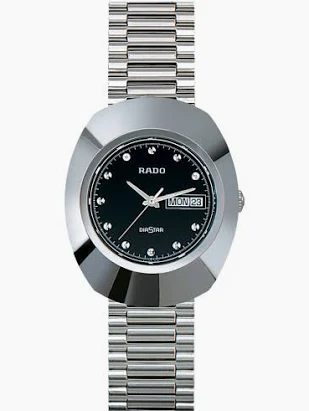
Introduced in 1962, the Rado DiaStar became the brand’s defining breakthrough. Its broad, shield-like case used hardmetal, a material far more resistant to scratching than conventional watch-case alloys. A sapphire crystal further protected the dial.
The DiaStar’s unusual geometry was closely connected to its construction. Instead of disguising the material, Rado made its polished hardness part of the design. The watch established a philosophy that would guide the company for decades: technical materials could create a new visual language rather than merely imitate traditional metal cases.
Captain Cook: Rado’s 1962 Diving Watch
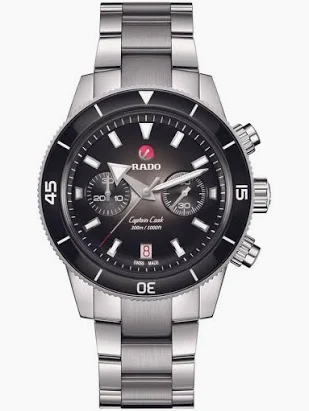
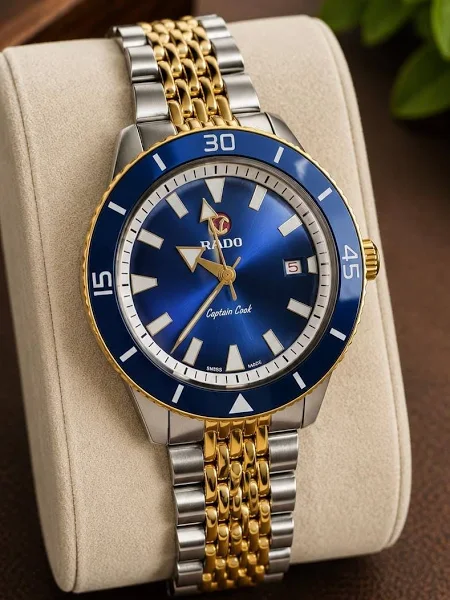
Rado also introduced the Captain Cook diving watch in 1962. The original featured a turning bezel, strong luminous details and the brand’s rotating anchor symbol. Its sporty character demonstrated that Rado’s catalogue extended beyond dress and design watches.
The Captain Cook returned in 2017 in a form inspired by the original. Larger versions and high-tech ceramic interpretations followed. Rado’s modern Captain Cook family combines vintage styling with contemporary automatic movements, sapphire crystals and advanced case materials.
Anatom and the Shape of the Wrist
The Rado Anatom arrived in 1983 with a curved profile designed to follow the wrist. Its cylindrical sapphire crystal and integrated shape treated comfort, case geometry and bracelet design as a single system. The result helped establish the sleek architectural approach seen in many later Rado watches.
The Anatom showed that ergonomics could become an important part of luxury-watch design. Its smooth transition from case to bracelet anticipated the increasingly integrated watches of the following decade.
Integral and the Ceramic Revolution
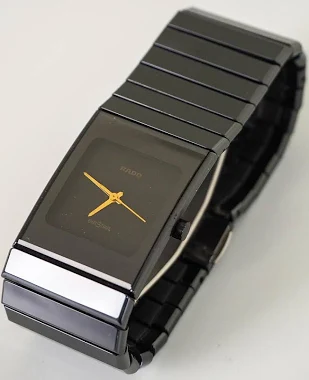
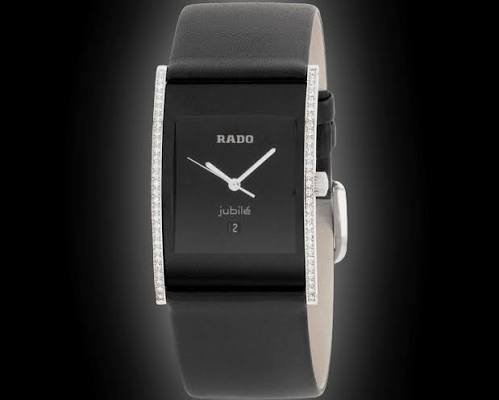
In 1986, Rado introduced the Integral. The model combined a linear rectangular form with scratch-resistant high-tech ceramic elements. Rado describes the Integral as a landmark in the watch industry’s adoption of high-tech ceramic in serial production.
High-tech ceramic is valued for hardness, low weight, skin-friendly qualities and the ability to retain its color and polished finish. Producing precise ceramic watch components requires controlled forming, sintering and finishing because the material behaves very differently from metal.
The Ceramica collection extended the concept further by making the case and bracelet appear as one continuous geometric object. These designs helped Rado earn its “Master of Materials” identity.
Sintra, Ceramos and Material Experimentation
Rado continued experimenting with materials that combined visual richness with resistance to wear. The Sintra introduced a curved, tapered form and later became associated with Ceramos, a composite offering the sheen of metal with properties related to high-tech ceramic.
These watches blurred the boundary between jewellery, industrial design and horology. Polished black, platinum-colored and gold-colored surfaces became structural elements rather than simple coatings applied to conventional cases.
V10K, True Thinline and Modern Engineering
In 2002, Rado presented the V10K, named for its surface hardness of 10,000 Vickers. Its high-tech diamond surface demonstrated the brand’s pursuit of extreme scratch resistance and was recognized by Guinness World Records as the world’s hardest watch.
The True Thinline later showed a different side of materials engineering. Its exceptionally slim, lightweight ceramic monobloc case proved that ceramic could support refined minimalist proportions rather than only bold or heavy-looking designs.
Movements and the Rotating Anchor
Rado has used both mechanical and quartz movements across its history. Vintage watches may contain movements produced within the wider Swiss ébauche industry, while modern automatic models commonly use movements developed within the Swatch Group’s industrial network.
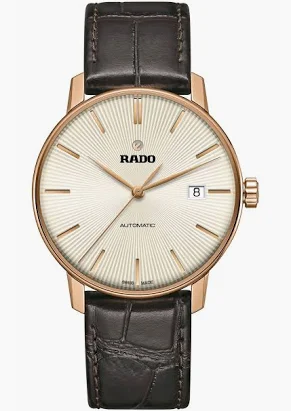
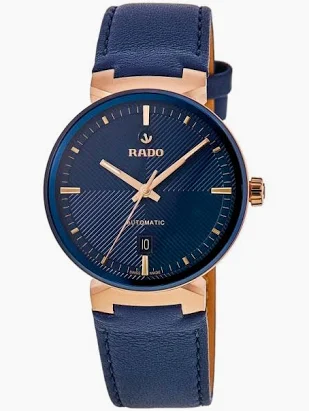
Many automatic Rado dials carry a small rotating anchor mounted near twelve o’clock. The emblem is both a brand signature and a reference to automatic winding. It should not be treated as proof of a specific calibre or reference; the caseback and movement markings remain essential for identification.
Design Families in the Photographic Archive
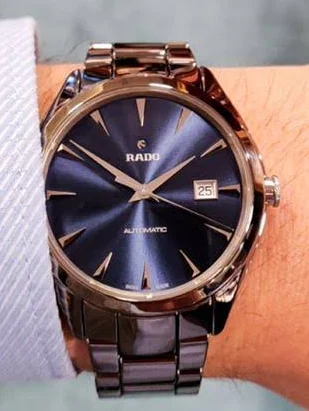
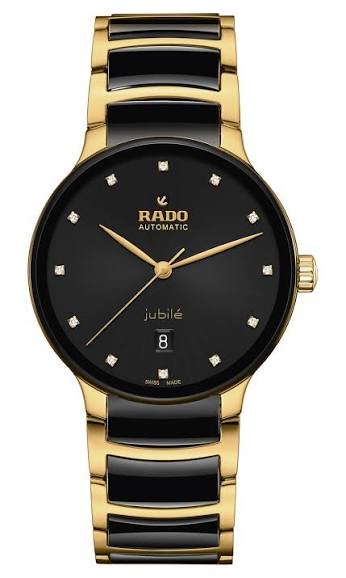
The photographs in the Abbady archive illustrate the range of Rado design. The collection includes the oval hardmetal language of the DiaStar, the rectangular ceramic geometry of the Integral and other shaped Jubilé designs, restrained automatic dress watches, modern chronographs and several interpretations of the Captain Cook.
Because Rado has produced many visually similar references in different sizes, movements, case materials and regional variants, an exact identification should be based on caseback numbers, serial information and movement data rather than appearance alone.
Historical Timeline
- 1917: Fritz, Ernst and Werner Schlup establish Schlup & Co. in Lengnau, Switzerland.
- 1957: The company introduces watches under the Rado name.
- 1962: Rado launches the scratch-resistant DiaStar and the original Captain Cook diving watch.
- 1983: The curved Anatom introduces a strongly ergonomic case-and-bracelet design.
- 1986: The Integral brings high-tech ceramic into a distinctive serially produced watch design; Rado joins SMH, later renamed the Swatch Group.
- 1990s: Ceramica, Sintra and Ceramos-based designs expand Rado’s material vocabulary.
- 2002: The high-tech-diamond V10K demonstrates a surface hardness of 10,000 Vickers.
- 2011: The True Thinline advances ultra-slim ceramic monobloc construction.
- 2017: Rado relaunches the Captain Cook in a modern interpretation of the 1962 original.
- 2021: Captain Cook High-Tech Ceramic combines the revived diving-watch design with Rado’s signature material.
Identification Checklist
- Record the complete caseback reference and serial number.
- Check whether the rotating anchor, dial printing and date typography match the period.
- Identify the movement calibre before ordering parts or arranging service.
- Document case and bracelet materials, including hardmetal, ceramic, Ceramos, stainless steel and plated components.
- Inspect the bracelet, clasp, crown and crystal for original signed parts.
- Compare the watch with official catalogues and service documentation.
- Do not assign an exact reference, material or production year from photographs alone.
Collector and Preservation Guidance
Rado’s hard materials resist ordinary scratches, but they are not indestructible. High-tech ceramic, sapphire and hardmetal can chip or fracture after a sharp impact. Damaged integrated bracelet links and shaped crystals may be difficult to replace, especially on discontinued models.
Do not polish coated, hardmetal or ceramic surfaces using methods intended for ordinary stainless steel. Preserve original geometry and mixed finishes. Vintage water-resistance markings should never be trusted without professional testing, and mechanical movements should be serviced by a qualified watchmaker familiar with the specific calibre.
Record the reference, serial number, movement, dimensions and condition before restoration. Keep replaced original parts, service receipts, boxes and papers with the watch’s provenance.
Why Rado Matters
Rado helped move Swiss watch design beyond precious-metal tradition by making advanced industrial materials central to both function and appearance. Its watches demonstrate how surface science, ergonomics, ceramic engineering and modernist design can shape a brand’s historical identity.
The enduring importance of the DiaStar, Integral, Ceramica and Captain Cook lies in their different answers to the same challenge: creating watches that remain visually distinctive while using materials engineered for everyday wear.
References and Further Research
- Rado — History of the Future
- Rado — Captain Cook history and collection
- Rado — High-tech ceramic and Integral anniversary
- Rado Service — Manuals, references and catalogue
- Swatch Group — Rado brand information
Identification note: Captions describe visible design characteristics and established collections. Exact references, calibres, materials and production years require confirmation from caseback markings, movement data or official documentation.