Russian mechanical watchmaking · Raketa name introduced 1961 · Peterhof heritage
Raketa
Raketa grew from the historic Peterhof factory, founded in 1721 as an Imperial hardstone workshop. The factory began producing jewels for watch movements in 1938 and later manufactured Pobeda watches. The Raketa name—Russian for “rocket”—was created in 1961 in honor of Yuri Gagarin’s space flight. Raketa became known for robust mechanical movements, 24-hour Polar watches, the graphic Big Zero and specialized Soviet-era timepieces. Modern production continues near Saint Petersburg with in-house mechanical calibres.
Abbady photographic archive
Raketa photographs



Origins and period
Peterhof, near Saint Petersburg, Russia
Peterhof factory founded 1721; watch-jewel production from 1938; Raketa brand from 1961 to the present
Raketa in watchmaking
Raketa grew from the historic Peterhof factory, founded in 1721 as an Imperial hardstone workshop. The factory began producing jewels for watch movements in 1938 and later manufactured Pobeda watches. The Raketa name—Russian for “rocket”—was created in 1961 in honor of Yuri Gagarin’s space flight. Raketa became known for robust mechanical movements, 24-hour Polar watches, the graphic Big Zero and specialized Soviet-era timepieces. Modern production continues near Saint Petersburg with in-house mechanical calibres.
Landmark dates
1721 — Peter the Great establishes the Imperial Peterhof Factory
1938 — The factory begins producing ruby jewels for watch mechanisms
1945 — The Pobeda watch name is created
1961 — The Raketa brand is created in honor of Yuri Gagarin’s space flight
1970 — A 24-hour Polar watch is developed for Soviet Antarctic explorers
1971 — The factory receives the Order of the Red Banner of Labour
1980 — Official watches are produced for the Moscow Olympic Games
1991 onward — The post-Soviet transition disrupts production and distribution
2011 — A modernization program begins
2014 — The modern Raketa automatic movement is introduced
2021 — The institution marks 300 years since the founding of the Peterhof factory
Known for
In-house Russian mechanical movements; 24-hour Polar watches; Big Zero; Copernicus; Pilot and naval designs; Soviet Olympic commemoratives; bold Cyrillic typography; unusual time displays; and the historic Petrodvorets Watch Factory.
Movements and innovation
Raketa has produced hand-wound, automatic, calendar and specialized 24-hour mechanical movements. Vintage calibre numbers and bridge markings are central to identification. The modern factory emphasizes vertical manufacture and produces many movement components, including the hairspring. A 24-hour dial must be verified against the installed movement, because mixed or assembled examples are common.
Identification checklist
Record the dial, caseback, crown, movement and inside caseback. Photograph all Cyrillic inscriptions and calibre numbers. Determine whether country markings refer to the USSR or Russia. Confirm that 24-hour dials have the correct 24-hour movement. Compare hands, date wheels, cases and crowns with reliable catalogues. Look for redials, replacement parts and mixed-period assemblies.
Preservation guidance
Service mechanical movements before regular use if their history is unknown. Preserve original dials, hands, crowns and replaced components. Do not assume vintage water resistance; test professionally before exposure to moisture. Store watches dry and away from magnetic fields, and retain boxes, papers, service records and provenance.
Raketa: Russian Watchmaking from Peterhof to the Space Age
Raketa is one of the most distinctive names in Russian watchmaking. Its story connects three very different eras: the Imperial Peterhof stone-cutting works founded in 1721, Soviet industrial watch production, and the modern revival of mechanical manufacture near Saint Petersburg. The Raketa name—Russian for “rocket”—was introduced in 1961 in honor of Yuri Gagarin’s pioneering space flight.
The brand became known for robust mechanical movements and watches designed for practical Soviet needs: 24-hour instruments for polar explorers, specialized models for navigators and military personnel, Olympic commemoratives, simple civilian dress watches and the boldly graphic Big Zero. Modern Raketa continues to reinterpret those themes while manufacturing its own mechanical calibres.
The Peterhof Factory Before Watches
Peter the Great founded the Imperial Peterhof Factory in 1721 near Saint Petersburg. It was originally a lapidary workshop producing hardstone objects and architectural decoration for the Russian court. Under later emperors, the factory became celebrated for complex mosaics, carved stone and prestigious diplomatic gifts.
This early history is important to the institution, but it should not be confused with continuous watch production from 1721. The transition toward horology came much later. In 1938, the factory began producing precision ruby jewels for watch mechanisms—an industrial task that connected its long experience with hard materials to the needs of Soviet timekeeping.
Pobeda and Postwar Watch Production
During the Second World War, the factory was evacuated and contributed precision components to the war effort. In 1945, the Soviet watch name Pobeda—meaning “Victory”—was created. The Peterhof enterprise subsequently became involved in producing watches and components under the wider Soviet industrial system.
Pobeda watches were intended to be practical, affordable and serviceable. Their production helped build the technical base from which the future Raketa brand would emerge. Early watches from the factory therefore may carry Pobeda rather than Raketa on the dial, and collectors should distinguish the institutional history from the later brand name.
1961: The Raketa Name
In 1961, after Yuri Gagarin became the first human to orbit Earth, the Raketa name was created to honor the achievement. “Raketa” means “rocket” in Russian, making the brand an especially clear expression of the Soviet fascination with science, aviation and space exploration.
The factory was commonly known in English as the Petrodvorets Watch Factory, using the Soviet-era name for Peterhof. During the following decades it became a major producer of mechanical wristwatches, supplying both domestic consumers and export markets. Dials can therefore appear with Cyrillic or Latin lettering, and export variants may differ substantially from watches sold inside the Soviet Union.
Mechanical Movements and Vertical Production
Raketa developed a family of durable mechanical movements. Hand-wound calibres such as members of the 2609 family became widely used, while specialized movements supported calendar and 24-hour displays. Modern production includes automatic calibres assembled and decorated at the factory.
The company emphasizes vertical manufacturing: it produces many movement components itself, including the hairspring, a technically demanding part made by only a limited number of manufacturers. Modern display backs often reveal large bridges, red accents and decorative finishing that deliberately express a contemporary Russian identity.
Movement numbers, jewel counts and bridge shapes remain essential for identification. A familiar dial design can appear with different cases or movements, and replacement dials are common in the market. The safest attribution combines the dial, caseback and movement evidence.
The Polar 24-Hour Watch
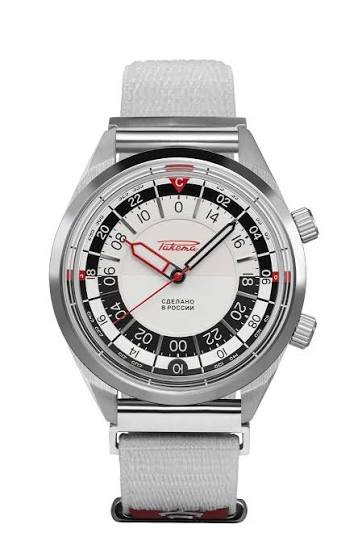
One of Raketa’s most historically important special-purpose watches is the Polar. According to the factory’s history, it was developed in 1970 for members of the 16th Soviet Antarctic Expedition. Its 24-hour display allowed the wearer to distinguish day from night during the long polar summer and winter, when the sun may remain continuously above or below the horizon.
Unlike a conventional twelve-hour watch, the hour hand completes one rotation per day. Authentic vintage 24-hour watches should be checked carefully because ordinary movements, redialed examples and assembled “marriage” watches sometimes appear with polar-style dials.
Design, Typography and the Big Zero
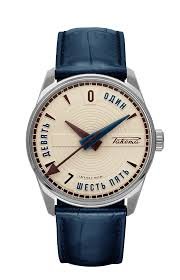
Raketa’s visual character ranges from restrained mid-century dress watches to radical graphic designs. The best-known example is the Big Zero, whose oversized 0, 3, 6 and 9 numerals create an instantly recognizable dial. Other notable families include Copernicus, with hands inspired by celestial motion; Polar and 24-hour watches; Pilot and naval designs; and commemorative models.
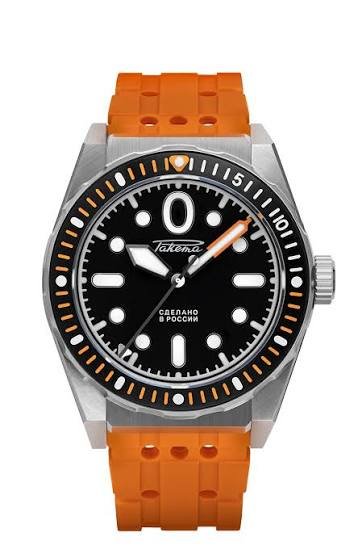
Many watches use Russian words as part of the design. “Сделано в России” means “Made in Russia,” while Soviet-era dials may say “Сделано в СССР,” or “Made in the USSR.” These inscriptions help date the broad period of a watch, but they are not sufficient by themselves to prove originality.
Olympic, Military and Civic Themes
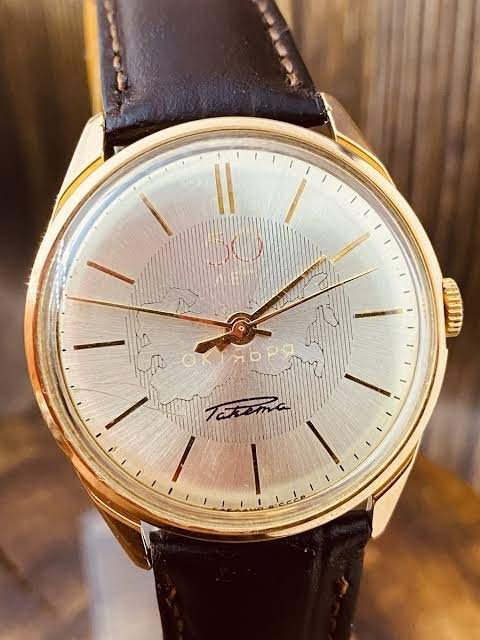
The factory produced official watches connected with the 1980 Moscow Olympic Games. Raketa also created dials celebrating Soviet institutions, cities, military services, exploration and political anniversaries. Such themes make the brand attractive to collectors of social and industrial history as well as horology.
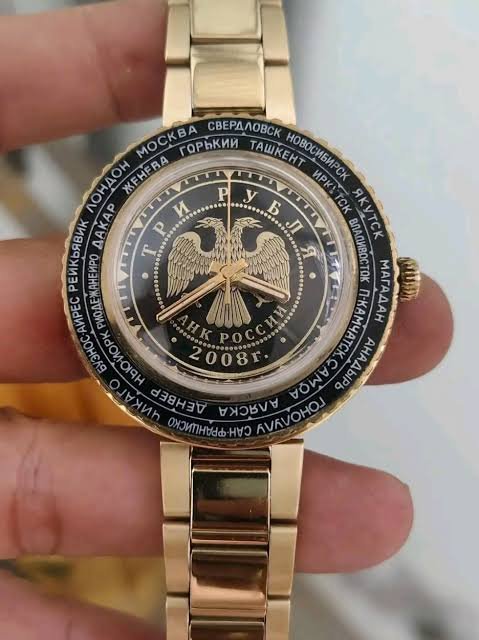
Commemorative imagery requires careful interpretation. Some watches are original factory issues, while others use later printed dials, modern cases or mixed components. A dramatic emblem or inscription should always be examined alongside the movement, case and documented catalogue examples.
After the Soviet Union
The collapse of the Soviet Union disrupted the factory’s traditional production and distribution system. Output declined, ownership and commercial arrangements changed, and the market accumulated large numbers of surplus parts and assembled watches. This period explains why identification can be difficult: genuine components from different years were sometimes combined outside their original factory configuration.
A modernization program began in 2011. The revived manufacture focused on mechanical watches, in-house production and modern reinterpretations of historic Raketa designs. In 2014 the company presented a new automatic movement, and later collections expanded the Big Zero, Polar, Copernicus, Pilot, Baikonur and other themes.
Contemporary Raketa
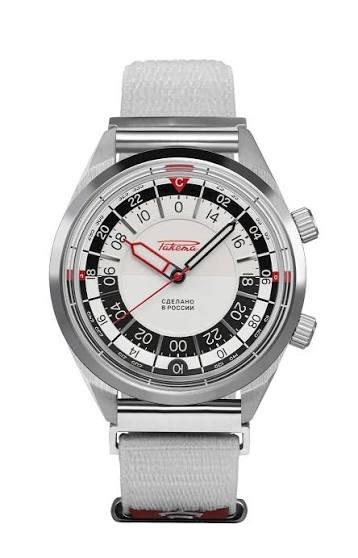
Modern Raketa watches often retain the strong typography and unconventional displays associated with Soviet-era models. Current tool-watch designs may use 24-hour rings, geographic or navigational scales, bold color coding and robust stainless-steel cases. Classic models preserve the large numerals and clean geometry that made vintage Raketa recognizable.
The company also experiments with counterclockwise displays and astronomical concepts. These watches show how Raketa treats time indication as a design subject rather than limiting itself to conventional three-hand layouts.
Photographic Archive
The Abbady photographic archive illustrates both vintage-inspired and contemporary expressions of Raketa. The selection includes a calendar-style dial, a globe motif, a modern diver, a vintage gold-tone watch with geographic decoration, several 24-hour and world-time designs, an exhibition caseback and a civic or commemorative model.
Exact reference names should not be assigned from photographs alone. Raketa has issued closely related designs in multiple editions, and watches assembled from authentic but mismatched parts are common. Caseback numbers, movement markings, dimensions, papers and reliable catalogue comparisons are needed for a defensible identification.
Historical Timeline
- 1721: Peter the Great establishes the Imperial Peterhof Factory as a hardstone workshop.
- 1938: The factory begins producing precision ruby jewels for watch mechanisms.
- 1945: The Pobeda watch name is created at the end of the Second World War.
- 1961: The Raketa brand is created in honor of Yuri Gagarin’s space flight.
- 1970: A 24-hour Polar watch is developed for Soviet Antarctic explorers.
- 1971: The factory receives the Order of the Red Banner of Labour.
- 1980: It produces official watches connected with the Moscow Olympic Games.
- 1991 onward: The post-Soviet transition brings severe disruption and reduced production.
- 2011: A modernization program begins at the historic factory.
- 2014: The modern Raketa automatic movement is introduced.
- 2021: The factory marks 300 years since the founding of the Peterhof institution.
Identification Checklist
- Photograph the dial, caseback, crown, movement and inside caseback.
- Record all Cyrillic inscriptions, calibre numbers and jewel markings.
- Determine whether the dial says USSR, Russia or carries no country marking.
- Check whether a 24-hour dial is paired with a genuine 24-hour movement.
- Compare the hands, date wheel, case and crown with period catalogue examples.
- Look for evidence of refinishing, newly printed dials or mixed-period components.
- Do not rely on a commemorative emblem alone to establish provenance.
Preservation and Servicing
Vintage Raketa movements are generally robust, but age, dried lubricant and previous repairs can cause wear. A qualified watchmaker should inspect and service a mechanical watch before regular use. Avoid replacing original hands, dials or crowns unless necessary; retain every removed part and document the work.
Do not assume that an older watch remains water resistant. Acrylic crystals, crown seals and case gaskets may have deteriorated. Keep vintage watches away from water until professionally tested. Store them dry, avoid magnetic fields and preserve boxes, papers and service records.
Why Raketa Matters
Raketa represents more than a watch brand. It links Imperial craft traditions, Soviet mass production, polar exploration, space-age symbolism and contemporary independent manufacturing. Its greatest designs are direct and functional, but they are also culturally specific: the unusual numerals, Cyrillic text and 24-hour displays make history visible on the wrist.
For collectors, Raketa offers both opportunity and responsibility. The wide variety is fascinating, yet the prevalence of redials and assembled watches makes careful documentation essential. A well-researched example can preserve an important chapter of Russian industrial and design history.
References and Further Research
- Raketa Watch Factory — Official history
- Raketa Watch Factory — Official website
- Raketa Watch Factory — Movement manufacture
- Raketa Watch Factory — Manufacture
Identification note: Captions describe visible characteristics only. Exact references, production dates and originality require confirmation from movement, caseback and documentary evidence.