Tianjin mechanical watchmaking since 1955
Sea-Gull
Sea-Gull grew from Tianjin’s 1955 domestic wristwatch project into a major Chinese maker of mechanical watches and movements. Its 1963 aviation chronograph is a historic milestone; the pictured watches span dress, sports, open-heart and chronograph styles.
Abbady photographic archive
Sea-Gull photographs
Origins and period
Tianjin, China
Factory origins in 1955; aviation chronograph project in 1963
Sea-Gull in watchmaking
Sea-Gull grew from Tianjin’s 1955 domestic wristwatch project into a major Chinese maker of mechanical watches and movements. Its 1963 aviation chronograph is a historic milestone; the pictured watches span dress, sports, open-heart and chronograph styles.
Landmark dates
1955 — Tianjin factory made the Five-Star (Wu Xing) wristwatch
1963 — Aviation chronograph project developed for the Air Force
1966 — Dongfeng watch designed and mass-produced
2005 — Sea-Gull developed its own tourbillon
2009 — ST9250 combined tourbillon, minute repeater and perpetual calendar
Known for
Five-Star (Wu Xing) early wristwatch, 1963 aviation chronograph heritage, mechanical movements, tourbillons and contemporary dress and sports watches.
Movements and innovation
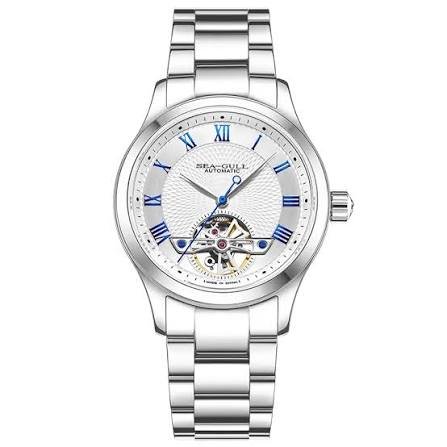
Sea-Gull lists the hand-wound ST1901 column-wheel chronograph and automatic ST2130 date movement among its calibres, alongside more complicated mechanisms. These examples do not establish the calibres of photographed watches. Open-heart displays reveal the balance area and are not automatically tourbillons.
Identification checklist
Check the dial signature, case-back reference, movement designation, serial markings and original papers. Distinguish an open-heart display from a tourbillon. Confirm an individual watch’s calibre and water-resistance rating from its actual markings and documentation.
Preservation guidance
Have mechanical watches serviced by a qualified watchmaker. Keep leather straps dry; pressure-test any watch before swimming or diving, regardless of a printed depth rating. Retain the case, dial and parts in original condition when possible.
Historical development
Sea-Gull traces its origins to Tianjin, where watchmaking began in 1955 with the Five-Star (Wu Xing), described by the company as China’s first domestically developed wristwatch. The factory went on to produce mechanical watches and movements at scale. Its 1963 aviation chronograph project became a defining reference for the brand’s later chronograph reissues.
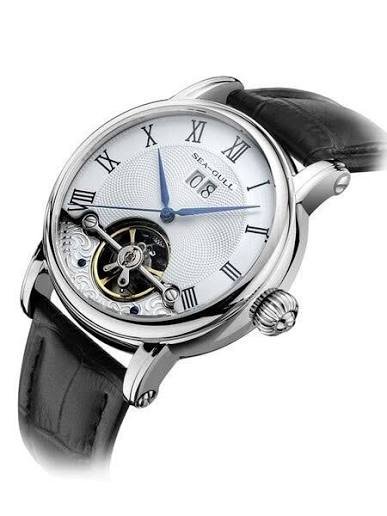
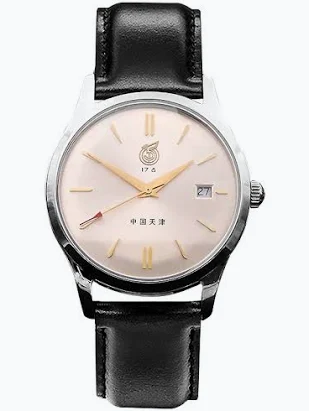
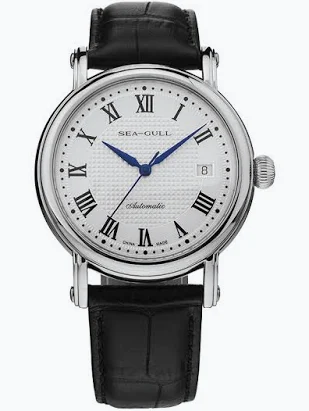
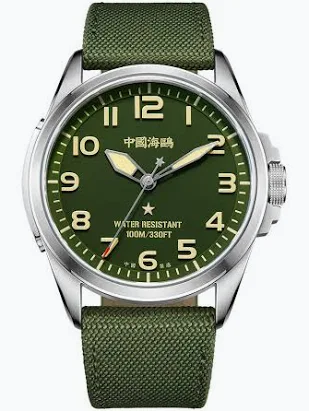
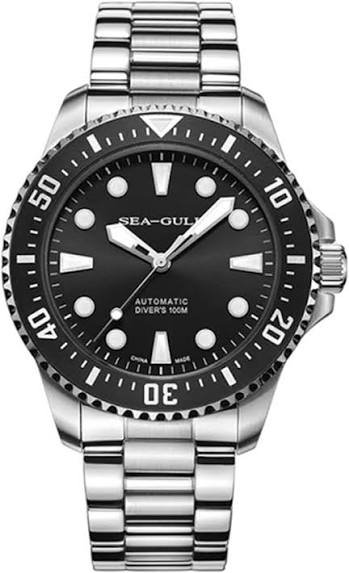
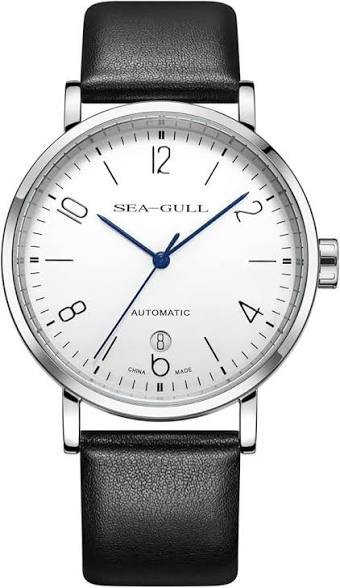
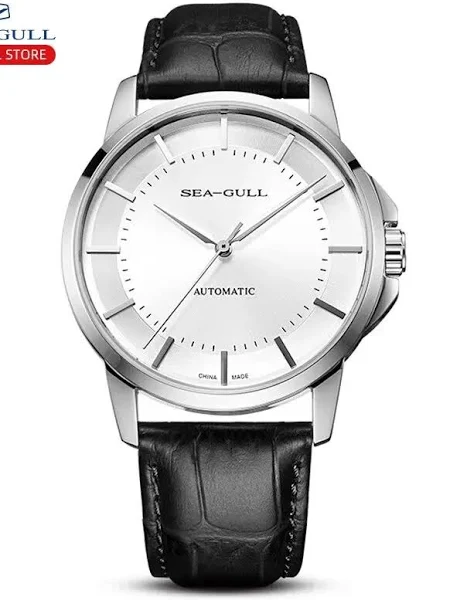
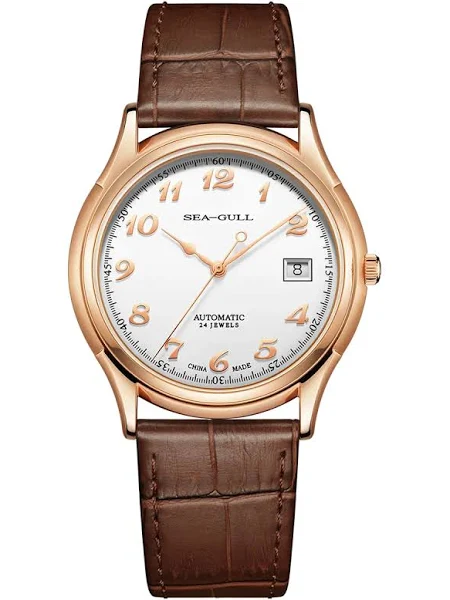
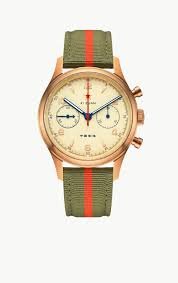
Sea-Gull’s official history describes the 1966 Dongfeng watch and a later expansion into complicated mechanical watchmaking, including tourbillons, minute repeaters and perpetual calendars. The company now presents a wide range of dress, sports and more elaborate watches. The images here show that breadth: a Chinese-script vintage-style dial, contemporary automatic dress models, open-heart displays, a green field-style watch, a black diver and a small chronograph image.
Movements and design
Sea-Gull identifies its ST1901 as a hand-wound column-wheel chronograph and its ST2130 as an automatic three-hand date movement. These are examples of the manufacturer’s movement range, not calibre assignments for the watches pictured here. A visible balance on an open-heart dial should not automatically be called a tourbillon. The “Automatic,” “24 Jewels,” “100M” and other inscriptions in the gallery apply only to the individual photographed pieces.
Identification and care
For a specific watch, record its case-back reference, movement markings and accompanying documentation. Verify the claimed water-resistance of a diver-style watch before immersion, especially after service or age. A qualified watchmaker can inspect and maintain the mechanical movement without damaging dial finishes or original components.
References and credits
SEA-GULL official — About Us and Timeline ↗