Swiss watchmaking from Le Locle since 1853
Tissot
Tissot was founded in Le Locle in 1853. Its history includes antimagnetic watches in the 1930s, the Visodate in the 1950s, the original PRX design in 1978, the T-Touch in 1999 and the Le Locle anniversary collection in 2003.
Abbady photographic archive
Tissot photographs
Origins and period
Le Locle, Switzerland
Founded in 1853; active today
Tissot in watchmaking
Tissot was founded in Le Locle in 1853. Its history includes antimagnetic watches in the 1930s, the Visodate in the 1950s, the original PRX design in 1978, the T-Touch in 1999 and the Le Locle anniversary collection in 2003.
Landmark dates
1853 — Tissot watchmaking business established in Le Locle
1930s — Antimagnetic watch developed
1954 — Visodate with integrated date display introduced
1978 — Original PRX design appears
1999 — T-Touch tactile watch introduced
2003 — Le Locle collection marks 150th anniversary
2021 — PRX design relaunched
Known for
Accessible Swiss mechanical and quartz watches; Visodate, Seastar, PRX, Le Locle and T-Touch; sports chronographs and timing.
Movements and innovation
Tissot has made mechanical, automatic and quartz watches as well as tactile and connected models. The antimagnetic developments of the 1930s, date-display Visodate and tactile T-Touch represent different eras. Chronograph functions and water-resistance specifications vary by reference.
Identification checklist
Read the dial and full case-back reference; photograph case, bracelet, clasp and crown; compare reference with official Tissot specifications. For chronographs, check subdial functions, pushers and reset alignment. Verify movement and serial details with authorized service where necessary; styling alone cannot date a watch.
Preservation guidance
Keep records and original parts. Have an authorized watchmaker inspect an older mechanical movement before extensive use. Replace quartz batteries when depleted. Test seals before water exposure; avoid heat, moisture and strong magnetic fields, and service according to the model’s requirements.
Historical development
Tissot began in Le Locle, Switzerland, in 1853, when the Tissot family established its watchmaking business. Its long history combines Swiss production with practical experimentation, from early pocket watches to modern mechanical, quartz and connected timepieces.
In the 1930s the company developed an antimagnetic watch. The Visodate story dates to the 1950s, with a prominent date display. Its sport and water-oriented lines include Seastar and the PR family. The original integrated-bracelet PRX design appeared in 1978; Tissot revived it in 2021. Tissot introduced the tactile T-Touch in 1999. The Le Locle collection launched for the brand’s 150th anniversary in 2003.
Designs in this gallery
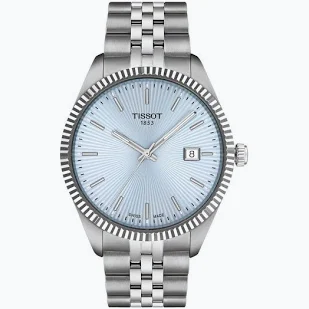
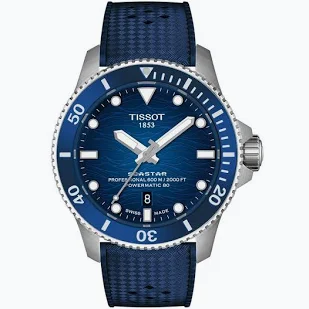
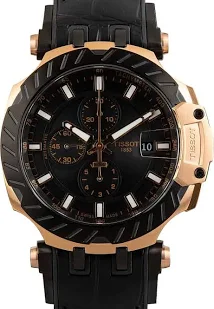
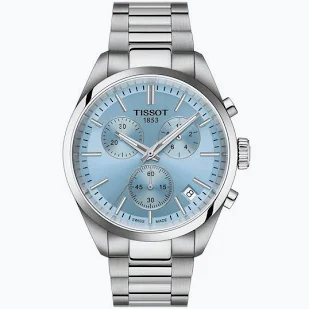
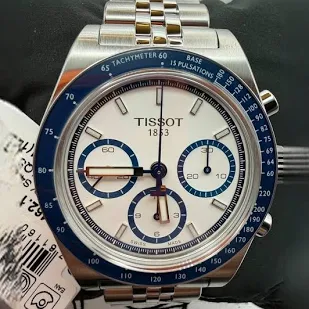
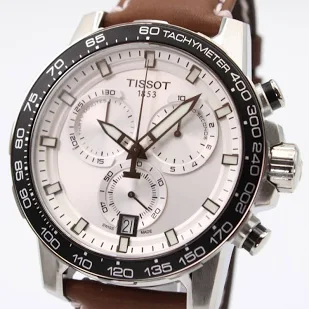
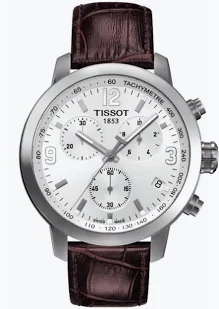
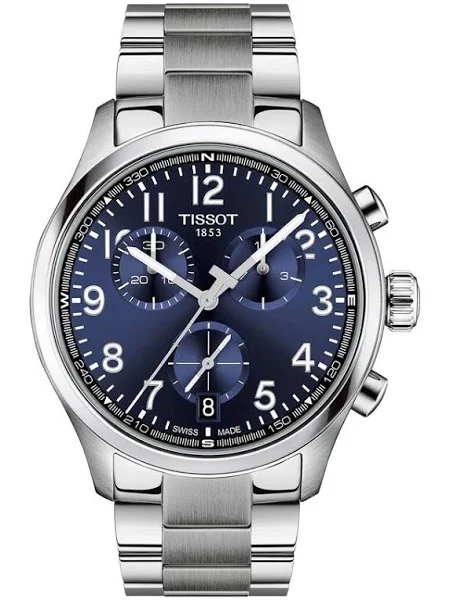
The eight Tissot photographs show a pale blue three-hand watch, a Seastar diving design, several chronographs and sport watches. Their dial markings offer starting points for identification, but a photograph cannot establish exact reference, movement, condition, originality or production year. The two other supplied files labelled Tissot00 and Tissot2 visibly bear the Bulova name and are excluded from this Tissot catalogue.
Collecting and care
Record a watch’s full reference and case-back markings, then compare details against the manufacturer’s catalogue. Check that a chronograph starts, stops and resets correctly. An older water-resistance marking is not evidence that current seals are sound; have the watch pressure-tested before exposure to water.