Swiss utility watches shaped by the heritage of the Swiss Army knife
Wenger
Founded as a Jura cutlery company in 1893, Wenger became one of the two historic makers associated with the Swiss Army knife. It entered watchmaking in 1988, building an accessible Swiss-made range around legibility, durability and outdoor utility. Victorinox acquired Wenger in 2005 and continues the name principally for watches and travel gear.
Abbady photographic archive
Wenger photographs

Origins and period
Courtételle and Delémont, Canton of Jura, Switzerland
Founded 1893; watches introduced in 1988; a Victorinox brand since 2005
Wenger in watchmaking
Founded as a Jura cutlery company in 1893, Wenger became one of the two historic makers associated with the Swiss Army knife. It entered watchmaking in 1988, building an accessible Swiss-made range around legibility, durability and outdoor utility. Victorinox acquired Wenger in 2005 and continues the name principally for watches and travel gear.
Landmark dates
1893 — Paul Boéchat & Cie. establishes a cutlery works in Courtételle, near Delémont.
1897 — Théodore Wenger joins the enterprise; the Wenger name subsequently becomes associated with the company.
1908 — The Swiss Army divides its knife orders between the two historic Swiss producers, Victorinox and Wenger.
1988 — Wenger begins producing Swiss watches, extending its practical product identity to the wrist.
2005 — Victorinox acquires Wenger while maintaining Wenger as a distinct brand.
2013 — Wenger knife production is integrated into Victorinox; Wenger focuses on watches and travel gear.
2016 — Wenger is relaunched internationally with the heritage statement “A Swiss Company Since 1893.”
Known for
Swiss-made quartz watches; field, sport, dive and chronograph designs; highly legible dials; red-and-white shield logo; accessible pricing; Swiss Army knife heritage.
Movements and innovation
Predominantly Swiss quartz movements, chosen for accuracy, reliability and low maintenance. Collections include simple time-and-date watches, day-date models, chronographs, GMT displays and dive-style watches with rotating bezels. Stainless-steel cases, luminous hands and indices, practical water resistance and strong dial legibility are recurring characteristics.
Identification checklist
Confirm the Wenger shield and wordmark on the dial; locate the reference and material markings on the case-back; verify the Swiss Made inscription; compare the hands, numerals, bezel, crown and date layout with documented examples; check that water-resistance claims match the case-back; treat “Swiss Military” wording as branding, not proof of military issue.
Preservation guidance
Keep the reference and case-back engravings legible and avoid aggressive polishing. Replace depleted quartz batteries promptly to reduce leakage risk. Pressure-test any watch before water exposure, especially an older diver. Preserve original dials, hands, crowns and bezels whenever possible, and retain replaced components and service records.
Historical development
Wenger’s story begins in 1893 in Courtételle, near Delémont in Switzerland’s Jura region, where Paul Boéchat & Cie. established a cutlery works. The firm later moved its operations to Delémont and, under the Wenger name, became one of the two historic producers associated with the Swiss Army knife. That background—durable tools, clear function and a strong Swiss identity—eventually shaped the company’s watches.
From pocket tools to wristwatches
Wenger entered wristwatch production in the late 1980s. Its watchmaking did not pursue traditional haute horlogerie; instead, the brand translated the practical language of its knives into affordable Swiss-made watches. Typical Wenger pieces emphasize legibility, robust cases, water resistance and useful complications. Field watches, divers, chronographs and straightforward day-date models became central to the range, usually powered by dependable Swiss quartz movements.
Design identity
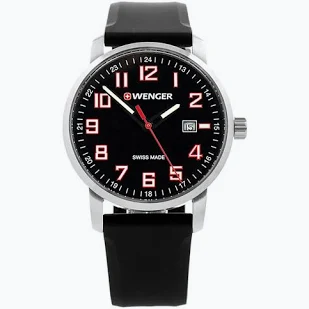
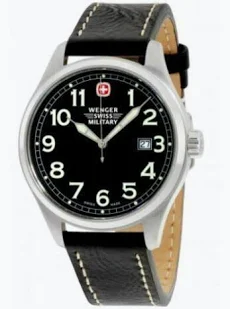
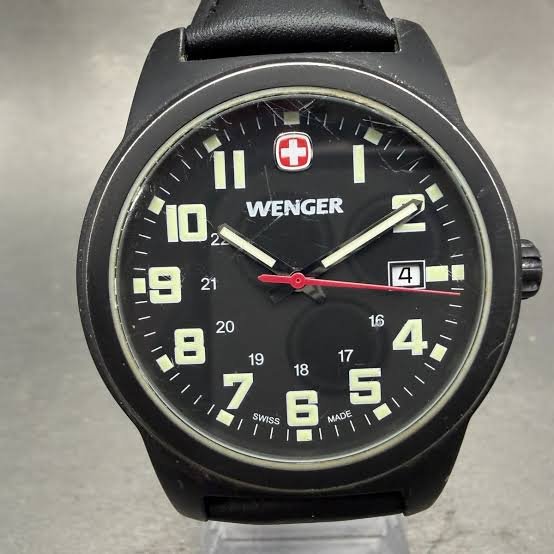
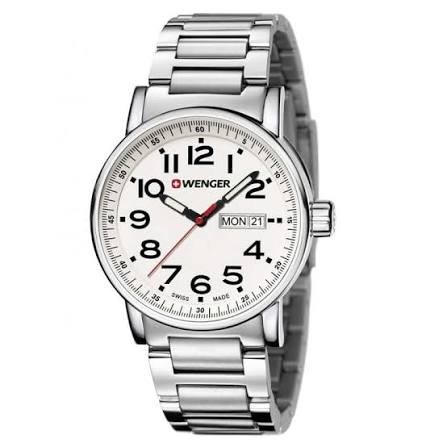
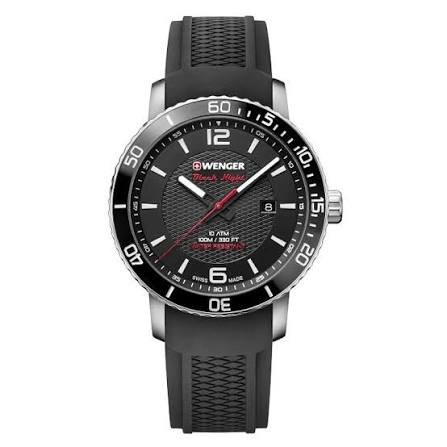
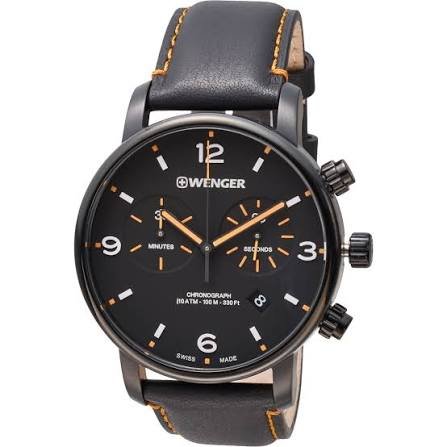
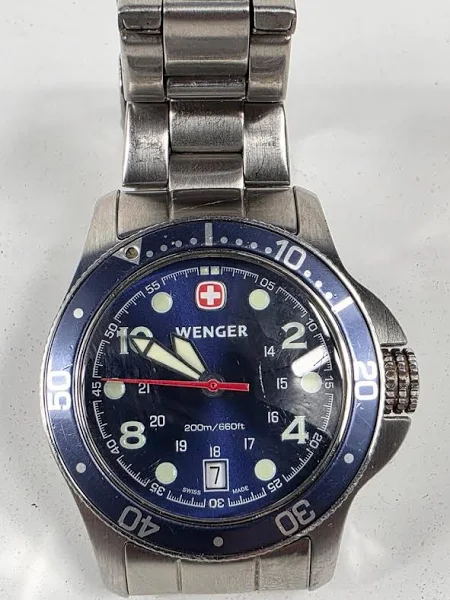
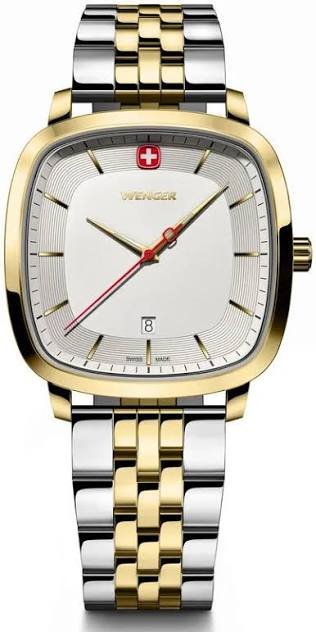
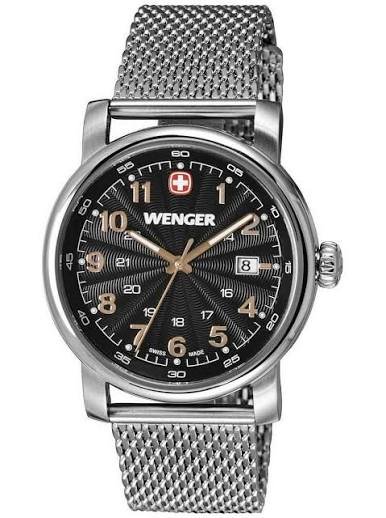
Across several decades, Wenger watches have used the red-and-white shield as their strongest visual signature. Large Arabic numerals, luminous hands, minute tracks and restrained military cues recur frequently. The photographs here show that breadth: a utilitarian case-back engraved with a multi-tool, highly legible black-dial field watches, a white-dial day-date model, a 200-metre diver, a modern chronograph and more formal rectangular and mesh-bracelet designs.
Victorinox stewardship
Victorinox acquired Wenger in 2005, keeping the long-established Swiss company in Swiss ownership. Wenger continued as a distinct brand. In 2013, the knife ranges were integrated into Victorinox, while Wenger’s name remained focused principally on watches and travel gear. Victorinox later relaunched Wenger internationally with the positioning “A Swiss Company Since 1893,” reinforcing the brand’s heritage while separating its contemporary identity from knife production.
Movements and construction
Most modern Wenger watches are Swiss-made quartz models, valued for accuracy, low maintenance and affordability. Depending on the collection, they may offer central seconds, date or day-date displays, chronographs, GMT indications and rotating dive bezels. Stainless-steel cases are common, with mineral or sapphire-coated crystals varying by model and period. Water-resistance ratings must always be read from the individual case-back rather than inferred from appearance.
Collecting and identification
Wenger watches are best identified by the dial logo, Swiss Made marking, reference information on the case-back and the construction details appropriate to the stated model. Collectors should distinguish ordinary age and honest wear from replaced dials, hands, bezels or crowns. The brand produced many references and regional variants, so a model number and clear case-back photograph are essential for precise attribution. “Swiss Military” wording is a design or branding cue, not evidence that a watch was officially issued to military personnel.
Legacy
Wenger occupies an accessible but historically distinctive place in Swiss watchmaking. Its watches connect the visual language of the Swiss Army knife with practical, everyday timekeeping. Their appeal lies less in rarity or elaborate movements than in honest usability: clear dials, sturdy construction and recognizably Swiss industrial design.
Historical development
Wenger began as a cutlery manufacturer in the Swiss Jura and became one of the official makers of the Swiss Army knife. The company later extended its practical outdoor identity to watches and travel products; Victorinox acquired Wenger in 2005 while preserving the brand.