From integrated manufacture to the high-frequency El Primero
Zenith
Founded in Le Locle by Georges Favre-Jacot in 1865, Zenith pioneered the integrated manufacture model and built an international reputation for precision. Its 1969 El Primero became one of the first automatic chronographs and the first integrated high-frequency design operating at 36,000 vibrations per hour. Saved during the quartz crisis by Charles Vermot, the calibre remains central to Zenith’s modern Chronomaster, Defy and Pilot collections.
Abbady photographic archive
Zenith photographs

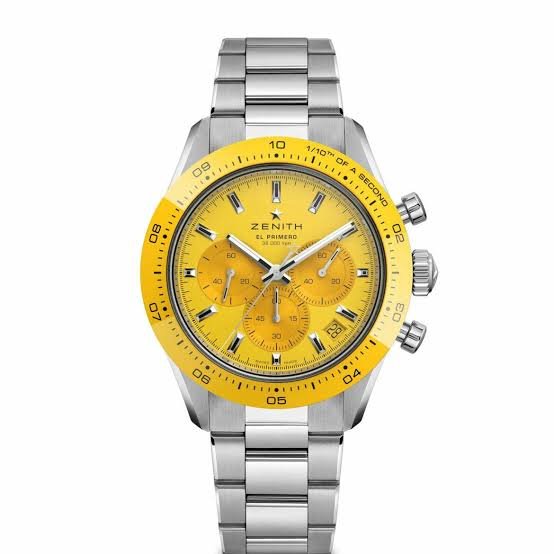
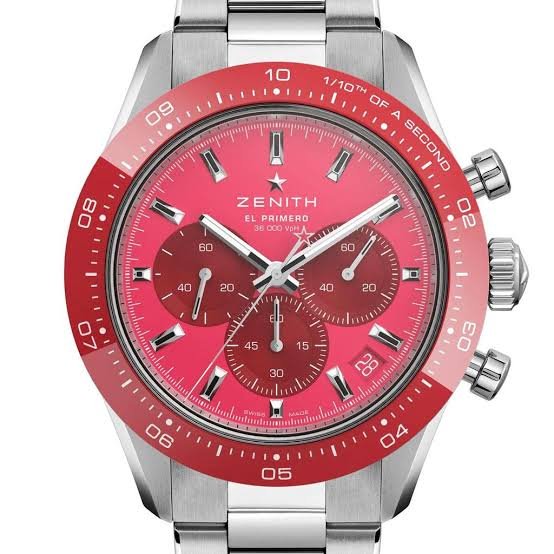
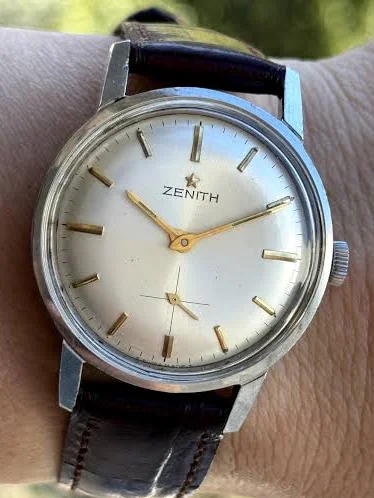
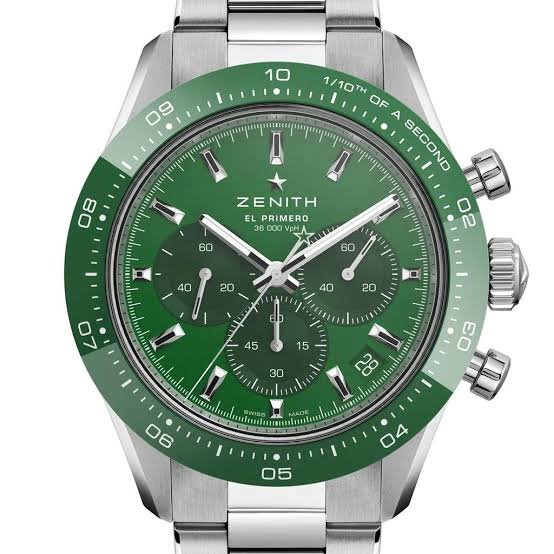
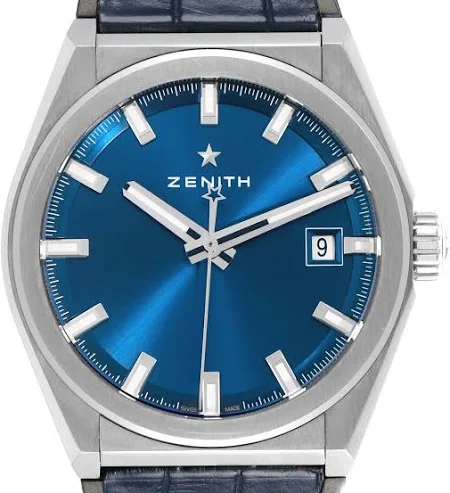
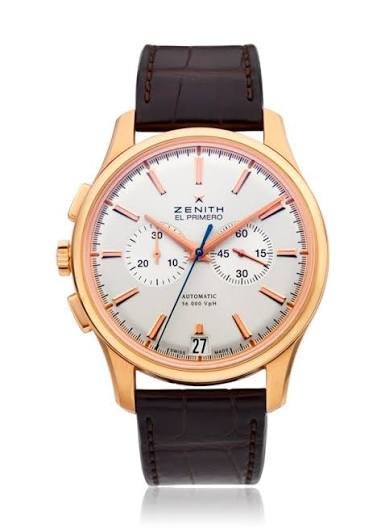
Origins and period
Le Locle, Neuchâtel, Switzerland
Founded in 1865; Zenith name adopted in 1911; El Primero introduced in 1969
Zenith in watchmaking
Founded in Le Locle by Georges Favre-Jacot in 1865, Zenith pioneered the integrated manufacture model and built an international reputation for precision. Its 1969 El Primero became one of the first automatic chronographs and the first integrated high-frequency design operating at 36,000 vibrations per hour. Saved during the quartz crisis by Charles Vermot, the calibre remains central to Zenith’s modern Chronomaster, Defy and Pilot collections.
Landmark dates
1865 — Georges Favre-Jacot establishes the manufacture in Le Locle.
1900 — The manufacture receives major recognition at the Paris Universal Exhibition.
1911 — The company officially adopts the Zenith name.
1959 — Zenith acquires Martel Watch Co., strengthening its chronograph expertise.
1969 — Zenith unveils the 36,000-vph automatic El Primero chronograph.
1975 — Mechanical chronograph production is ordered to stop during the quartz crisis.
1975–1976 — Charles Vermot secretly preserves the El Primero tooling and plans.
1980s — El Primero production resumes as mechanical watchmaking revives.
1988 — A modified El Primero begins powering the automatic Rolex Daytona.
1999 — Zenith joins the LVMH group.
2017 — The Defy El Primero 21 displays hundredths of a second using a 50-hertz chronograph oscillator.
Known for
El Primero high-frequency chronographs; Chronomaster; Defy; Pilot watches; observatory chronometry; integrated manufacture; the star emblem.
Movements and innovation
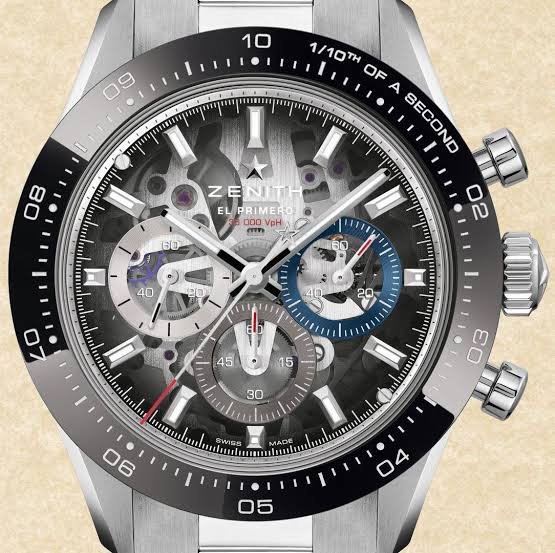
The El Primero is an integrated automatic column-wheel chronograph operating at 36,000 vibrations per hour, allowing measurement to one-tenth of a second. Modern El Primero 3600-series calibres display tenths directly with a central hand rotating once every ten seconds. Zenith has also produced Elite automatic calibres, historical hand-wound movements and the dual-escapement Defy El Primero 21 capable of hundredths-of-a-second display.
Identification checklist
Confirm the reference and serial numbers; inspect the movement calibre; compare the star logo, dial typography, subdial colours and date position with documented examples; verify tachymeter or decimal scales; examine case edges for excessive polishing; check that hands, crown, pushers, bezel and bracelet are period-correct; distinguish Zenith watches from unrelated products sharing the word Zenith.
Preservation guidance
Preserve original dials, hands, pushers, crowns, bezels and bracelets. Avoid polishing angular Defy or chronograph cases, where lost facets cannot be restored. High-frequency El Primero movements require a specialist familiar with correct lubrication and chronograph adjustment. Service before regular use, avoid water exposure unless recently pressure-tested, and retain all replaced components and documentation.
Origins of the manufacture
Zenith was founded in 1865 in Le Locle by Georges Favre-Jacot, who was only 22. His radical idea was to gather the many specialized trades of watchmaking under one roof, improving coordination, consistency and industrial precision. This integrated manufacture model helped Zenith control both movement production and finished watches at a scale unusual for the period. The manufacture remains at its original Le Locle site.
The Zenith name and precision
The company initially operated under its founder’s name. After winning recognition for a movement called “Zenith,” the firm formally adopted the Zenith name in 1911. The star became its emblem. Observatory chronometry and precision timekeeping shaped the company’s reputation; over decades Zenith produced pocket watches, marine chronometers, wristwatches, aviation instruments and complicated movements.
El Primero: the high-frequency breakthrough
On 10 January 1969 Zenith unveiled the El Primero, one of the first automatic chronograph movements and the first to combine automatic winding, an integrated column-wheel chronograph and a high frequency of 36,000 vibrations per hour. That five-hertz rate allowed the mechanism to resolve one-tenth of a second. Early references such as the A386 established the familiar overlapping grey, blue and anthracite subdials that remain a Zenith signature.
The quartz crisis and Charles Vermot
During the quartz crisis, Zenith’s owners ordered mechanical chronograph production stopped in 1975 and intended to dispose of the El Primero tooling. Watchmaker Charles Vermot secretly preserved the presses, plans, cams and technical equipment in the manufacture’s attic. His intervention enabled production to restart when demand for mechanical chronographs returned in the 1980s.
Revival and wider influence
The revived El Primero supplied movements to other respected houses, including Ebel and Rolex. A modified lower-frequency version powered the automatic Rolex Daytona from 1988 until 2000. Zenith joined LVMH in 1999, giving the manufacture resources to expand its own collections and develop increasingly ambitious high-frequency chronographs.
Defy, Pilot and Chronomaster
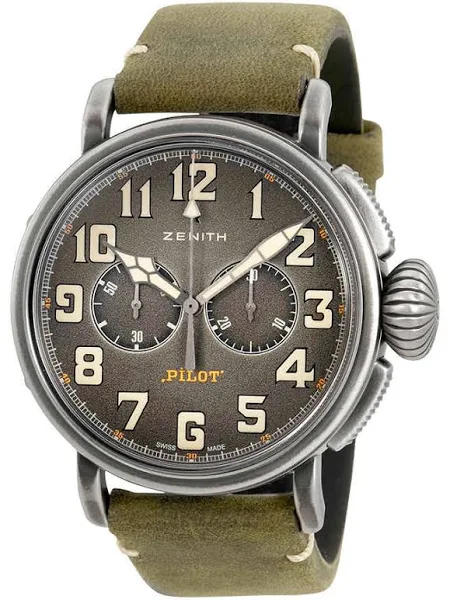
Zenith’s identity extends beyond one movement. The Defy line, introduced in the late 1960s, paired robust construction with angular cases and bold modern styling. Pilot watches recall the company’s early aviation instruments and its historic right to place “Pilot” on the dial. Chronomaster models reinterpret the El Primero lineage, while contemporary Defy watches explore openworked displays, integrated bracelets and chronographs capable of displaying hundredths of a second.
Movements and manufacture
Zenith is notable for maintaining extensive movement production in Le Locle. Alongside the El Primero family, it has produced Elite automatic calibres and numerous historical hand-wound movements. Modern El Primero 3600-series movements make the high-frequency escapement visually useful by driving the chronograph seconds hand once around the dial every ten seconds, directly displaying tenths of a second.
Collecting and identification
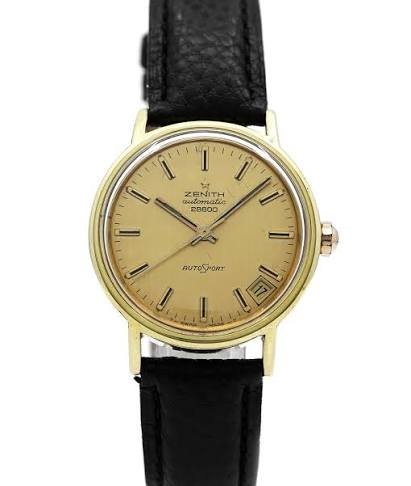
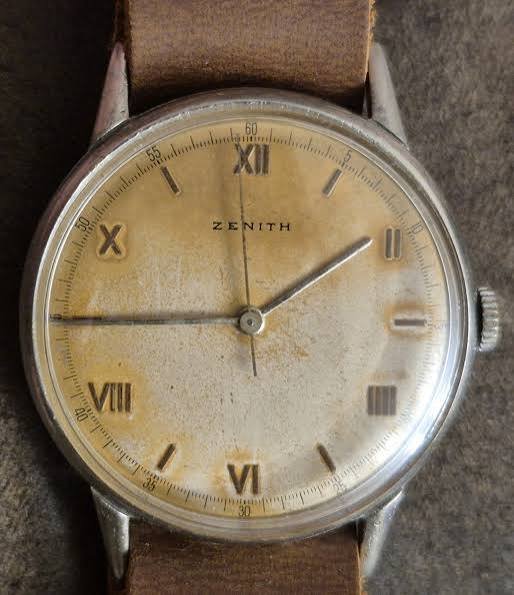
Collectors should record the case reference, serial numbers, movement calibre, dial signature and dimensions. Vintage Zenith watches vary widely, from understated small-seconds dress pieces to AutoSport models, Defy sports watches and professional chronographs. On El Primero examples, confirm subdial colours, date position, tachymeter or decimal scale, movement calibre and case proportions. Replacement dials, hands, bezels and heavily polished cases materially affect historical integrity.
Legacy
Zenith’s legacy rests on the union of industrial organization and precision mechanics. From nineteenth-century manufacture principles to the El Primero’s high-frequency architecture, the company repeatedly treated accurate time measurement as both an engineering discipline and a visual experience. Its continuing presence in the original Le Locle manufacture gives that history unusual physical continuity.