Saxon Precision Watchmaking, Reborn in Glashütte
A. Lange & Söhne
Ferdinand Adolph Lange founded his precision-watch workshop in Glashütte in 1845, helping transform the economically struggling Saxon town into Germany’s most important watchmaking center. The family firm became renowned for high-grade pocket watches, precision engineering and the distinctive three-quarter plate. Expropriation after the Second World War ended the independent company, but Ferdinand Adolph Lange’s great-grandson Walter Lange re-established the name in 1990. The modern manufacture presented its first collection in 1994 and has since become a leading expression of German haute horlogerie.
Abbady photographic archive
A. Lange & Söhne photographs
Origins and period
Glashütte, Saxony, Germany
Founded 1845; modern manufacture re-established 1990
A. Lange & Söhne in watchmaking
Ferdinand Adolph Lange founded his precision-watch workshop in Glashütte in 1845, helping transform the economically struggling Saxon town into Germany’s most important watchmaking center. The family firm became renowned for high-grade pocket watches, precision engineering and the distinctive three-quarter plate. Expropriation after the Second World War ended the independent company, but Ferdinand Adolph Lange’s great-grandson Walter Lange re-established the name in 1990. The modern manufacture presented its first collection in 1994 and has since become a leading expression of German haute horlogerie.
Landmark dates
1815 — Ferdinand Adolph Lange is born in Dresden.
1845 — Lange establishes his watchmaking workshop in Glashütte and begins training local apprentices.
1848 — He becomes mayor of Glashütte and continues developing the town’s watchmaking infrastructure.
1868 — Ferdinand Adolph’s sons join the business, and the firm adopts the name A. Lange & Söhne.
1948 — The company is expropriated in East Germany and later absorbed into the state-owned Glashütte watchmaking combine.
1990 — Walter Lange registers Lange Uhren GmbH in Glashütte and begins the modern revival with Günter Blümlein.
1994 — The revived manufacture presents its first four watches: LANGE 1, ARKADE, SAXONIA and TOURBILLON “Pour le Mérite”.
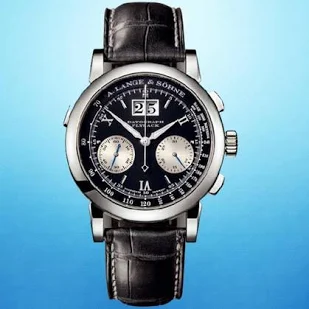
1999 — The DATOGRAPH introduces a newly developed manufacture flyback chronograph movement with an outsize date.
2009 — The ZEITWERK debuts with mechanically driven jumping hour and minute numerals.
2013 — The GRAND COMPLICATION becomes the modern manufacture’s most complex wristwatch.
2019 — The ODYSSEUS launches as the company’s first sporty-elegant watch family.
2023 — A. Lange & Söhne documents 71 manufacture calibres developed since the 1990 revival.
Known for
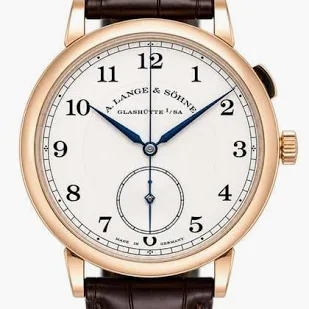
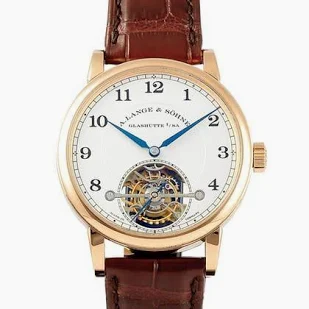
The LANGE 1 and its outsize date; the DATOGRAPH flyback chronograph; the ZEITWERK mechanical digital display; the 1815 family; tourbillons and grand complications; three-quarter plates, screwed gold chatons, blued screws, hand-engraved balance cocks and exceptional movement finishing.
Movements and innovation
Modern A. Lange & Söhne movements are developed, manufactured, decorated and assembled in Glashütte. Hallmarks include German-silver plates and bridges, the historic three-quarter plate, hand engraving, screwed gold chatons and carefully finished steelwork. The LANGE 1 calibre L901.0 paired an asymmetric dial with a patented outsize-date mechanism. The TOURBILLON “Pour le Mérite” combined a tourbillon with a fusée-and-chain transmission, while the DATOGRAPH established an integrated manufacture chronograph. The ZEITWERK uses a constant-force mechanism to control its precisely jumping numerical display. Many Lange movements are assembled twice so that finishing and final adjustment can be completed to the manufacture’s standards.
Identification checklist
Record the exact model and reference, case metal, case number and separate movement number. Modern genuine examples should show precise dial printing, sharply finished hands and appliqués, correct outsize-date typography where applicable, and a highly finished manufacture calibre visible through the case back. Look for the three-quarter plate or appropriately styled bridges, hand-engraved balance cock, blued screws and screwed gold chatons, but compare every feature with the correct reference because layouts vary by calibre. Early pocket watches require specialist evaluation of signatures, serial numbers, hallmarks and movement architecture. Because convincing counterfeits exist, do not authenticate from the dial or photographs alone; obtain an extract, service history or examination by A. Lange & Söhne or a qualified specialist.
Preservation guidance
Treat every Lange as a precision mechanical instrument. Avoid shocks, magnetic fields, moisture and operating calendar or chronograph controls contrary to the model’s instructions. Do not polish cases or refinish dials without considering the loss of original geometry and collector value. Wind and set gently, keep leather straps dry, and never assume vintage water resistance. The manufacture recommends a complete overhaul approximately every five to seven years. Preserve the original box, papers, service records, buckle and replaced parts; case and movement numbers are important for registration, provenance and future service.
Historical development
Ferdinand Adolph Lange established precision watchmaking in Glashütte in 1845 and helped create the town’s specialist horological industry. After the original company was absorbed into the East German state combine, Walter Lange revived the family name in 1990; the first modern collection appeared in 1994.