The Ultra-Thin Geneva Innovator and Its Later Seiko-Era Legacy
Jean Lassale
Jean Lassale emerged in Geneva during the 1970s with an exceptionally ambitious goal: to make mechanical watches dramatically thinner. Watchmaker Pierre Mathys designed the hand-wound calibre 1200, only 1.2 mm thick, and the automatic calibre 2000, approximately 2.08 mm thick. Their unusual construction supported train wheels on miniature ball bearings instead of conventional upper bridges. The original Bouchet-Lassale enterprise encountered financial difficulty in 1979; its movement technology continued through Lemania-derived calibres, while the Jean Lassale name passed to Seiko and appeared on later Swiss and Japanese-made luxury, jewellery, quartz and mechanical watches. These later watches must be distinguished from the rare original ultra-thin mechanical pieces.
Abbady photographic archive
Jean Lassale photographs
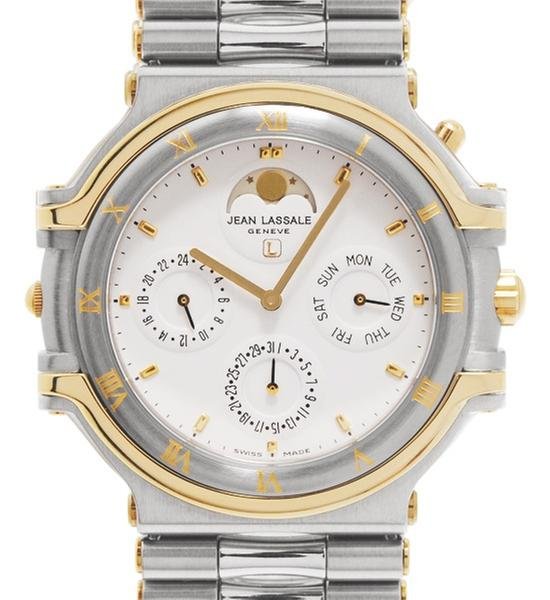
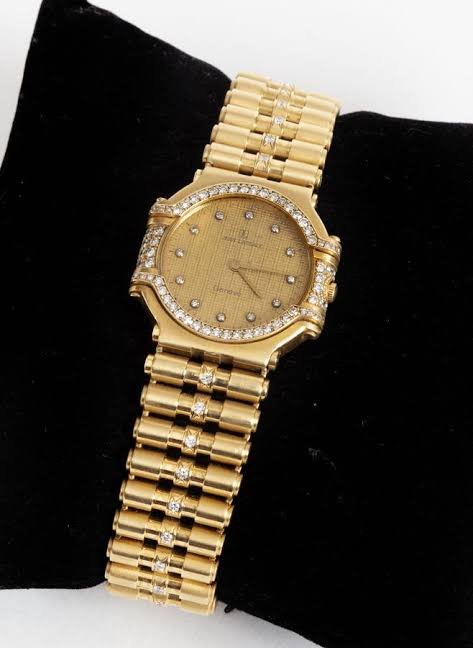
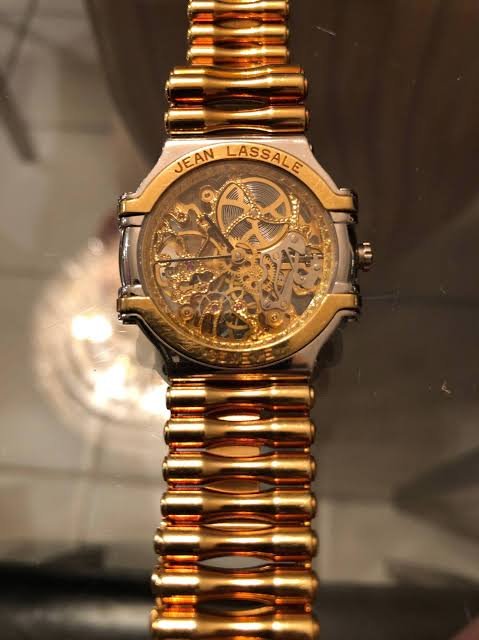
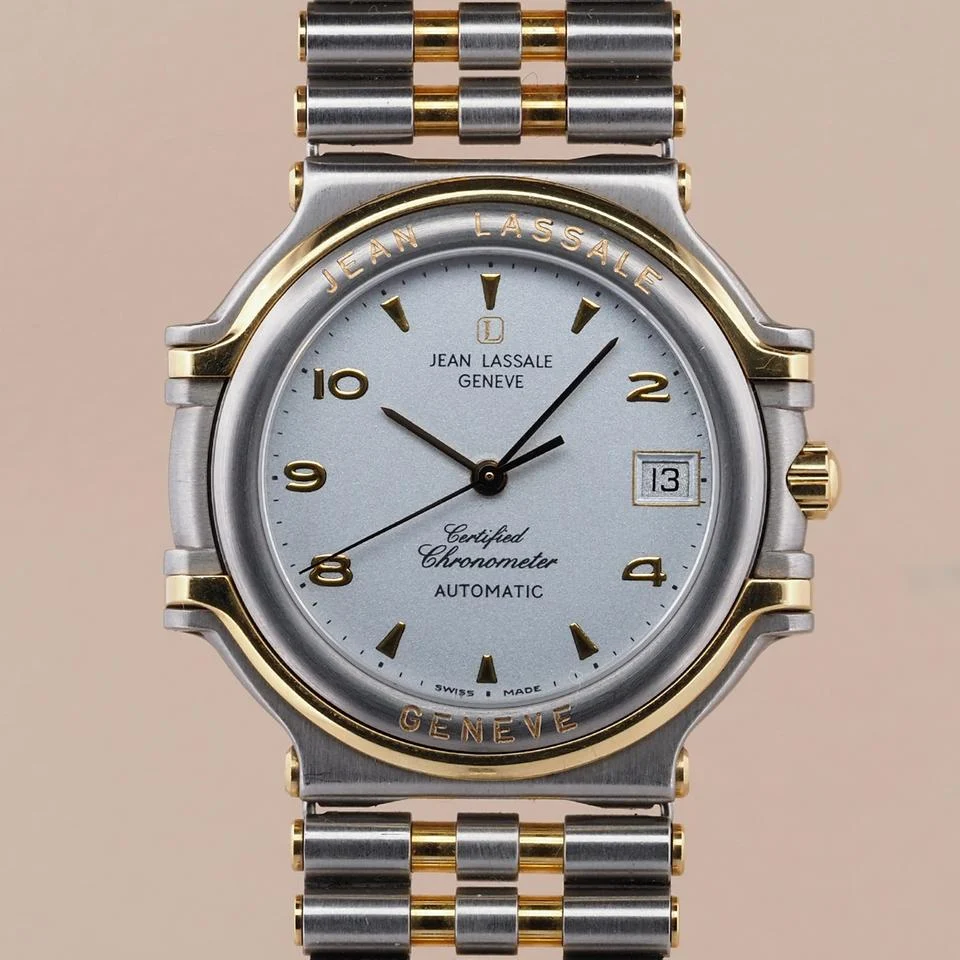
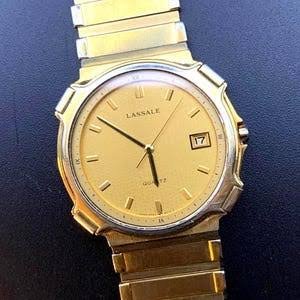
Origins and period
Geneva, Switzerland
Brand established in the 1970s
Jean Lassale in watchmaking
Jean Lassale emerged in Geneva during the 1970s with an exceptionally ambitious goal: to make mechanical watches dramatically thinner. Watchmaker Pierre Mathys designed the hand-wound calibre 1200, only 1.2 mm thick, and the automatic calibre 2000, approximately 2.08 mm thick. Their unusual construction supported train wheels on miniature ball bearings instead of conventional upper bridges. The original Bouchet-Lassale enterprise encountered financial difficulty in 1979; its movement technology continued through Lemania-derived calibres, while the Jean Lassale name passed to Seiko and appeared on later Swiss and Japanese-made luxury, jewellery, quartz and mechanical watches. These later watches must be distinguished from the rare original ultra-thin mechanical pieces.
Landmark dates
1976 — Pierre Mathys’s ultra-thin movement design is patented for Bouchet-Lassale, and the calibre 1200 and automatic calibre 2000 are presented in Basel.
1976 — Bouchet-Lassale is established in Geneva and receives awards for its ultra-thin watchmaking concept.
1977 — The movement receives further recognition at an international inventors exhibition in New York.
1978–1979 — Jean Lassale works with Lemania-Lugrin and the SSIH/Omega industrial network on production and licensing.
1979 — Financial difficulties stop the original company’s movement production.
Circa 1980 — Seiko acquires the Jean Lassale name, while the technical documentation and movement rights follow a separate path associated with Lemania.
Early 1980s — Nouvelle Lemania develops successor calibres 1210 and 2010 from the ultra-thin architecture; related movements later appear in watches by other high-end firms.
1980s–1990s — Jean Lassale and Lassale-branded collections expand into thin quartz, jewellery, dress and complicated-looking luxury watches, often very different from the original calibre-1200 concept.
2003 — The later Jean Lassale corporate entity is reported bankrupt in Geneva.
2006 — The company is removed from the Swiss commercial register.
Known for
The 1.2 mm hand-wound calibre 1200; the approximately 2.08 mm automatic calibre 2000; miniature ball-bearing movement architecture; ultra-thin precious-metal watches; and later Jean Lassale or Lassale-branded Swiss and Seiko-era dress, jewellery and quartz watches.
Movements and innovation
The hand-wound calibre 1200 measured approximately 20.4 mm in diameter but only 1.2 mm in thickness. Its wheels were mounted cantilever-style in a thin main plate and supported by miniature single-race ball bearings, eliminating conventional bridges over much of the train. The automatic calibre 2000 applied related principles at roughly 2.08 mm. This construction achieved extraordinary thinness but is delicate, difficult to service and dependent on scarce specialist parts. Later Jean Lassale watches may instead contain conventional Swiss mechanical, quartz or Seiko-family movements; the dial name alone does not prove the presence of a calibre 1200 or 2000.
Identification checklist
First separate original 1970s ultra-thin mechanical watches from later Seiko-era and other Jean Lassale products. Record the exact dial wording—JEAN LASSALE GENÈVE, JEAN LASSALE, LASSALE or SEIKO LASSALE—plus case reference, precious-metal hallmarks, movement calibre and serial numbers. A genuine calibre 1200 or 2000 must be identified from the movement architecture and markings, not merely from a thin case. Check whether complications are mechanical or quartz and whether diamond settings are factory-original. Compare bracelet construction, clasp signatures and case engravings with period references. Because later production varies widely and counterfeits or assembled watches may exist, obtain specialist inspection before assigning a rare ultra-thin calibre or high value.
Preservation guidance
Original calibre 1200 and 2000 watches should be serviced only by a specialist familiar with their cantilevered wheel train and miniature ball bearings; ordinary movement handling can cause irreversible damage. Do not force winding, setting or calendar controls, and do not run a dry or damaged movement. Avoid polishing ultra-thin cases or integrated bracelets because their geometry and hallmarks are easily weakened. For later quartz pieces, replace exhausted batteries promptly and inspect for leakage. Treat vintage water resistance as absent until professionally tested. Preserve original bracelets, clasps, boxes, papers, movement photographs and every removed component.
Historical development
Jean Lassale became famous during the 1970s for exceptionally thin mechanical watches. Its celebrated Calibre 1200 used an unusual construction with components mounted on both sides of the main plate, allowing a complete hand-wound movement only about 1.2 millimetres thick.