Vintage professional chronographs and the modern Swiss revival
Le Jour
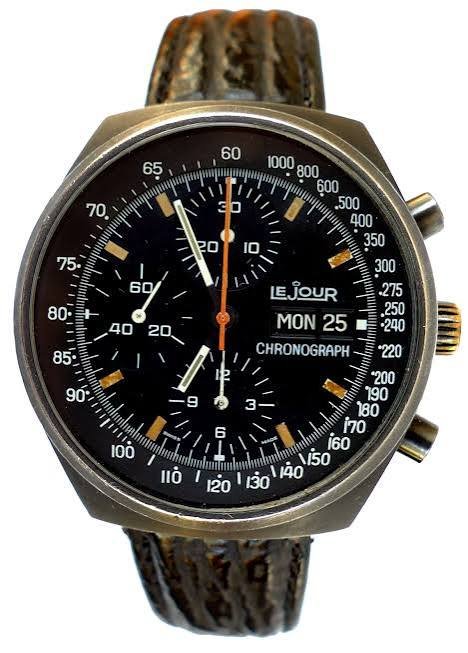
Le Jour emerged in the mid-20th century and became best known for robust sports and professional watches, especially chronographs with aviation, marine and motor-racing themes. Vintage examples frequently used proven Swiss ébauches and many are closely related to watches sold by French maker Yema, particularly in export markets. The original business disappeared amid the quartz-era disruption of the 1970s. A modern Le Jour revival began in 2015, combining retro-inspired designs with contemporary Swiss production. Because the historic name appeared across several suppliers and market arrangements, identification is strongest when dial, case, reference and movement evidence are considered together.
Abbady photographic archive
Le Jour photographs
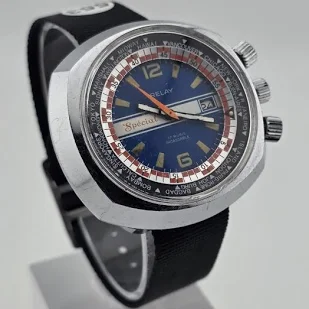
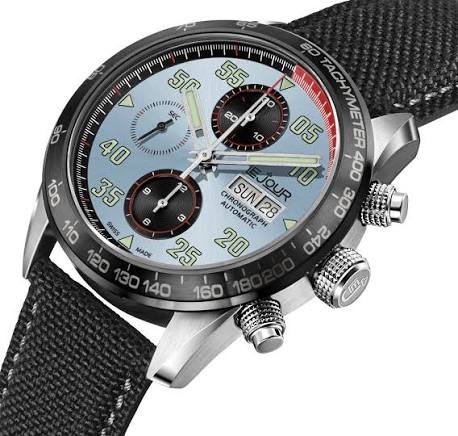
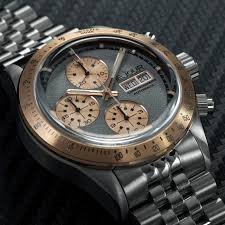
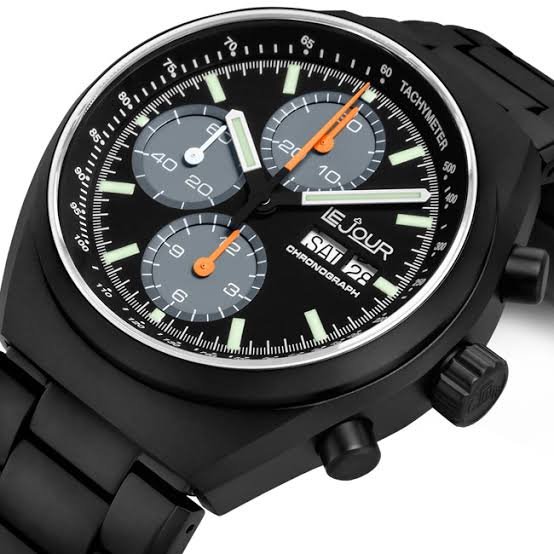
Origins and period
Historic brand associated with French and Swiss watchmaking; modern production is Swiss-made
Mid-20th century–1970s; revived from 2015
Le Jour in watchmaking
Le Jour emerged in the mid-20th century and became best known for robust sports and professional watches, especially chronographs with aviation, marine and motor-racing themes. Vintage examples frequently used proven Swiss ébauches and many are closely related to watches sold by French maker Yema, particularly in export markets. The original business disappeared amid the quartz-era disruption of the 1970s. A modern Le Jour revival began in 2015, combining retro-inspired designs with contemporary Swiss production. Because the historic name appeared across several suppliers and market arrangements, identification is strongest when dial, case, reference and movement evidence are considered together.
Landmark dates
Mid-20th century — Le Jour emerges as an independent watch name serving international distributors.
1960s — The brand becomes associated with sports and professional watches, including Valjoux-powered chronographs.
1970s — Racing, marine and aviation-themed chronographs define the vintage collector identity of Le Jour.
Late 1970s–1980s — The quartz revolution disrupts traditional mechanical-watch businesses and the original Le Jour operation disappears.
2015 — The Le Jour name is revived with vintage-inspired, Swiss-made collections.
Today — The range includes chronographs, divers and dress watches drawing on the brand’s historic design language.
Known for
Purpose-built chronographs; racing, aviation, yachting and diving designs; colourful scales and high-contrast dials; Valjoux-powered mechanical watches; and a modern Swiss-made revival inspired by vintage tool watches.
Movements and innovation
Vintage Le Jour watches used a variety of sourced Swiss mechanical movements rather than a single manufacture calibre. Collector favourites include hand-wound Valjoux chronograph families and later automatic chronographs based on the Valjoux 7750 architecture; exact calibre must be confirmed from the movement itself. Simpler three-hand and calendar watches may contain other Swiss ébauches. Modern Le Jour models use contemporary Swiss automatic or quartz movements according to collection. Dial layout alone is not sufficient proof of calibre, because similar cases and registers were used with different movements.
Identification checklist
• Confirm the LE JOUR or Le Jour signature, typography and any CHRONOGRAPH, AUTOMATIC, SWISS or SWISS MADE wording against the period style.
• Record the case-back reference, serial and all interior case-back marks before relying on a seller’s model name.
• For chronographs, compare register positions, day/date display, pusher layout and crown position with the installed calibre.
• Inspect the movement for the maker’s calibre stamp; many genuine vintage examples used Valjoux or other established Swiss ébauches.
• Compare case, bezel, handset and dial details with documented Yema-related counterparts, but treat resemblance as supporting evidence rather than proof.
• Check that lume colour, printing, hands and date discs age consistently; sharp new printing on a heavily worn case may indicate refinishing or replacement parts.
• Separate vintage Le Jour pieces from the post-2015 revival by reference format, dimensions, construction and modern branding.
• Obtain photographs of the movement and inner case back before purchase whenever possible.
Preservation guidance
Preserve original dials, hands, bezels, crowns, pushers and case finishes whenever serviceable; cosmetic originality is central to the historical value of vintage Le Jour chronographs. Do not polish a case or relume a dial without documenting the decision. A qualified watchmaker should service the movement, inspect the chronograph works and replace only worn functional parts. Old water-resistance claims are not reliable: pressure-test before moisture exposure and otherwise keep the watch dry. Avoid operating calendar quick-set mechanisms near midnight, and never force sticky chronograph pushers. Retain replaced parts, service invoices and clear photographs of all movement and case markings. Store dry, away from magnets, heat and direct sunlight, with leather straps allowed to breathe.
Historical development
Le Jour was a French watch name closely associated with Swiss-made sports and professional watches. Many vintage examples share cases, movements, or designs with specialist manufacturers such as Yema, reflecting the distribution and private-label relationships common in the period.