A pioneer of modern independent watchmaking and the double-ellipse case
Daniel Roth
Daniel Roth founded his independent marque in 1988 and became a pioneer of modern independent watchmaking. His signature double-ellipse case housed tourbillons, chronographs, ultra-thin watches, retrograde displays, perpetual calendars and the Papillon. The contemporary revival continues this design language through La Fabrique du Temps Louis Vuitton.
Abbady photographic archive
Daniel Roth photographs
Origins and period
Vallée de Joux and Geneva, Switzerland
Independent marque founded in 1988; contemporary revival active today
Daniel Roth in watchmaking
Daniel Roth founded his independent marque in 1988 and became a pioneer of modern independent watchmaking. His signature double-ellipse case housed tourbillons, chronographs, ultra-thin watches, retrograde displays, perpetual calendars and the Papillon. The contemporary revival continues this design language through La Fabrique du Temps Louis Vuitton.
Landmark dates
1988 — Daniel Roth establishes his independent marque
1988 — Asprey of London orders a subscription series of 25 tourbillons
1989 — The tourbillon establishes the brand’s signature double-ellipse design
Early 1990s — Dual-pusher, monopusher and split-seconds chronographs appear
1990 — Automatic ultra-thin model introduced
1991 — Retrograde-hours interpretation introduced
1990s — Perpetual calendar developed with Philippe Dufour
1999 — Papillon created for the marque’s tenth anniversary
2023 — Daniel Roth begins its contemporary revival through La Fabrique du Temps Louis Vuitton
Known for
Double-ellipse cases; one-minute tourbillons; hand-finished guilloché dials; chronographs; ultra-thin watches; retrograde displays; perpetual calendars; Papillon jumping-hour watches.
Movements and innovation
Historical models include hand-wound one-minute tourbillons; Lemania 2320-based dual-pusher chronographs; Lemania 15CHT monopushers; Venus 179 split-seconds chronographs; Frédéric Piguet 71-based automatic ultra-thin watches; retrograde hours; perpetual calendars; and the Papillon with jumping hours and retrograde minutes. Exact specifications vary by reference and era.
Identification checklist
Record the reference and individual number; verify case dimensions and precious-metal hallmarks; inspect the double-ellipse geometry, crown and lugs; compare dial typography, guilloché and hand shapes; identify the calibre and inscriptions; check originality of dial and components; review service records, invoices and provenance; obtain specialist authentication.
Preservation guidance
Retain original components, buckles and documents. Avoid unnecessary polishing of the sculptural case. Entrust tourbillons, chronographs, perpetual calendars and skeleton watches only to qualified specialists. Keep dry unless recently pressure-tested. Protect from magnets, chemicals, shock and extreme temperature.
Historical development
Daniel Roth established his independent marque in 1988 after developing deep experience in traditional Swiss watchmaking, most notably during the modern revival of Breguet. His aim was to create watches that joined classical complications, hand craftsmanship and a design language unmistakably his own. The most recognizable element became the double-ellipse case: neither round nor rectangular, but formed from two curved ends joined by straight sides.
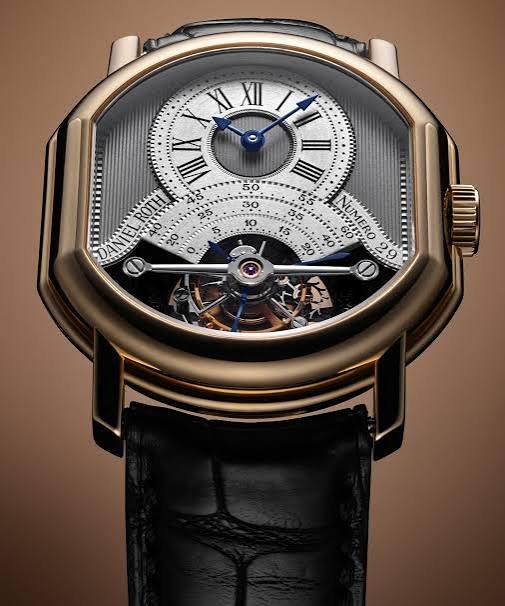
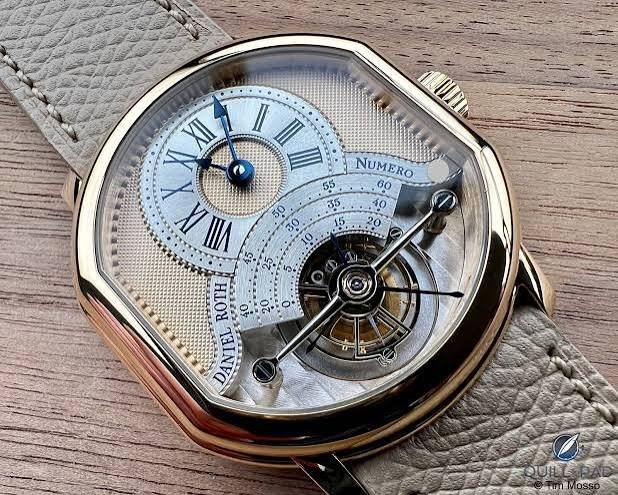
Roth began with the complication most closely associated with his name, the one-minute tourbillon. An early subscription order for 25 watches from Asprey of London helped launch the marque. The original reference 2187/C187 displayed the tourbillon prominently and used the caseback for additional indications including the date and power reserve. Its architecture, guilloché dials and distinctive seconds display established the visual vocabulary of the brand.
Independent complications
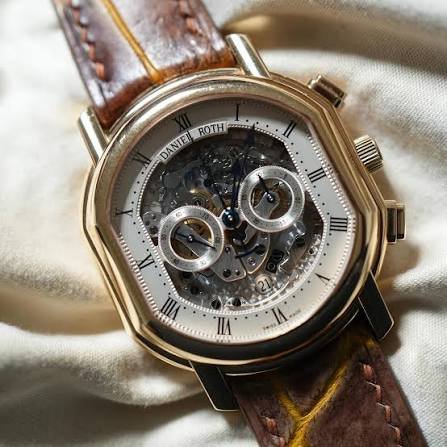
During the 1990s Daniel Roth expanded rapidly beyond the tourbillon. The dual-pusher chronograph reference 2147/C147 used the celebrated hand-wound Lemania 2320 base, while the rare monopusher chronograph reference 2137/C137 drew on the historic Lemania 15CHT. A split-seconds chronograph based on the Venus 179 followed in very small numbers.
Roth also explored restrained time-only watches. The automatic ultra-thin reference 2107/C107 used the Frédéric Piguet calibre 71, and a thinner hand-wound interpretation followed. His retrograde-hours watch placed an arc-shaped hour display above a subsidiary seconds indication, combining traditional finishing with an unconventional reading of time.
For the perpetual calendar, Roth worked with Philippe Dufour on a design using aperture—or guichet—displays for the day and month. The Papillon, created for the marque’s tenth anniversary and released in 1999, combined jumping hours, retrograde minutes and central running seconds. Its name honored Roth’s father, a collector of butterflies.
Design language
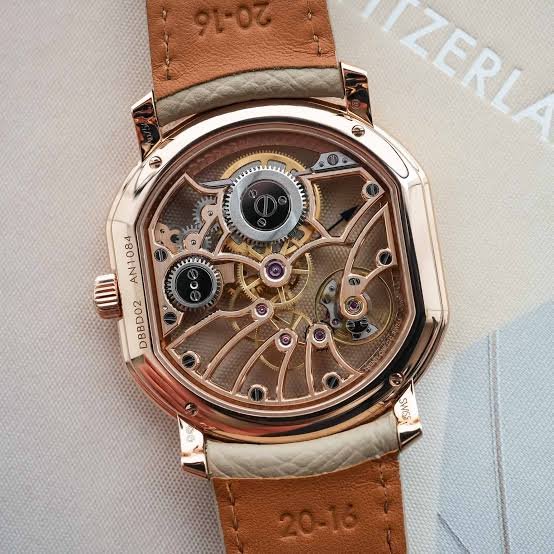
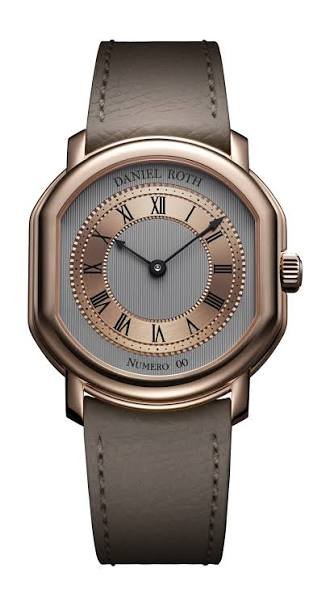
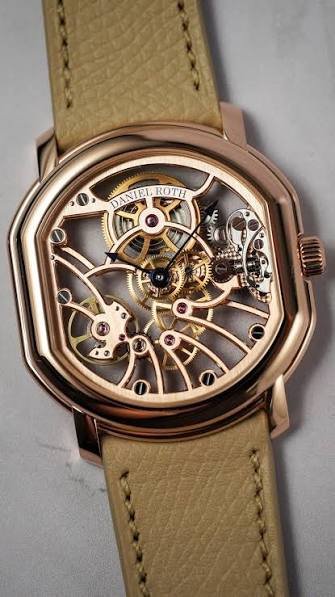
The classic Daniel Roth watch is recognized by its double-ellipse case, layered dial construction, Roman numerals, blued hands and elaborate hand-finished surfaces. Pinstripe and clous de Paris guilloché, finely printed tracks and unusual display layouts give the watches an architectural character. Skeletonized variants expose the mechanism while retaining a structured chapter ring and legible indications.
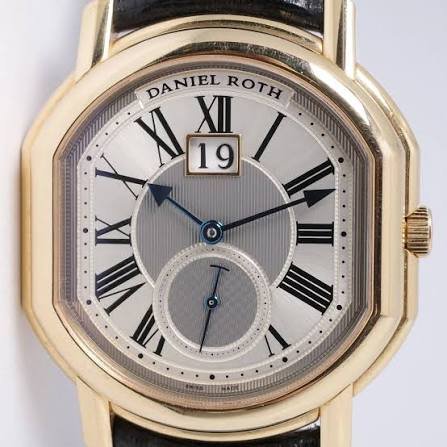
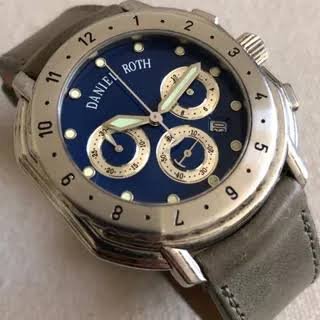
Later periods of production broadened the catalogue to sportier chronographs, large-date models and additional skeleton watches. These pieces may differ significantly from the earliest independent work, so collectors should identify the production era as well as the model family.
Movements and craftsmanship
Historical Daniel Roth watches used carefully selected high-grade movements that were modified, finished and adapted to the marque’s complications. The official archive documents hand-wound tourbillons and chronographs, automatic and manual ultra-thin calibres, perpetual calendars, retrograde displays and the Papillon. Many were produced in limited numbers and precious-metal cases.
The revived Daniel Roth marque continues the signature case and traditional approach through contemporary movements developed and finished at La Fabrique du Temps Louis Vuitton. Modern examples should be documented separately from the original independent-era watches, even when they deliberately echo the early designs.
Identification and authenticity
Authentication requires more than the name on the dial. Record the reference and individual number, case dimensions, hallmarks, dial construction, movement calibre and inscriptions. Compare the case profile, crown, typography, subdial positions and hand shapes with the official historical archive. A correct movement and case must be evaluated together because refinished dials, replacement parts and assembled watches can affect originality.
The double-ellipse form is widely associated with Daniel Roth, but it alone does not prove authenticity. High-value examples should be examined by a specialist familiar with independent watchmaking. Service documentation, invoices, boxes and prior auction or dealer records can strengthen provenance.
Preservation
Preserve original dials, hands, crowns, buckles, cases and movement components whenever possible. Avoid unnecessary polishing, which can change the crisp geometry of the case and remove hallmarks. Complicated and skeletonized movements should be serviced only by watchmakers qualified for their construction. Keep the watch dry unless it has passed a recent pressure test, and store it away from magnets, chemicals, shocks and extreme temperatures.
Legacy
Daniel Roth is regarded as a pioneer of the modern independent-watchmaking movement. His combination of historic complications, distinctive case design and limited artisanal production demonstrated that an individual watchmaker could build a recognizable high-horology identity outside the large established maisons. The renewed marque preserves that legacy while introducing the design to a new generation of collectors.