Swiss roots, Tavannes connections and an international name since the 1870s
Sandoz
Henri Frédéric Sandoz established a Swiss watchmaking enterprise during the 1870s and later helped create the manufacturing organization that became associated with Tavannes Watch Co. and Cyma. The Sandoz name subsequently appeared on a wide range of mechanical and quartz watches. Since the 1970s, regional rights and licensing arrangements have produced distinct Sandoz businesses, so later watches must be attributed by market, distributor, case and movement rather than by the dial name alone.
Abbady photographic archive
Sandoz photographs
Origins and period
Le Locle and Tavannes, Switzerland; later regional operations
1870s–present, with multiple regional trademark and licensing histories
Sandoz in watchmaking
Henri Frédéric Sandoz established a Swiss watchmaking enterprise during the 1870s and later helped create the manufacturing organization that became associated with Tavannes Watch Co. and Cyma. The Sandoz name subsequently appeared on a wide range of mechanical and quartz watches. Since the 1970s, regional rights and licensing arrangements have produced distinct Sandoz businesses, so later watches must be attributed by market, distributor, case and movement rather than by the dial name alone.
Landmark dates
1870s — Henri Frédéric Sandoz establishes Henri Sandoz & Cie. in the Swiss watchmaking region.
1890 — Sandoz and members of the Schwob families establish a manufacturing concern near Tavannes.
1890s–1910s — The Tavannes organization expands into a major industrial watch producer closely associated with Cyma.
1913 — Henri Frédéric Sandoz dies after overseeing the growth of the Tavannes enterprise.
Mid-20th century — The Sandoz name appears on dress, automatic, calendar, ladies’ and sports watches for international markets.
1970s onward — Trademark and licensing arrangements divide the Sandoz name among several regional businesses.
Quartz era — Sandoz-branded watches include Swiss quartz dress and sports models alongside continuing mechanical production.
2000 onward — Grupo Munreco develops and distributes the contemporary Sandoz operation in Spain.
Known for
Swiss mechanical and quartz watches; historic links with Henri Frédéric Sandoz and Tavannes; dress, calendar, rectangular, diving and sports models; broad international distribution.
Movements and innovation
Historic Sandoz-related production spans manually wound and automatic Swiss movements, calendar mechanisms and complicated work associated with the early industrial tradition. Later watches also used quartz calibres, including Swiss ESA-family movements. Because production and licensing varied by period and region, the calibre, case-back markings and distributor evidence should be recorded for every individual watch.
Identification checklist
• Record the exact dial logo, wording and country-of-origin marks.
• Photograph the exterior and interior case back, reference numbers and hallmarks.
• Identify the movement maker and calibre rather than assuming manufacture from the dial signature.
• Check that the calendar, hands and movement functions correspond.
• Compare dial printing, minute track, lume and hand style for signs of refinishing or replacement.
• Note the regional retailer or distributor, especially on watches made after the 1970s.
• Treat online model names and dates as provisional unless supported by catalogues or documentary records.
Preservation guidance
Assume vintage water resistance has expired until professionally pressure-tested. Service mechanical movements through a qualified watchmaker and avoid unnecessary polishing or dial refinishing. Remove exhausted quartz batteries quickly to prevent leakage. Preserve original hands, bezels, crowns and bracelets whenever possible, and document replacements. Store the watch dry and away from magnetic fields, strong sunlight and rapid temperature changes.
Historical development
The Sandoz name belongs to one of the more complicated family trees in Swiss watchmaking. Its best-documented nineteenth-century association is with Henri Frédéric Sandoz, a watchmaker and industrialist from Le Locle who established Henri Sandoz & Cie. during the 1870s. His work formed part of the rapid industrial growth of Swiss watchmaking in the Jura, when traditional specialist workshops increasingly gave way to coordinated factories capable of producing watches on a much larger scale.
In 1890, Sandoz joined forces with members of the Schwob families to establish a manufacturing concern near Tavannes in the Bernese Jura. This enterprise developed into the Tavannes Watch Company and became closely associated with Cyma. By the early twentieth century the Tavannes operation had grown into a major industrial manufacturer, while watches and movements connected with the wider organization appeared under several names. The historical relationship is important, but Sandoz, Tavannes and Cyma should not automatically be treated as interchangeable signatures on every surviving watch.
From pocket watches to wristwatches
Early Sandoz-related production belonged to the mechanical era of pocket watches, including conventional time-only pieces and more complicated work. As wristwatches became dominant during the first half of the twentieth century, the Sandoz name appeared on a broad variety of watches: restrained dress models, calendar watches, automatic pieces, shaped cases, ladies’ watches and sports-oriented designs. This breadth explains why surviving examples vary greatly in case construction, dial signature and movement.
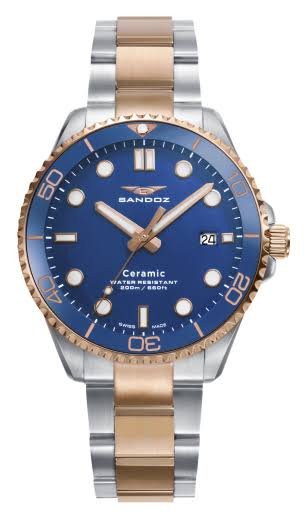
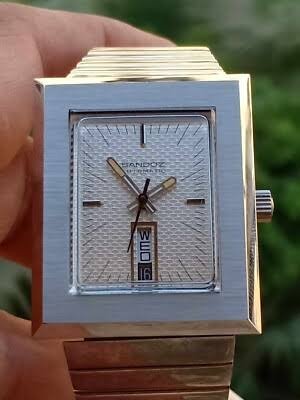
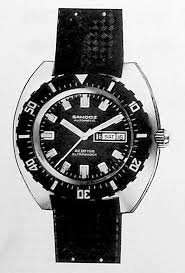
Mid-century Sandoz watches often followed the prevailing Swiss vocabulary of clean baton markers, small or central seconds, gold-plated or steel cases and dependable manually wound or automatic movements. Other examples adopted rectangular architecture, integrated bracelets or day-and-date displays. Divers and recreational sports watches added luminous markers, rotating bezels and stronger water-resistance claims, although those original ratings must never be assumed to remain valid today.
Quartz, regional markets and a divided identity
The quartz transformation of the 1970s and 1980s produced another important chapter. Watches bearing the Sandoz name used quartz movements—including Swiss ESA-family calibres—and ranged from slim dress watches to highly legible divers. Mechanical models nevertheless continued to appear alongside quartz products.
The modern history requires particular care. From approximately the 1970s onward, rights and licences connected with the Sandoz name were divided among businesses serving different regional markets. Consequently, a modern Sandoz sold in Spain may not share the same corporate lineage, specifications or distribution network as a Sandoz sold in parts of Asia. The contemporary Spanish operation, associated with Grupo Munreco, presents collections spanning classic, casual and sports styles and continues to emphasize Swiss design and movement traditions. Collectors should therefore identify the regional distributor and examine the case back and movement rather than relying on the dial name alone.
Design and technical character
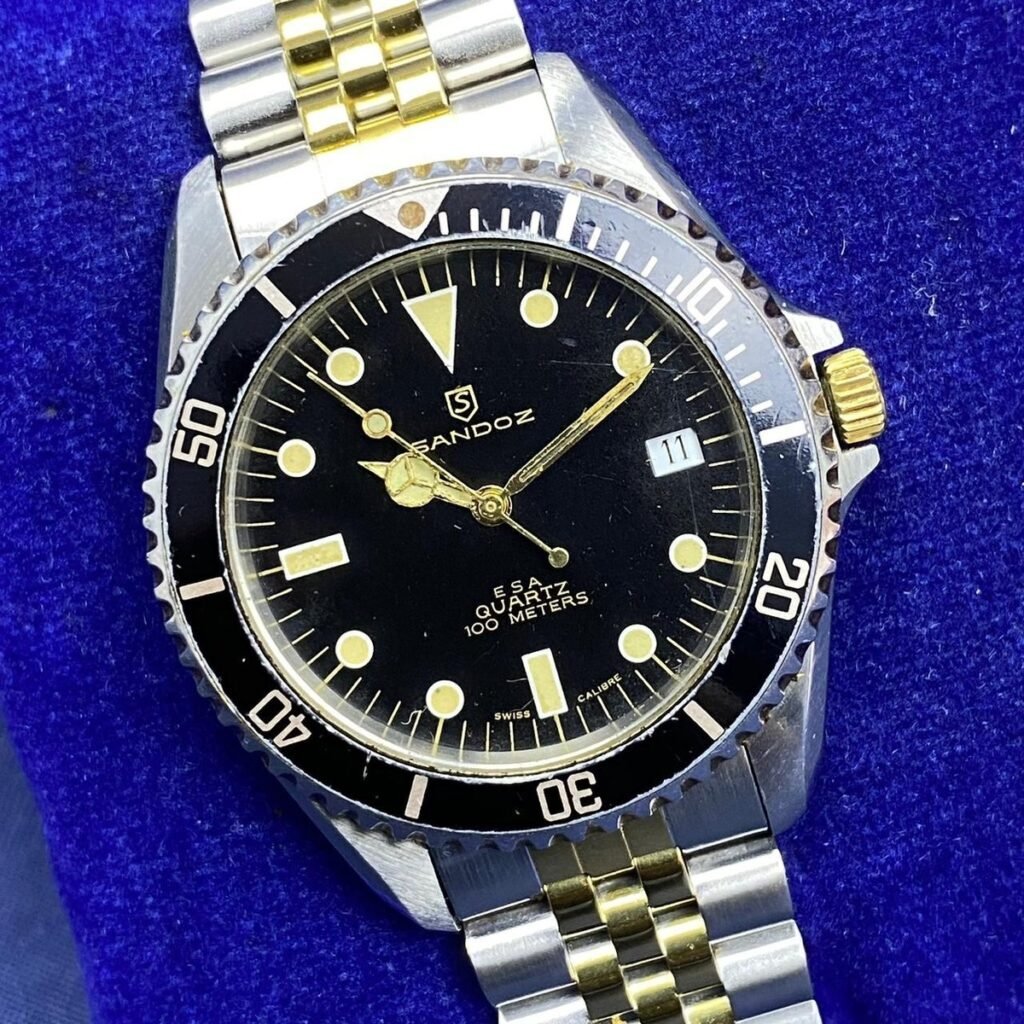
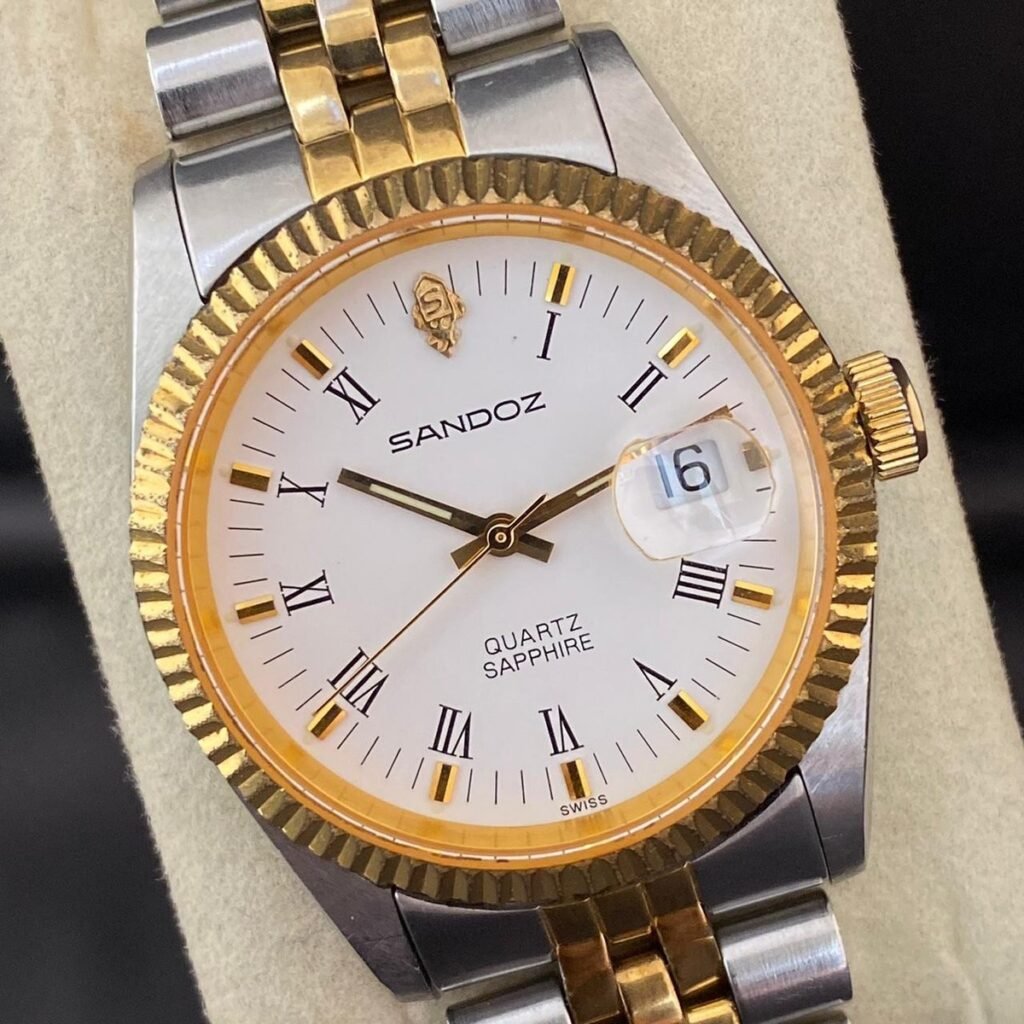
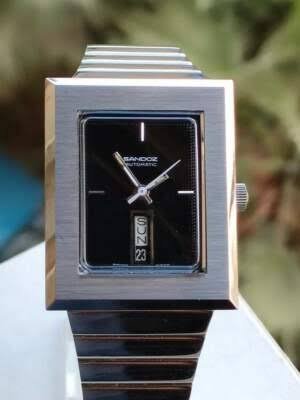
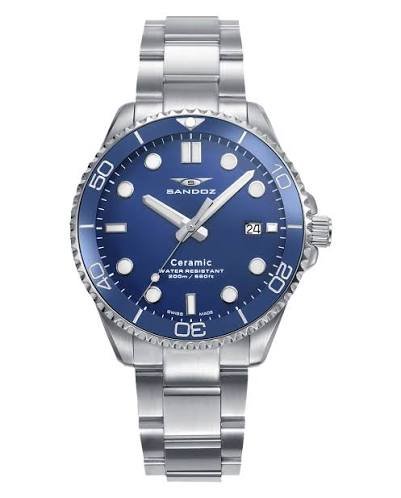
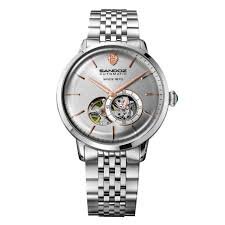
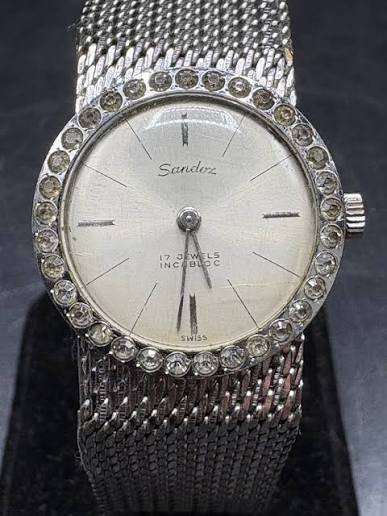
There is no single Sandoz design formula. The archive photographs illustrate the range especially well: a two-tone quartz diver, fluted-bezel dress watches, rectangular automatics with vertical calendar displays, modern ceramic-bezel sports watches, an open-worked mechanical model and an elegant jeweled ladies’ watch. Across these categories, recurring traits include direct legibility, familiar Swiss styling and an emphasis on practical calendar functions.
Movement identification is essential. Depending on age and market, a Sandoz may contain a Swiss manual-wind, automatic or quartz calibre, while later regional products require individual verification. Calibre markings beneath the balance or on a quartz movement, along with case-back reference numbers and import or distributor marks, provide stronger evidence than an online visual match.
Collecting and identification
Authentication begins with the whole watch. Compare the typography and logo, inspect whether the hands and luminous material agree with the dial’s age, and check that the movement fits the case and functions shown on the dial. Signs of refinishing include unusually fresh printing, uneven minute tracks, incorrect fonts or luminous plots that do not match the hands. A replaced crown, crystal or bracelet may be serviceable but should be disclosed.
Because the name crossed multiple companies and markets, collectors should avoid assigning an exact date or factory solely from the Sandoz signature. Photographs of the movement, inside case back, exterior case back and any reference or calibre numbers are normally required for a responsible attribution.
Preservation
Vintage water resistance should be considered expired until the watch has been pressure-tested by a qualified watchmaker. Mechanical movements need sympathetic servicing with correct lubrication; indiscriminate polishing can erase case geometry and reference marks. Old quartz batteries should be removed promptly if exhausted because leakage can irreversibly damage the circuit and movement. Original dials, bezels and hands are historically valuable, so restoration should favor stabilization and reversibility over cosmetic renewal.