Italian sports watches and the “No Limits” identity since 1973
Sector
Sector was established in Italy in 1973 as a sports-watch brand. Its “No Limits” identity linked technical-looking watches with personal challenge, durability, adrenaline and extreme-sports partnerships, becoming especially visible during the 1990s. After changes of ownership, the Sector Group was acquired by Morellato in 2006 and Sector continues as an Italian sports and lifestyle brand.
Abbady photographic archive
Sector photographs
Origins and period
Italy, with important periods of Swiss watchmaking and movement sourcing
Established in 1973; internationally prominent from the 1990s onward
Sector in watchmaking
Sector was established in Italy in 1973 as a sports-watch brand. Its “No Limits” identity linked technical-looking watches with personal challenge, durability, adrenaline and extreme-sports partnerships, becoming especially visible during the 1990s. After changes of ownership, the Sector Group was acquired by Morellato in 2006 and Sector continues as an Italian sports and lifestyle brand.
Landmark dates
1973 — Sector is established in Italy as a sports-watch brand.
Late 1980s–1990s — The “No Limits” identity gains international visibility through adventure and extreme-sports marketing.
1990s — Sector becomes closely associated with athletes and explorers, including free diver Umberto Pelizzari and aerial-sports pioneer Patrick de Gayardon.
2001 — The Sector business passes to the Opera Group during a period of Swiss-based ownership.
2006 — Morellato Group acquires the Sector Group, including Sector, Philip Watch and Chronostar.
2006 onward — Morellato relaunches Sector No Limits and expands its international sports and lifestyle collections.
Present — Sector continues to produce men’s and women’s watches and Sector-branded jewelry.
Known for
“No Limits” sports watches, diving and dive-inspired models, quartz chronographs, automatic watches, athlete partnerships, robust styling and Italian design.
Movements and innovation
Sector has used quartz three-hand and chronograph movements as well as mechanical automatic calibres and open-heart constructions. Models range from everyday sports watches to diving and chronograph designs with rotating bezels, tachymeter scales and substantial water-resistance claims. Movement origin and calibre must be verified watch by watch because specifications vary by period and collection.
Identification checklist
• Record the complete case-back reference, serial or production code and water-resistance marking.
• Identify the movement calibre rather than assuming Swiss manufacture from the brand name.
• Check chronograph reset alignment and the operation of every crown and pusher.
• Inspect bezel action, luminous material, crystal, crown, pushers and bracelet for replacements or heavy wear.
• Compare the dial logo, hands and printing with documented examples of the same reference.
• Treat online collection names and production dates as provisional unless supported by catalogues or original paperwork.
• Pressure-test any used watch before exposing it to water.
Preservation guidance
Remove exhausted quartz batteries promptly and inspect for leakage. Service automatic movements through a qualified watchmaker. Replace aged seals and pressure-test the case after opening or before water use. Avoid aggressive polishing that can erase case geometry or engraved references. Protect rubber straps from heat and ultraviolet light, rinse a properly tested watch after salt-water exposure, and preserve original bezels, dials, hands and bracelets whenever possible.
Historical development
Sector is an Italian sports-watch brand established in 1973. Its identity was built around watches for an active life: robust cases, clear displays, practical chronographs and water-resistant designs presented through an energetic Italian design language. The brand’s best-known phrase, “No Limits,” became much more than a product label. It expressed a philosophy of personal challenge, endurance and the determination to move beyond perceived limits.
Sector’s history also reflects the international nature of late-twentieth-century watchmaking. The creative direction and brand identity were Italian, while important periods of production relied on Swiss watchmaking and Swiss movements. This combination helped Sector occupy a recognizable position between traditional Swiss sports watches and accessible Italian lifestyle design.
The rise of “No Limits”
Sector achieved exceptional visibility during the late 1980s and 1990s, when the “No Limits” message was connected with athletes, explorers and extreme-sports figures. Advertising emphasized real physical tests rather than formal luxury. Diving, free diving, mountaineering, ocean navigation, parachuting, skiing, motorcycling and other demanding activities provided the setting for watches promoted as durable instruments.
Among the figures historically associated with Sector were free diver Umberto Pelizzari and aerial-sports pioneer Patrick de Gayardon, together with other athletes and adventurers. These partnerships gave the brand a strong cultural identity at a time when sports sponsorship was becoming an important way for watch companies to demonstrate performance and reach younger customers.
Sports watches and design
Sector became especially known for substantial sports watches, diving models and chronographs. Many designs use prominent bezels, luminous markers, protective crown architecture, steel bracelets or rubber straps and bold accent colors. The catalogue expanded through numbered series and collections designed for different levels of sport and daily wear.
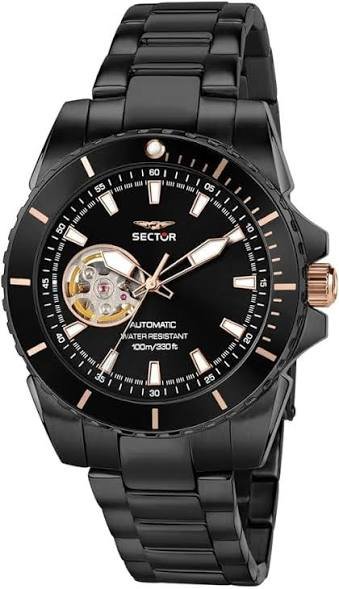
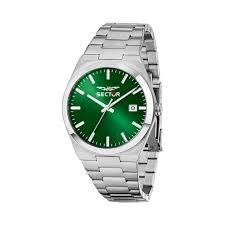
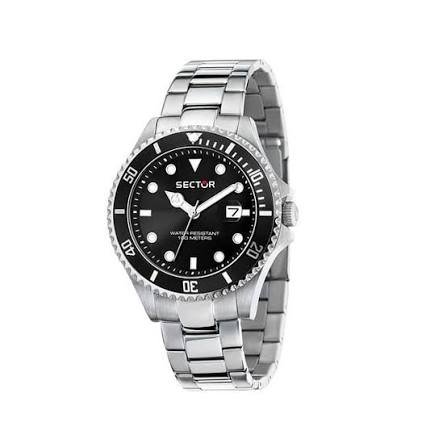
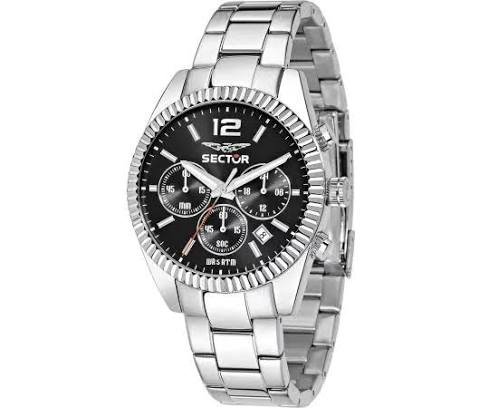
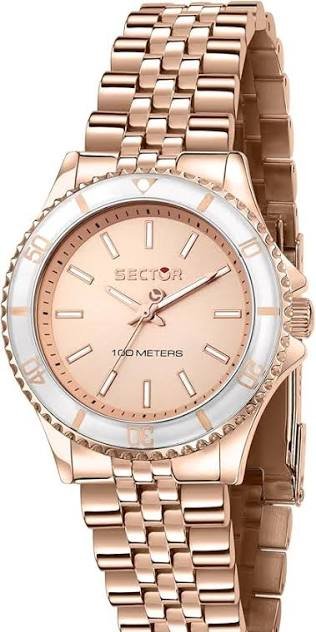
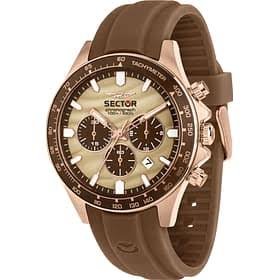
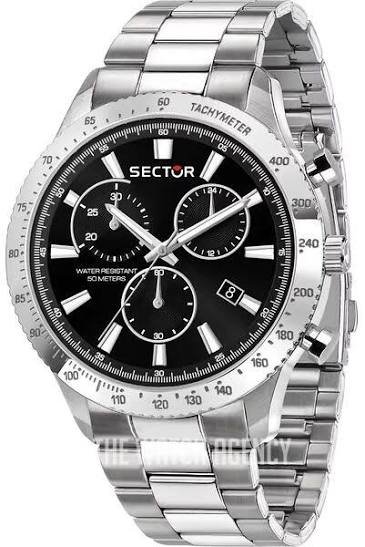
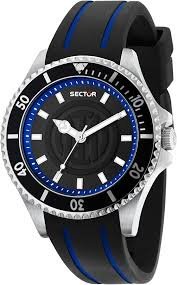
The archive photographs show how broad the modern range became. They include an open-heart automatic, a slim green-dial integrated-bracelet watch, conventional diving and dive-inspired models, several quartz chronographs and a rose-gold-tone women’s sports watch. Together they demonstrate that Sector’s performance image has been adapted to mechanical, quartz, masculine, feminine and fashion-oriented designs.
Movements and construction
Sector watches have used both quartz and mechanical movements. Quartz chronographs and three-hand movements became central because they offered accuracy, reliability and practical pricing for sports watches. Mechanical production has included automatic models and open-heart designs that display part of the regulating mechanism. Vintage and higher-specification pieces may use Swiss movements, but country-of-origin and calibre claims must be confirmed on each individual watch rather than inferred from the Sector name alone.
Water-resistance markings also vary widely—from everyday splash resistance to ratings intended for swimming or diving when the watch was new. A rotating bezel, screw-down crown or high depth marking is not proof that a used watch remains safe underwater. Seals age, crystals can be replaced incorrectly and crowns or case backs may no longer close to their original tolerances.
Ownership and the Morellato era
Sector passed through changes of ownership during the early twenty-first century. In 2001 it was acquired by Opera, a group associated with Bulgari interests at the time. In 2006 the Sector Group—including Sector, Philip Watch and Chronostar—was acquired by the Italian Morellato Group. Morellato subsequently invested in the relaunch and international distribution of Sector No Limits.
Under Morellato, Sector has continued as a contemporary Italian sports and lifestyle brand. The present range retains the familiar themes of performance, adrenaline, technological appearance and Italian design while extending beyond watches into Sector-branded jewelry.
Collecting and identification
For identification, record the complete reference on the case back, the water-resistance wording, movement calibre, case material and any serial or production code. Sector produced many visually similar watches, and retailer descriptions often confuse collection names. A dial photograph alone is rarely enough to establish the exact reference or year.
On older “No Limits” watches, inspect bezel condition, chronograph operation, bracelet stretch, crown and pusher seals, luminous material and case-back engraving. Replacement parts can make a watch useful but may affect historical originality. Because heavily used sports watches were often exposed to water and impact, condition inside the case matters as much as exterior appearance.
Preservation
Mechanical Sector watches should be serviced by a qualified watchmaker familiar with the installed calibre. Quartz watches should never be stored with an exhausted battery because leakage can damage the movement and dial. After any battery change or case opening, the seals should be inspected and a pressure test performed before water exposure. Avoid aggressive polishing, which can soften bezel teeth, lugs and engraved case-back details. Store rubber straps away from heat and ultraviolet light, and rinse a properly tested watch with fresh water after exposure to salt water.