German Watchmaking, Modernist Design and Radio Precision
Junghans
Founded by Erhard Junghans in Schramberg in 1861, Junghans grew from a small Black Forest component workshop into one of the world’s largest clock and watch manufacturers. Its history combines industrial-scale production with refined mechanical watchmaking, Max Bill’s enduring modernist design language, precision sports timing, quartz technology, solar power and pioneering radio-controlled timekeeping. The company continues to manufacture watches in Schramberg, including the Meister, max bill, FORM and radio-controlled MEGA families.
Abbady photographic archive
Junghans photographs
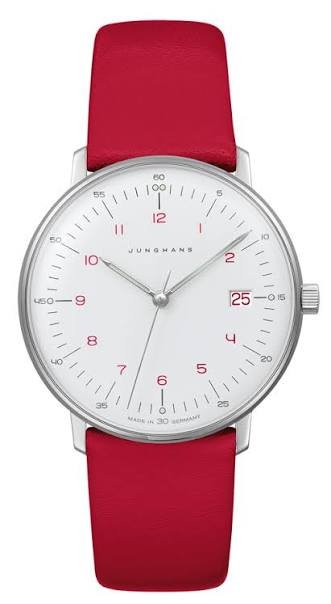
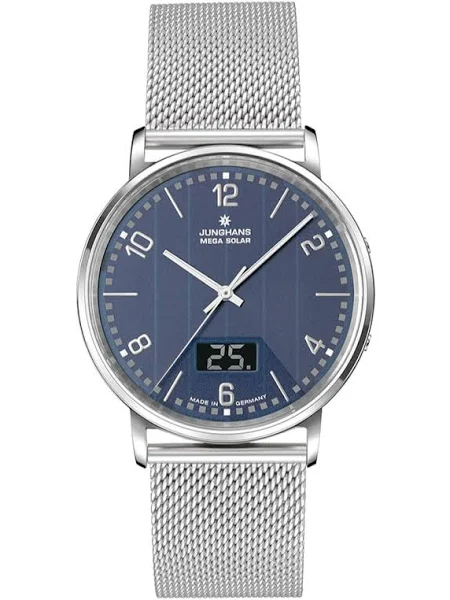
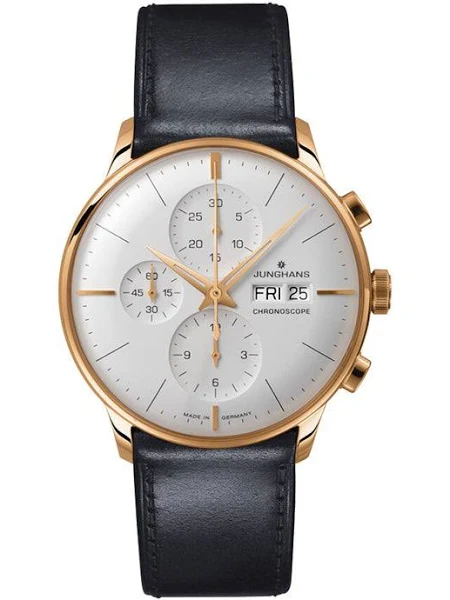
Origins and period
Schramberg, Germany
Founded 1861
Junghans in watchmaking
Founded by Erhard Junghans in Schramberg in 1861, Junghans grew from a small Black Forest component workshop into one of the world’s largest clock and watch manufacturers. Its history combines industrial-scale production with refined mechanical watchmaking, Max Bill’s enduring modernist design language, precision sports timing, quartz technology, solar power and pioneering radio-controlled timekeeping. The company continues to manufacture watches in Schramberg, including the Meister, max bill, FORM and radio-controlled MEGA families.
Landmark dates
1861 — Erhard Junghans establishes the company in Schramberg in Germany’s Black Forest.
1903 — Junghans has grown into the world’s largest watch and clock factory.
1927 — The company begins producing wristwatches.
1930s — The Meister tradition develops around refined mechanical watch and clock design.
1950s–1960s — Bauhaus-trained designer Max Bill creates clocks and wristwatches whose clear typography and proportions become Junghans signatures.
1971 — Junghans marks its 110th anniversary during the early era of its quartz wristwatch production.
1972 — Junghans serves as official timekeeper for the Munich Summer Games and advances electronic timing and color photo-finish technology.
1985 — The company introduces the first radio-controlled table clock produced in series for private use.
1986 — Junghans presents a radio-controlled clock powered by solar energy.
1990 — The radio-controlled MEGA 1 wristwatch brings antenna and receiver technology to the wrist in a futuristic design.
2000s — Junghans renews its mechanical Meister and Max Bill heritage while continuing quartz and radio-controlled development.
2020s — MEGA Solar and app-connected radio technology combine multi-frequency synchronization, solar energy and modern German design.
Known for
German clocks and wristwatches, the Meister collection, Max Bill design, 1972 Olympic sports timing, quartz innovation, solar power and radio-controlled MEGA watches.
Movements and innovation
Junghans has worked across mechanical, quartz, solar and radio-controlled timekeeping. Historic hand-wound and automatic calibres helped establish its mass-production and chronometer reputation, while modern mechanical collections use carefully finished automatic and chronograph movements. Its electronic milestones include quartz watches, high-precision sports timing and radio-controlled movements that synchronize to official time signals. Contemporary MEGA Solar technology combines solar charging, radio reception and connected adjustment. Calibre, power source and synchronization capability vary significantly by reference and period.
Identification checklist
Record the exact dial signature, star logo, case-back reference, calibre marking, serial information and any “Made in Germany” wording. Compare typography, hands, numeral shapes and case proportions with the correct collection and production period—especially for Max Bill and Meister models, whose restrained designs are frequently imitated. For radio-controlled watches, identify the antenna system, display functions and regional signal compatibility. Confirm whether a watch is hand-wound, automatic, quartz, solar or radio-controlled from its reference and movement rather than assuming from the dial alone.
Preservation guidance
Service mechanical watches through Junghans or a watchmaker familiar with the exact calibre. Replace depleted quartz batteries promptly and have gaskets tested before water exposure. Solar watches should receive regular light without prolonged extreme heat, while radio-controlled models should be stored where signal reception is possible and away from strong magnetic or electronic interference. Avoid polishing historically significant cases or refinishing original dials. Protect domed crystals from impact and preserve original crowns, pushers, bracelets, boxes, papers and replaced components.
Historical development
Erhard Junghans founded the company in Schramberg in 1861. It grew from component production into an enormous clock and watch factory, becoming the world’s largest watch factory by the beginning of the twentieth century and later contributing to mechanical, quartz, radio-controlled, and design history.