A landmark of French watchmaking, design and social history
Lip
LIP traces its industrial history to the watchmaking workshop established by Emmanuel Lipmann in Besançon in 1867. The family firm grew into one of France’s most important watch manufacturers, producing its own calibres and combining dependable everyday watches with major technical and design experiments. Notable chapters include the T18 rectangular movement, post-war electronic-watch research, the Nautic-Ski diving watch and Roger Tallon’s radical Mach 2000. In 1973, financial crisis and threatened layoffs led to a celebrated factory occupation and worker-managed production, making the “LIP affair” a symbol of French labor history. The historic company later collapsed, but the name survived through successive owners and is again used for watches linked to the Besançon region.
Abbady photographic archive
Lip photographs
Origins and period
Besançon, France
Founded in 1867; historic manufacture, later revivals and modern French production
Lip in watchmaking
LIP traces its industrial history to the watchmaking workshop established by Emmanuel Lipmann in Besançon in 1867. The family firm grew into one of France’s most important watch manufacturers, producing its own calibres and combining dependable everyday watches with major technical and design experiments. Notable chapters include the T18 rectangular movement, post-war electronic-watch research, the Nautic-Ski diving watch and Roger Tallon’s radical Mach 2000. In 1973, financial crisis and threatened layoffs led to a celebrated factory occupation and worker-managed production, making the “LIP affair” a symbol of French labor history. The historic company later collapsed, but the name survived through successive owners and is again used for watches linked to the Besançon region.
Landmark dates
1867 — Emmanuel Lipmann establishes a watchmaking workshop in Besançon.
1896 — The LIP name appears on a chronometer and develops into the company’s public brand.
1933 — André Donat’s rectangular T18 calibre enters production.
1936 — LIP presents the early water-resistant Nautic model.
1948 — A LIP T18 is presented to Winston Churchill.
1952 — LIP presents its Electronic electric-watch prototype to the French Academy of Sciences.
1958 — Series production of the LIP Electronic begins.
1967 — Fred Lip opens the company’s capital to Swiss movement group Ébauches SA.
1968 — The Nautic-Ski becomes one of France’s best-known early electronic diving watches.
1973 — LIP produces early French quartz watches while the factory crisis triggers occupation and worker-managed production.
1974 — Designer Roger Tallon creates the avant-garde Mach 2000 family.
1977 — The historic operating company is liquidated after years of industrial conflict.
1990 — Jean-Claude Sensemat acquires and relaunches the LIP brand.
Today — Modern LIP collections reinterpret historic models and continue the brand’s connection with French watchmaking.
Known for
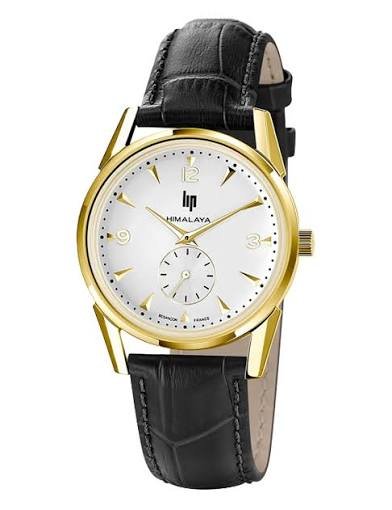
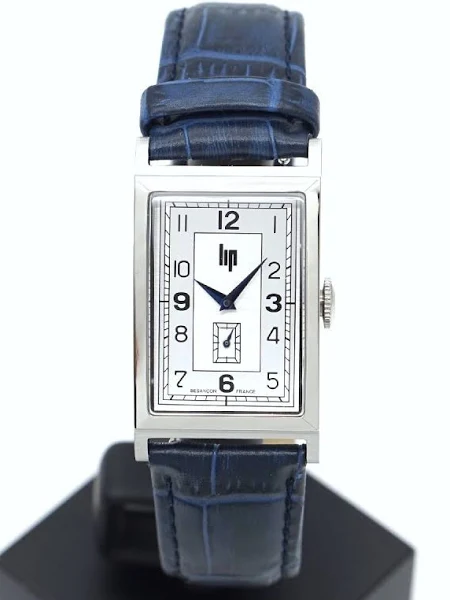
T18 rectangular watches; Dauphine dress watches; Himalaya; Nautic and Nautic-Ski divers; Electronic and R27 electric watches; Roger Tallon’s Mach 2000; French-made calibres; and the internationally known 1973 workers’ struggle.
Movements and innovation
LIP was not simply a dial name: for much of its history it designed and manufactured calibres in Besançon. Important examples include the rectangular T18 and later mechanical families such as the R25. LIP also pursued battery-powered timekeeping with Elgin, presenting an Electronic prototype in 1952 and producing electric watches from 1958. The R27 became one of the best-known French electric movements, while the company later participated in the transition to quartz. Surviving watches may contain LIP manufacture movements, Swiss-supplied calibres or later outsourced movements depending on date and model, so the calibre must be confirmed from movement markings rather than assumed from the dial alone.
Identification checklist
• Confirm the LIP signature, typography and any model name against the style of the claimed period.
• Record all case-back references, serial numbers, waterproof markings and French hallmarks.
• Inspect the movement for a LIP calibre designation such as T18, R25 or R27, while recognizing that some periods used sourced movements.
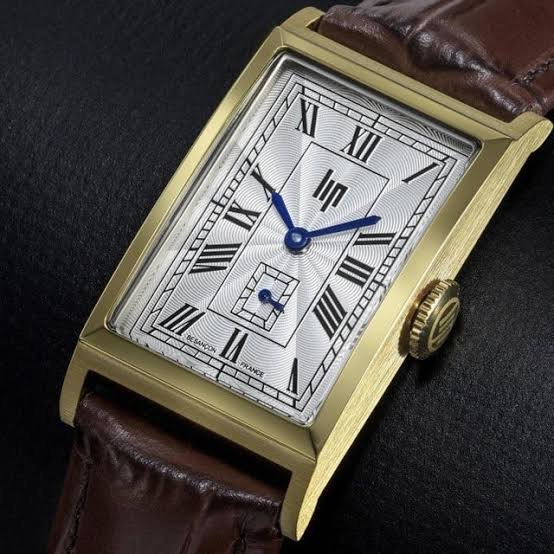
• For rectangular watches, compare case proportions, small-seconds position and movement architecture before calling a watch a T18.
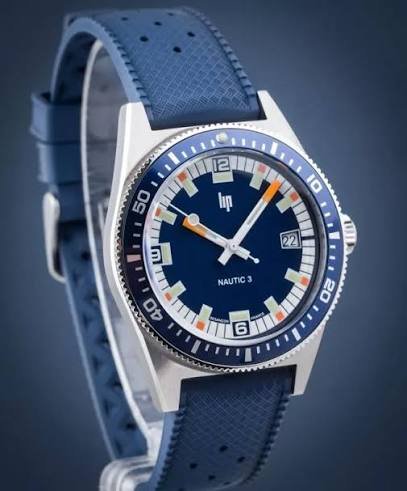
• For Nautic-Ski models, verify the compressor-style case, crowns, bezel, dial layout and correct movement.
• For Mach 2000 watches, compare the case, colored controls and Roger Tallon design details with documented references.
• Check dial printing, lume, hands, crown and case wear for consistent age; refinished vintage dials are common.
• Distinguish original-period watches from modern reissues by reference, movement, dimensions and case-back wording.
• Request movement and inner case-back photographs before purchasing an expensive vintage example.
Preservation guidance
Preserve original dials, hands, crowns, crystals, case finishes and signed components whenever they remain serviceable. Avoid polishing vintage cases or refinishing dials, because originality is central to historical and collector value. Mechanical and electric LIP movements should be serviced by a watchmaker familiar with vintage French calibres. For battery-powered models, remove exhausted cells promptly and check for corrosion before operation. Never rely on an old waterproof or diving inscription: pressure-test the watch before any moisture exposure and otherwise keep it dry. Retain replaced components, service invoices and photographs of all movement and case markings. Store watches away from magnets, humidity, heat and direct sunlight.
Historical development
LIP grew from a small Besançon workshop into one of France’s defining watch manufacturers. The company combined accessible production with technical and design experimentation, and its highly publicized labor struggle during the 1970s became part of French social history.