Swiss watchmaking heritage, precision timing and the winged-hourglass tradition
Longines
Longines traces its history to 1832, when Auguste Agassiz joined a watchmaking enterprise in Saint-Imier. His nephew Ernest Francillon later consolidated production in a purpose-built factory at a site known locally as Es Longines, giving the company its enduring name. Longines became known for precision movements, chronographs, sports timing and instruments for aviation and navigation. The brand remains based in Saint-Imier and is part of the Swatch Group.
Abbady photographic archive
Longines photographs
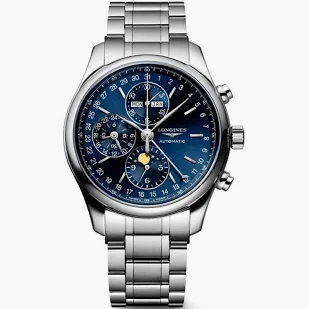
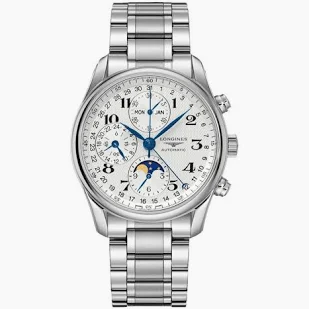
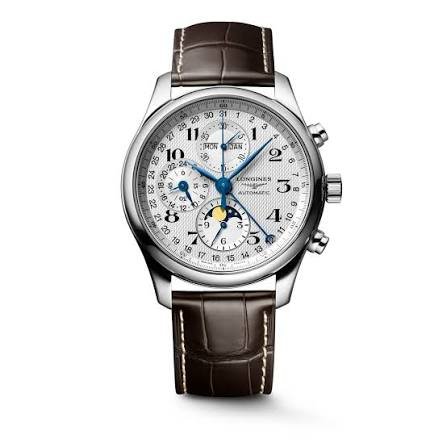
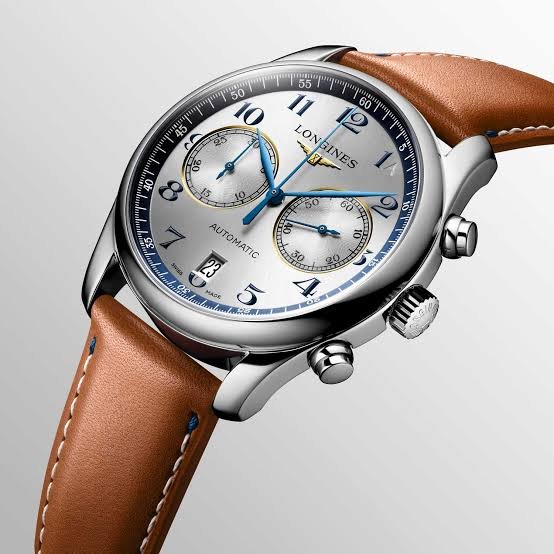
Origins and period
Saint-Imier, Switzerland
Founded 1832; Longines name registered in 1880; winged-hourglass trademark registered in 1889
Longines in watchmaking
Longines traces its history to 1832, when Auguste Agassiz joined a watchmaking enterprise in Saint-Imier. His nephew Ernest Francillon later consolidated production in a purpose-built factory at a site known locally as Es Longines, giving the company its enduring name. Longines became known for precision movements, chronographs, sports timing and instruments for aviation and navigation. The brand remains based in Saint-Imier and is part of the Swatch Group.
Landmark dates
1832 — Auguste Agassiz enters the watchmaking business in Saint-Imier.
1867 — Ernest Francillon opens the factory at Es Longines and introduces the 20A movement.
1878 — Longines develops the 20H single-pusher chronograph calibre.
1880 — The Longines name is registered.
1889 — The winged-hourglass trademark is registered.
1912 — Longines introduces an electromechanical sports-timing system.
1927 — The Weems Second-Setting Watch supports precise navigation.
1931 — Longines produces the Lindbergh Hour Angle watch.
1954 — Chronocinégines enables recorded sports timing.
1969 — Longines introduces the Ultra-Quartz electronic wristwatch.
Today — Longines continues watchmaking in Saint-Imier as part of the Swatch Group.
Known for
The winged-hourglass emblem; early industrialized Swiss production; chronograph calibres and precision instruments; sports timing; aviation and navigation watches; the Lindbergh Hour Angle watch; elegant calendar and moon-phase watches; modern collections including the Master Collection, Spirit and HydroConquest.
Movements and innovation
Longines produced an extensive family of in-house movements, including early industrial calibres, the 20H chronograph and high-frequency timing mechanisms. Its technical history spans mechanical chronographs, observatory precision, electromechanical and quartz timing, and modern automatic calendar and moon-phase complications.
Identification checklist
Confirm the Longines signature and winged-hourglass emblem on the dial, movement and case where appropriate. Record the case reference and serial number, then compare them with period-correct catalogues or Longines archive information. Check that dial printing, hands, crown, pushers, bracelet or strap, movement calibre and case-back markings are consistent. Front-view photographs alone are not enough to authenticate a watch or determine its exact reference.
Preservation guidance
Keep the watch dry, clean and protected from shocks and magnetic fields. Avoid polishing an older case or refinishing an original dial without specialist advice. Mechanical watches should be serviced by a qualified watchmaker familiar with the calibre. Preserve replaced parts, boxes, papers and service records, and photograph all case and movement numbers before work begins.
Historical development
Auguste Agassiz established the business in Saint-Imier in 1832. His nephew Ernest Francillon later consolidated production in a factory at Les Longines, introduced the winged-hourglass identity, and helped build an international reputation in precision timing, chronographs, navigation, aviation, and sport.