Independent Swiss mechanical watchmaking from Hölstein since 1904
Oris
Oris was founded in Hölstein in 1904 by Paul Cattin and Georges Christian, who named the company after a nearby brook. It developed from a regional factory into a major producer of reliable, attainable Swiss watches, making movements, cases and components across several sites. Oris became known for practical complications and purpose-built watches, including the Big Crown pilot’s watch introduced in 1938 with its distinctive pointer-date display. After the pressures of the quartz crisis, managers Ulrich W. Herzog and Rolf Portmann led a 1982 buyout that restored the company’s independence and refocused it on mechanical watches. Modern Oris collections include Big Crown, ProPilot, Aquis, Divers and Artelier. The brand commonly adapts established Swiss base movements while also developing proprietary calibres, notably the long-power-reserve Calibre 110 series and the five-day, anti-magnetic Calibre 400 family.
Abbady photographic archive
Oris photographs


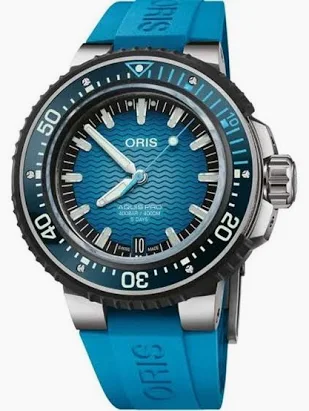

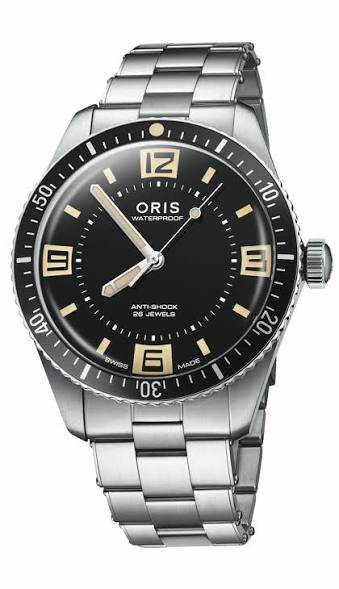
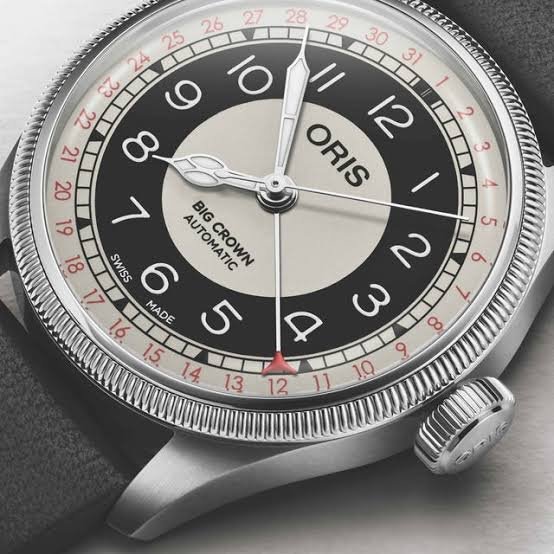
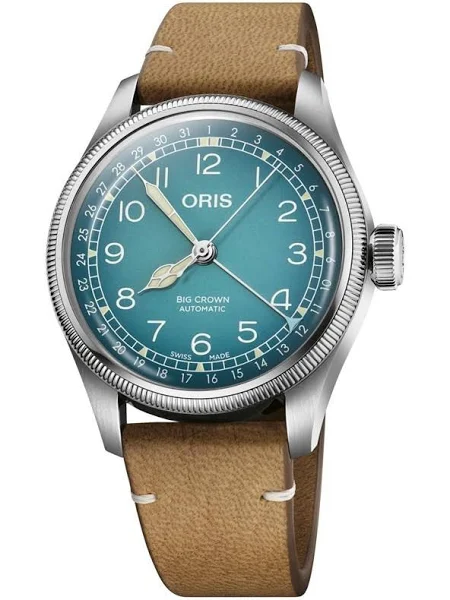

Origins and period
Hölstein, Basel-Landschaft, Switzerland
Founded in 1904; active and independently owned
Oris in watchmaking
Oris was founded in Hölstein in 1904 by Paul Cattin and Georges Christian, who named the company after a nearby brook. It developed from a regional factory into a major producer of reliable, attainable Swiss watches, making movements, cases and components across several sites. Oris became known for practical complications and purpose-built watches, including the Big Crown pilot’s watch introduced in 1938 with its distinctive pointer-date display. After the pressures of the quartz crisis, managers Ulrich W. Herzog and Rolf Portmann led a 1982 buyout that restored the company’s independence and refocused it on mechanical watches. Modern Oris collections include Big Crown, ProPilot, Aquis, Divers and Artelier. The brand commonly adapts established Swiss base movements while also developing proprietary calibres, notably the long-power-reserve Calibre 110 series and the five-day, anti-magnetic Calibre 400 family.
Landmark dates
1904 — Paul Cattin and Georges Christian establish Oris in Hölstein.
1920s — Oris expands production and develops a network of Swiss manufacturing facilities.
1938 — The Big Crown pilot’s watch appears with an oversized crown and pointer-date display.
Mid-20th century — Oris becomes a large-scale producer of dependable mechanical watches and alarm clocks.
1960s — The company develops sports, diving and chronometer watches during a period of strong international growth.
1970 — Oris becomes part of the ASUAG group as the Swiss industry consolidates.
1982 — Ulrich W. Herzog and Rolf Portmann complete a management buyout and restore Oris as an independent company.
1990s — Oris commits its modern identity to mechanical watches and useful complications.
2002 — The red rotor becomes a prominent symbol of Oris automatic watches.
2014 — Oris introduces the hand-wound Calibre 110 with a ten-day power reserve.
2020 — The automatic Calibre 400 launches with a five-day power reserve and strong anti-magnetic performance.
Today — Oris remains based in Hölstein and produces exclusively Swiss mechanical watches.
Known for
Independent Swiss ownership; Big Crown Pointer Date; pilot’s watches; Aquis dive watches; Divers Sixty-Five; ProPilot and ProPilot X; Artelier complications; red automatic rotor; practical mechanical complications; Calibre 110 and five-day Calibre 400 movement families.
Movements and innovation
Historic Oris watches used numerous company-made pin-lever and jeweled mechanical calibres, followed by lever movements and specialized complications. Modern models often use Oris-modified Swiss base calibres, identified by Oris calibre numbers, with the red rotor as a visual signature on many automatics. The proprietary Calibre 110 family offers long hand-wound power reserves, while the automatic Calibre 400 family provides approximately five days of power reserve, anti-magnetic construction and extended service-oriented engineering. Exact specifications vary by reference and production year.
Identification checklist
Confirm the ORIS signature, case reference, serial number, calibre number and case-back engravings. Big Crown models should be checked for the correct pointer-date scale, cathedral-style hands, crown shape and dial printing for the stated reference. On Aquis and vintage divers, inspect bezel type, water-resistance markings, crown, bracelet and luminous components. Vintage examples may have refinished dials or replacement hands, crowns and crystals. Compare the watch with Oris product documentation and have valuable pieces inspected internally by a qualified specialist.
Preservation guidance
Service the movement through Oris or a watchmaker experienced with the fitted Oris, Sellita, ETA or proprietary calibre. Never force pointer-date or calendar adjustments during the movement’s automatic changeover period. Pressure-test Aquis and other water-oriented watches after opening, but treat untested vintage pieces as non-water-resistant. Do not operate pushers underwater unless the exact model permits it. Preserve original dials, bezels, crowns, luminous material and case geometry, and retain bracelets, spare links, boxes, papers and service records.
Historical development
Oris began in a former Hölstein watch factory in 1904 and grew through industrial production of reliable, accessible watches. After the quartz crisis, management returned the independent company to an all-mechanical focus, building modern collections around diving, aviation, culture, and motorsport.