Independent Swiss haute horlogerie shaped by restoration, proportion and vertical integration
Parmigiani Fleurier
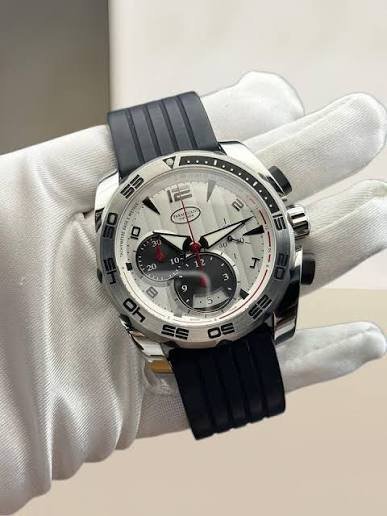
Parmigiani Fleurier grew from the restoration work of Michel Parmigiani, who established his workshop Mesure et Art du Temps in Fleurier in 1976. His expertise in historic watches, clocks and automata brought him into contact with the Maurice-Yves Sandoz Collection and the Sandoz Family Foundation, whose support enabled the creation of Parmigiani Fleurier in 1996. The maison’s first watches included the Toric QP Rétrograde and the tonneau-shaped Kalpa Hebdomadaire, expressing Michel Parmigiani’s interest in classical proportion, the golden ratio and traditional decorative craft. Beginning in 1999, the group built a vertically integrated watchmaking center encompassing cases, dials, escapement components and movement manufacture. Parmigiani Fleurier has since developed simple and highly complicated watches, including calendars, chronographs, tourbillons, minute repeaters and unconventional display systems. Its modern identity is led by the refined Tonda PF and Toric collections.
Abbady photographic archive
Parmigiani Fleurier photographs
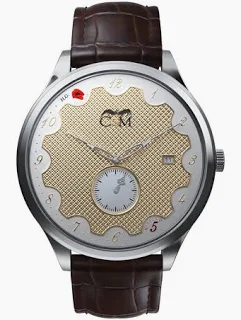
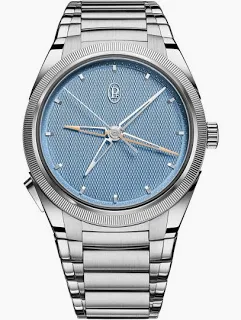
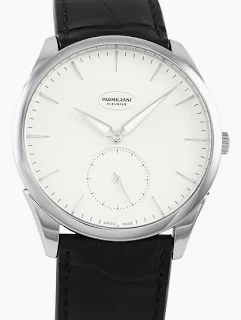
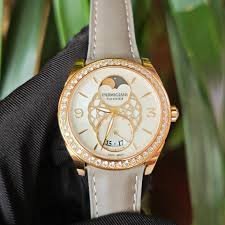
Origins and period
Fleurier, Val-de-Travers, Switzerland
Restoration workshop founded in 1976; Parmigiani Fleurier established in 1996; active today
Parmigiani Fleurier in watchmaking
Parmigiani Fleurier grew from the restoration work of Michel Parmigiani, who established his workshop Mesure et Art du Temps in Fleurier in 1976. His expertise in historic watches, clocks and automata brought him into contact with the Maurice-Yves Sandoz Collection and the Sandoz Family Foundation, whose support enabled the creation of Parmigiani Fleurier in 1996. The maison’s first watches included the Toric QP Rétrograde and the tonneau-shaped Kalpa Hebdomadaire, expressing Michel Parmigiani’s interest in classical proportion, the golden ratio and traditional decorative craft. Beginning in 1999, the group built a vertically integrated watchmaking center encompassing cases, dials, escapement components and movement manufacture. Parmigiani Fleurier has since developed simple and highly complicated watches, including calendars, chronographs, tourbillons, minute repeaters and unconventional display systems. Its modern identity is led by the refined Tonda PF and Toric collections.
Landmark dates
1976 — Michel Parmigiani establishes the restoration workshop Mesure et Art du Temps in Fleurier.
1980s — His restoration of the Maurice-Yves Sandoz Collection forms an important relationship with the Sandoz family.
1995 — The Sandoz Family Foundation supports the creation of an independent watchmaking maison around Michel Parmigiani’s work.
1996 — Parmigiani Fleurier is officially inaugurated in Lausanne on May 29.
1996 — The Toric QP Rétrograde and Kalpa Hebdomadaire establish the maison’s early design language and complications.
1999 — The group begins building a vertically integrated manufacture with the acquisition of specialist case-making expertise.
Early 2000s — Dial, component, escapement and movement specialists are brought together in the Parmigiani watchmaking center.
2004 — The unconventional Bugatti Type 370 demonstrates the maison’s mechanical and architectural experimentation.
2010s — Parmigiani Fleurier expands its calendars, chronographs, tourbillons and chiming complications.
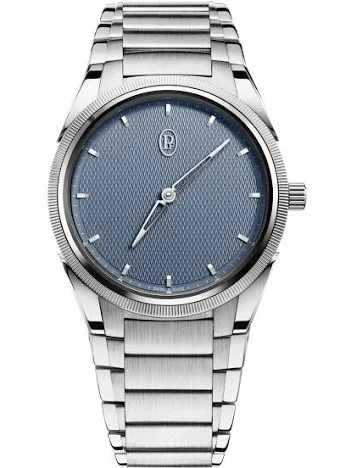
2021 — The Tonda PF collection introduces a restrained, contemporary interpretation of integrated-bracelet luxury.
Today — Parmigiani Fleurier remains an independent haute-horlogerie manufacture supported by the Sandoz Family Foundation.
Known for
Michel Parmigiani’s restoration expertise; Sandoz Family Foundation support; Toric and Kalpa; Tonda and Tonda PF; knurled bezels and teardrop-shaped lugs; golden-ratio proportions; micro-rotor movements; high complications; cultural calendars; Bugatti Type 370; vertically integrated manufacture and hand-finishing.
Movements and innovation
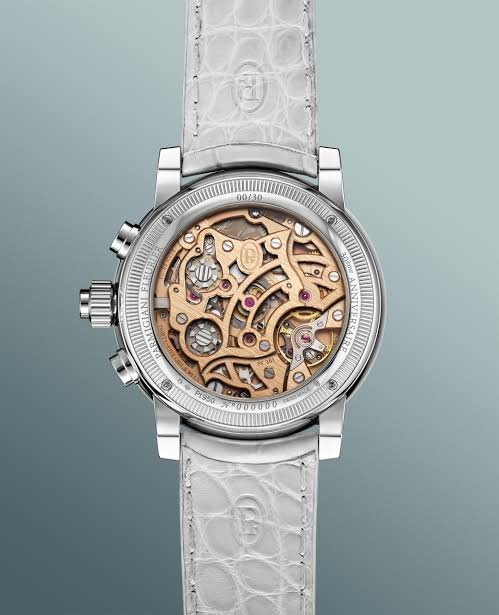
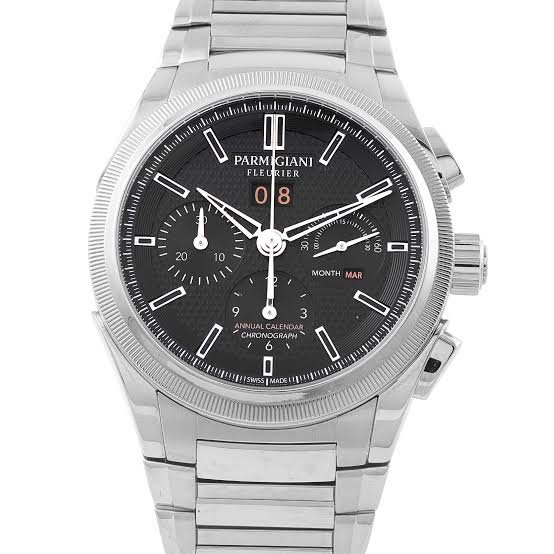
Parmigiani Fleurier develops and manufactures a wide range of hand-wound and automatic calibres through its integrated watchmaking network, including Vaucher Manufacture Fleurier and specialist component makers. Its portfolio includes slim micro-rotor automatics, shaped movements for Kalpa cases, high-frequency chronographs, long-power-reserve hand-wound calibres, tourbillons, minute repeaters and annual, perpetual and cultural calendars. The PF110 was an early eight-day shaped movement, while the thin PF700-family micro-rotor architecture is closely associated with modern Tonda PF models. Exact calibre, complications and finishing must be matched to the reference.
Identification checklist
Confirm the full reference, case and movement numbers, metal hallmarks, dial signature and case-back engravings. Examine the knurled bezel, teardrop lugs, bracelet construction, guilloché or hand-finished dial and movement architecture against official documentation for the exact reference. Tonda, Tonda PF, Toric, Kalpa and Pershing-style models use distinct case families and movements. High-value pieces should be checked for original hands, dials, crowns, pushers, bracelets and buckles, and authenticated by Parmigiani Fleurier or an experienced haute-horlogerie specialist.
Preservation guidance
Service the watch through Parmigiani Fleurier or a specialist trained for its calibre and complication. Do not force calendar, GMT, chronograph or power-reserve controls, especially during an automatic calendar changeover. Keep micro-rotor, chronograph and high-complication movements protected from shock, moisture and strong magnetic fields. Pressure-test water-resistant models after opening, but treat untested older watches as non-water-resistant. Preserve original case finishing, guilloché dials, movement decoration, bracelets and hallmarks; avoid aggressive polishing. Retain boxes, certificates, accessories and service documentation.
Historical development
Restorer and watchmaker Michel Parmigiani founded his namesake manufacture in Fleurier with support from the Sandoz Family Foundation. The company built an integrated network of specialist workshops covering movements, cases, dials, hairsprings, restoration, and high complications.