Frankfurt instrument watches since 1961
Sinn
Founded by pilot and flight instructor Helmut Sinn in Frankfurt in 1961, Sinn began with navigation clocks and pilot chronographs sold directly to customers. Under engineer Lothar Schmidt from 1994, the company developed a broad family of professional instrument watches and proprietary case, lubrication, dehumidifying, hardening and fluid-filling technologies.
Abbady photographic archive
Sinn photographs
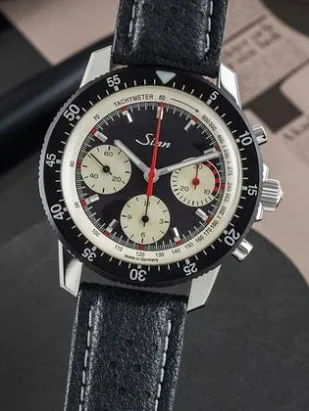
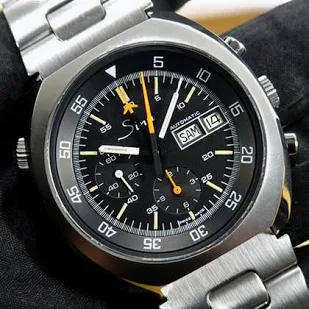
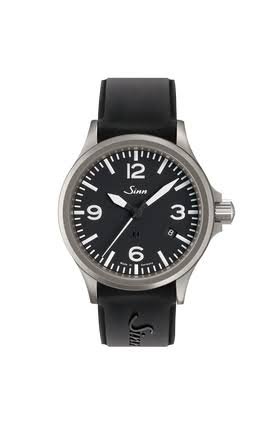
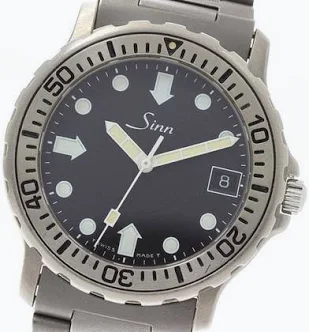

Origins and period
Frankfurt am Main, Germany
Founded in 1961; engineering-led era under Lothar Schmidt since 1994
Sinn in watchmaking
Founded by pilot and flight instructor Helmut Sinn in Frankfurt in 1961, Sinn began with navigation clocks and pilot chronographs sold directly to customers. Under engineer Lothar Schmidt from 1994, the company developed a broad family of professional instrument watches and proprietary case, lubrication, dehumidifying, hardening and fluid-filling technologies.
Landmark dates
1961 — Helmut Sinn establishes Helmut Sinn Spezialuhren in Frankfurt am Main.
1994 — Engineer Lothar Schmidt acquires the company and begins a new technical era.
1995 — Ar-Dehumidifying Technology is introduced to reduce moisture-related ageing.
Late 1990s — DIAPAL and TEGIMENT technologies broaden Sinn’s engineering programme.
1999 — Sächsische Uhrentechnologie GmbH is founded in Glashütte with Sinn participation for case production.
2000s — HYDRO fluid-filled watches and certified professional diving instruments become major signatures.
2012 — TESTAF establishes a technical standard for pilot watches.
Present — Sinn continues producing mission-focused mechanical and quartz watches in Frankfurt.
Known for
Pilot chronographs, mission timers, professional diving watches, TEGIMENT hardening, Ar-Dehumidifying Technology, DIAPAL escapements, HYDRO fluid-filled cases, and the Frankfurt Financial District series.
Movements and innovation
Sinn has used proven Swiss mechanical and quartz ébauches, including Valjoux/ETA, Sellita and Lemania families, integrated with purpose-built cases and technical systems. Important innovations include Ar-Dehumidifying Technology, TEGIMENT surface hardening, DIAPAL lubrication-free escapement components, HYDRO fluid filling, magnetic-field protection, temperature-resistance technology and captive safety bezels. Movement calibre must be confirmed from the movement or reliable reference documentation.
Identification checklist
Confirm the case-back reference and serial number; compare diameter, lugs, crown and pusher layout; inspect dial printing, hands, lume and bezel scale; check chronograph operation and reset; verify technology and certification markings against the exact reference; review movement photographs and service records; distinguish legitimate service parts from original components; never assign a calibre or year from a front view alone.
Preservation guidance
Use a qualified specialist familiar with Sinn case technologies. Pressure-test before water use and renew seals as required. Do not polish historically important or TEGIMENT-treated cases without expert advice. HYDRO and proprietary dehumidifying systems require appropriately equipped service. Keep replaced original parts and all service documentation; store dry, away from strong magnetism, heat and prolonged ultraviolet exposure.
From cockpit instruments to Frankfurt tool watches
Sinn Spezialuhren began in Frankfurt am Main in 1961, when pilot and flight instructor Helmut Sinn established Helmut Sinn Spezialuhren. His starting point was practical rather than decorative: navigation cockpit clocks and pilot chronographs designed to be read quickly and relied upon in demanding environments. The company sold directly to customers, a model that kept the focus on function and value while giving the founder close contact with the people who used the instruments.
That aviation origin still explains the character of a Sinn watch. Clear scales, strongly differentiated hands, restrained typography and cases built around a task recur throughout the catalogue. The brand’s best-known watches are not copies of historical cockpit instruments so much as modern instruments shaped by the same priorities: legibility, durability and information presented without ambiguity.
The Helmut Sinn period
Under Helmut Sinn, the firm became associated with pilot chronographs, navigation clocks and robust wristwatches sold under a direct-distribution model. Many earlier pieces used proven Swiss movements and externally manufactured cases, so their historical interest lies in the complete specification and instrument design rather than in a claim that every component was made in-house. Collectors encounter a wide variety of dial signatures, handsets, bezels and case forms from this period.
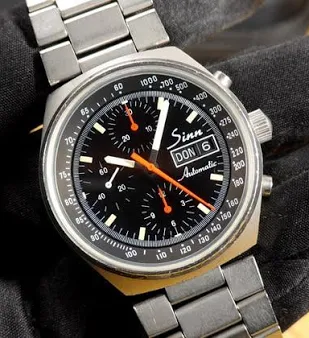
Early Sinn chronographs often combine high-contrast registers with tachymeter or rotating timing scales. Other watches are simpler three-hand instruments. Because components and movements varied, an exact reference or production year should be assigned only after checking the case back, movement, dimensions and documented comparison examples.
A new engineering era
Engineer Lothar Schmidt acquired the company on 1 September 1994. Schmidt had previously worked at IWC and was involved in the production and logistical development of the revived A. Lange & Söhne. At Sinn he expanded the model range, strengthened technical development and repositioned the business as Sinn Spezialuhren GmbH. The transition preserved the functional identity of the brand while giving it a more systematic engineering programme.
Modern Sinn watches are frequently designed for a defined operating environment. Pilot watches emphasize at-a-glance reading and secure operation; diving watches address pressure, bezel security and underwater visibility; mission timers place controls and displays according to professional use. The Frankfurt Financial District series applies the same sober approach to more formal, multi-time-zone watches.
Technologies developed around real problems
Sinn’s most distinctive work concerns the conditions that cause watches to fail or age. Ar-Dehumidifying Technology uses a drying capsule, special seals and protective gas to reduce moisture inside the case and slow the ageing of lubricants. TEGIMENT Technology hardens the surface zone of compatible case materials to improve scratch resistance; it is a treatment of the surface layer, not merely a conventional coating.
DIAPAL technology pairs materials in the escapement so that lubrication is not required at that critical friction point. HYDRO watches fill the case with a clear fluid, eliminating reflections under water and allowing the dial to remain readable at very oblique angles. Selected watches also employ magnetic-field protection, temperature-resistance technology, captive safety bezels and purpose-built case constructions. These systems may appear individually or in combination, so the markings and documentation of a particular watch matter.
Sinn has also pursued external standards and testing. Its professional diving watches have been tested and certified through independent classification bodies, while the TESTAF initiative and later German pilot-watch standards formalized requirements for reliable operation, legibility, resistance and safe interaction with aircraft systems. Certification applies to specified models, not automatically to every Sinn watch.
Movements and production
Across its history Sinn has used established mechanical and quartz ébauches as foundations, then specified, modified, regulated or protected them according to the watch’s purpose. Depending on period and model, collectors may encounter movements from Valjoux/ETA, Sellita, Lemania and other suppliers. Calibre families should not be inferred from the dial alone: case-back inscriptions, movement architecture and service records provide stronger evidence.
The company’s manufacturing identity is therefore best understood through engineering integration. Case design, sealing systems, hardened surfaces, fluid filling, dial construction, testing and final regulation turn a proven movement into a specialized instrument. This pragmatic approach is central to the brand’s appeal and distinguishes technical substance from purely stylistic “tool-watch” design.
Identification and collecting
Begin with the reference and serial information on the case back, then compare case diameter, lug geometry, crown and pusher layout, bezel scale, dial printing and handset. Inspect lume colour and application under magnification, but remember that honest ageing is not uniform. Service dials, hands, bezels, crowns and replacement cases can be legitimate yet materially affect originality and value.
On vintage chronographs, confirm that all functions start, stop and reset correctly without forcing the pushers. On diving models, treat stated water resistance as historical information until the watch passes a current pressure test. A drying capsule colour, TEGIMENT marking, HYDRO indication or certification legend should be interpreted against the documentation for that exact reference.
Preservation
Mechanical Sinn watches benefit from periodic inspection by a qualified watchmaker familiar with the model and its case technology. Avoid polishing hardened or historically important cases merely to improve appearance; altered edges and erased surface character cannot be restored. Replace seals when necessary, request pressure testing before water use and preserve removed original components with the service paperwork.
Fluid-filled HYDRO watches and models using proprietary capsules or special case systems should be serviced through Sinn or an appropriately equipped specialist. Store any watch dry and away from strong magnetic fields, extreme heat and prolonged ultraviolet exposure. The safest collector record includes photographs of the dial, case back and movement together with invoices, timing results and pressure-test documentation.
Legacy
Sinn’s importance rests on continuity of purpose. From Helmut Sinn’s direct-sold cockpit instruments to the engineering-led company developed by Lothar Schmidt, the brand has treated the wristwatch as equipment first. Its most convincing designs make complex engineering feel visually simple: information is clear, controls are deliberate and technology serves a defined use rather than becoming ornament.
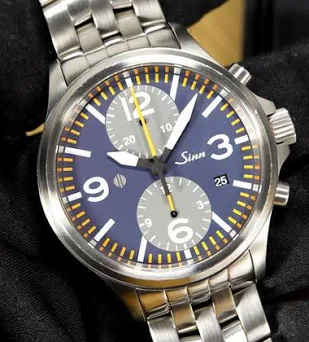
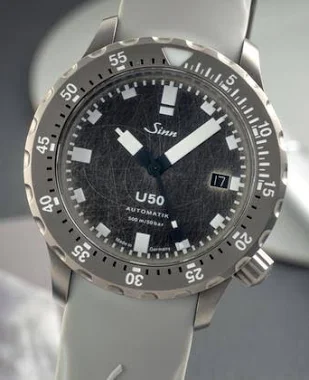
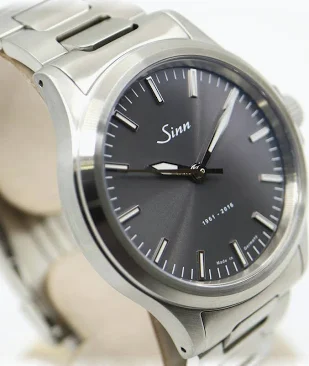
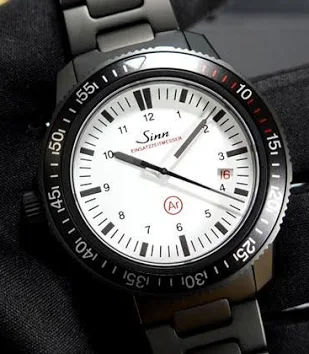
Identification note: the photographs below document representative Sinn watches. Exact references, production dates and calibres are left unassigned where a front view alone does not provide conclusive evidence.