Danish-inspired minimalist watches since 1989
Skagen
Henrik and Charlotte Jorst founded Skagen in the United States in 1989, building an accessible watch brand around Danish-inspired minimalism, slim cases and mesh bracelets. Fossil Group acquired Skagen Designs in 2012, expanding the name into a broader international watch, jewellery and accessories brand.
Abbady photographic archive
Skagen photographs



Origins and period
United States; founded by Danish entrepreneurs and inspired by Skagen, Denmark
Founded in 1989; part of Fossil Group since 2012
Skagen in watchmaking
Henrik and Charlotte Jorst founded Skagen in the United States in 1989, building an accessible watch brand around Danish-inspired minimalism, slim cases and mesh bracelets. Fossil Group acquired Skagen Designs in 2012, expanding the name into a broader international watch, jewellery and accessories brand.
Landmark dates
1989 — Henrik and Charlotte Jorst establish Skagen Designs in the United States.
1990s — Slim quartz watches and metal-mesh bracelets establish the brand’s signature look.
2000s — Skagen expands international distribution and broadens into jewellery and accessories.
2012 — Fossil announces and completes the acquisition of Skagen Designs.
2010s — The collection expands into connected watches, automatics and additional accessories.
Present — Skagen continues within Fossil Group with watches and jewellery inspired by modern Danish design.
Known for
Minimalist Danish-inspired design, slim quartz watches, titanium and stainless-steel cases, fine mesh bracelets, clean dials and accessible pricing.
Movements and innovation
Most Skagen watches use reliable sourced quartz movements, allowing thin cases and low-maintenance everyday wear. Depending on the reference, functions include two or three hands, date, sub-seconds, chronograph or multifunction displays. Later collections include automatic, solar-powered and connected watches. Skagen’s principal contribution is industrial design: slim profiles, light titanium cases, restrained dials and adjustable mesh bracelets rather than proprietary mechanical calibres.
Identification checklist
Record the case-back model/reference code; compare case shape, dimensions, dial printing, handset and date position; inspect bracelet attachment and clasp; distinguish titanium, steel and plated finishes; confirm movement type from the back or an internal inspection; test the crown, date and subsidiary displays; check mesh bracelets for stretched wires or damaged sliding clasps; do not infer Danish manufacture or an exact year from dial wording alone.
Preservation guidance
Replace exhausted batteries promptly to reduce leakage risk. Renew gaskets whenever appropriate and pressure-test before water exposure. Clean mesh bracelets gently and avoid harsh compounds on plated, brushed or titanium surfaces. Do not polish away original finishes or softened case geometry. Preserve original bracelets, clasps, case backs, packaging and service records.
Danish inspiration, American entrepreneurship
Skagen was founded in 1989 by Henrik and Charlotte Jorst, Danish entrepreneurs who had moved to the United States. Although the watches carried a strong Danish identity and took their name from Skagen, the northernmost town in Denmark, the business itself was built in America. This distinction matters: Skagen is best described as an American-founded brand inspired by Danish design rather than a traditional Danish manufacture.
The Jorsts developed a clear proposition—modern-looking watches with restrained styling, slim profiles and attainable prices. At a time when many affordable watches were visually busy or conventional, Skagen offered a recognizable alternative based on clean dials, lightweight cases and fine metal-mesh bracelets. The design language suggested Scandinavian modernism without depending on luxury pricing or mechanical complexity.
The design identity
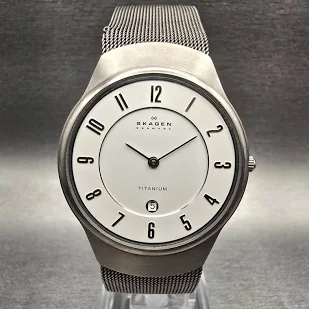
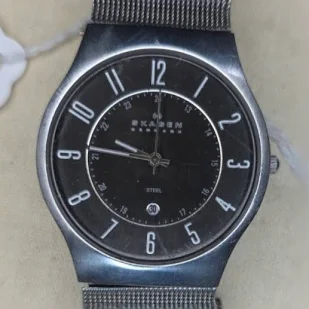
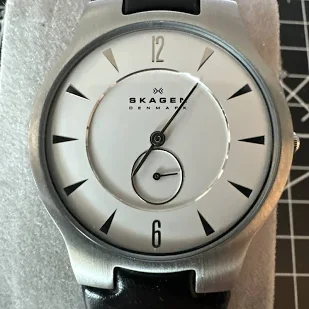
Early Skagen watches established motifs that remained closely associated with the name. Cases were often thin and softly curved, lugs were minimized or integrated, and dials relied on simple batons, sparse numerals and open space. Stainless steel and titanium were frequent materials, while Milanese-style mesh bracelets reinforced the light, architectural appearance. Many examples used muted silver, charcoal, black or blue palettes, sometimes enlivened by a single coloured seconds hand.
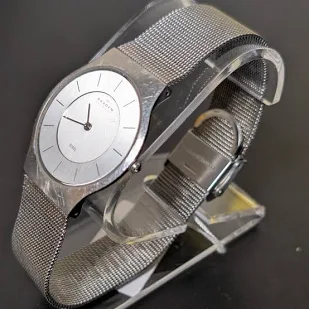
This minimalism was practical as well as stylistic. Quartz movements allowed the cases to remain slender and required relatively little daily attention. The mesh bracelet could conform closely to the wrist and often used a sliding clasp that allowed fine adjustment without removing links. The result was a watch that looked distinctive, felt light and could be sold to a broad international audience.
Growth into an international brand
Skagen expanded through department stores, jewellery retailers and international distribution. Its identity proved portable: the clean appearance was easy to recognize, while the name and imagery of Denmark gave the watches a coherent story. The company later broadened beyond watches into jewellery and other accessories, applying the same language of simplicity and accessible modern design.
The town of Skagen supplied a particularly effective source of inspiration. Located where seas meet at the northern tip of Jutland, it is known for coastal light, beaches and a long artistic tradition. The watch brand translated that atmosphere into cool colours, uncluttered surfaces and flowing case lines. These associations were interpretive branding rather than evidence that every watch was designed or manufactured in the town itself.
Fossil Group ownership
In January 2012, Fossil announced an agreement to acquire Skagen Designs, and the transaction was completed that year. Contemporary reports valued the combination of cash and shares at more than $200 million. The acquisition brought Skagen into Fossil Group’s portfolio and gave the brand access to a much larger international design, sourcing, distribution and retail network.
Under Fossil ownership, Skagen continued to offer minimalist quartz watches while adding jewellery, bags and connected products. Later collections explored solar-powered movements, automatic watches and smartwatches, but the core visual vocabulary remained familiar: thin cases, restrained dials, mesh or leather straps and an emphasis on everyday comfort.
Movements and construction
Most Skagen watches encountered by collectors use dependable quartz movements sourced from established movement suppliers. Depending on model and period, functions may include two or three hands, date, sub-seconds, chronograph indications or multifunction calendar displays. Some later collections use automatic mechanical or solar-powered movements. The dial alone is not sufficient to identify the calibre; the case-back reference and a movement inspection provide stronger evidence.
Skagen’s significance does not rest on proprietary mechanical calibres. It rests on industrial design—combining economical movements with thin cases, distinctive dial layouts and bracelets that make the finished product feel coherent. Titanium models are especially representative because their low weight supports the brand’s promise of unobtrusive wear.
Identification and dating
Begin with the model or reference code engraved on the case back. Compare the case shape, dial printing, handset, date position, bracelet attachment and clasp. Earlier pieces may bear “Skagen Denmark,” “Denmark,” “Titanium” or “Steel” on the dial, but these words should not be treated as proof of Danish manufacture. Country-of-origin and movement markings on the back or inside the case are more useful.
Check that the crown operates smoothly, the date changes correctly and any subsidiary displays function. Inspect mesh bracelets for stretched wires, bent edges and damaged sliding clasps. On titanium cases, honest wear often appears as fine surface marks; aggressive polishing can change the original brushed finish and soften the crisp transitions that define the design.
Preservation and servicing
Replace exhausted batteries promptly because leakage can damage a quartz movement and dial. A competent watchmaker should inspect the gasket whenever the case is opened. Treat the original water-resistance rating as historical until the watch has passed a current pressure test, particularly when the watch is vintage or its service history is unknown.
Clean mesh bracelets gently with a soft brush and minimal moisture after separating them from the case when practical. Avoid harsh compounds on plated finishes and do not polish titanium or brushed steel merely to remove normal wear. Preserve the original bracelet, clasp and case-back labels because they help document the watch even when replacement straps are used.
Legacy
Skagen helped make minimalist design a mainstream category in accessible watches. Its strongest models are immediately recognizable without large logos or elaborate decoration. They demonstrate how proportion, typography, surface finish and bracelet construction can create a compelling identity around a straightforward quartz movement.
Identification note: the photographs below show representative Skagen watches. Exact references, production years and movement calibres are left unassigned where the available front views do not provide conclusive evidence.