Soviet civilian watchmaking and later Russian revival
Slava
A major civilian name of the Second Moscow Watch Factory, Slava combined distinctive mechanical calibres with wide-ranging dress, calendar, sports and later quartz designs. The brand continued through post-Soviet changes and contemporary collections.
Abbady photographic archive
Slava photographs

Origins and period
Moscow, Soviet Union / Russia
Slava name from the late 1950s; Soviet and post-Soviet production
Slava in watchmaking
A major civilian name of the Second Moscow Watch Factory, Slava combined distinctive mechanical calibres with wide-ranging dress, calendar, sports and later quartz designs. The brand continued through post-Soviet changes and contemporary collections.
Landmark dates
1924 — Second Moscow Watch Factory founded.
Late 1950s — Slava-branded watches introduced.
1960s–1970s — 2409, 2414, 2428 and 2427 movement families developed.
2000s — Factory ownership and brand production arrangements changed.
Known for
Second Moscow Watch Factory heritage; twin-barrel mechanical movements; prominent day-date displays; diverse Soviet and later designs.
Movements and innovation
The factory historical account names calibres 2409, 2414, 2428 and 2427 among its 1960s–1970s developments. Slava also made automatics and quartz products. Confirm a particular calibre from the movement itself; dial jewel counts are model-specific.
Identification checklist
Read Слава or SLAVA dial signature and country-of-origin printing. Record case-back, calibre and serial or reference markings. Check calendar language, case shape, handset and dial finish against period material. Distinguish Soviet-era factory pieces from later brand releases.
Preservation guidance
Avoid water exposure and forcing the crown or calendar. Have a watchmaker inspect an unserviced mechanical example before regular use. Retain original finishes and document replaced parts; test any claimed water resistance professionally.
Historical development
Slava (Слава, “glory”) grew out of the Second Moscow Watch Factory, founded in 1924. Its early work encompassed clocks and alarms; the factory expanded into pocket and wristwatches and was evacuated to Chistopol during the Second World War. The Slava name appeared in the second half of the 1950s and became closely associated with the factory’s civilian wristwatches. These were practical, widely distributed watches with an unusually varied visual language, from restrained dress dials to bold day-date displays.
During the 1960s and 1970s, the factory developed the 2409, 2414, 2428 and 2427 families cited in the brand’s historical account. Mechanical watches, automatics and quartz products followed different paths through the late Soviet period. Slava exported watches and movements, including to Western European markets. A vintage example may therefore carry Cyrillic Слава, Latin SLAVA, or export markings; the exact dial, movement and case need to be assessed together.
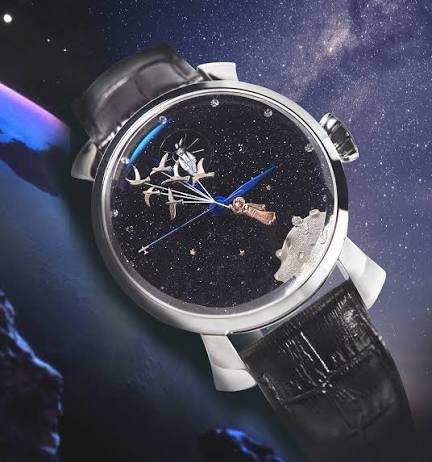
The end of the Soviet Union brought a difficult transition for the factory. Ownership and production arrangements changed in the 2000s, while the Slava name continued in contemporary collections. A modern Slava-branded design should not automatically be dated to Soviet factory production: the brand’s history spans more than one manufacturing era.
Design and collecting
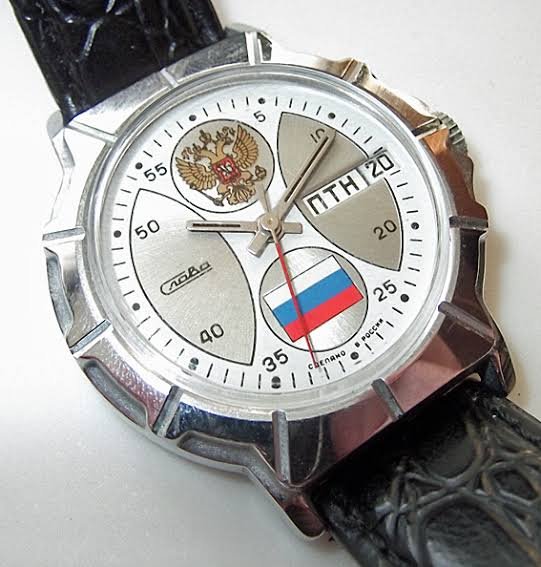
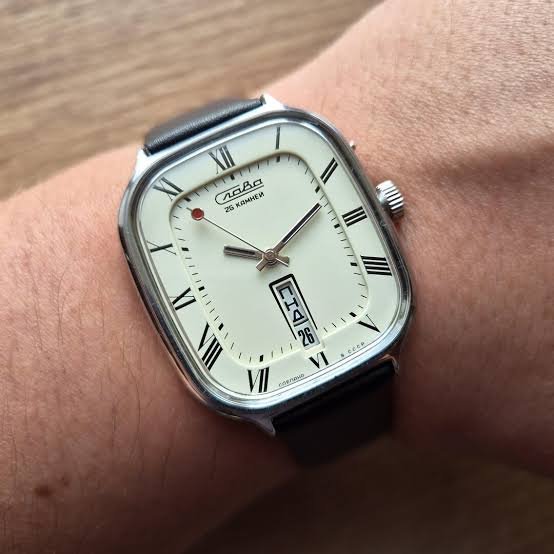
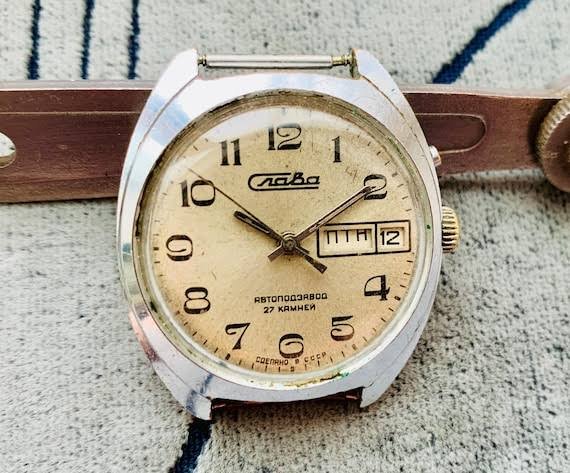
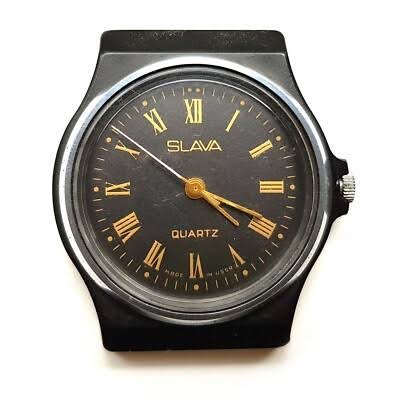
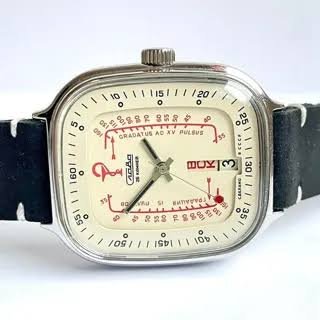
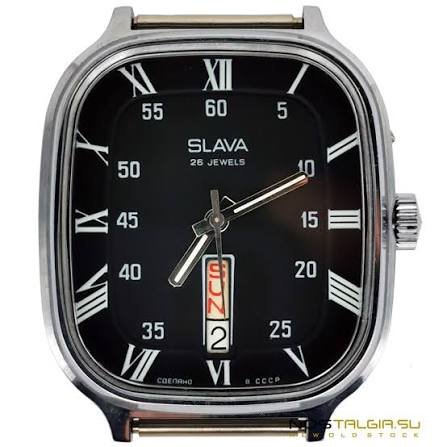
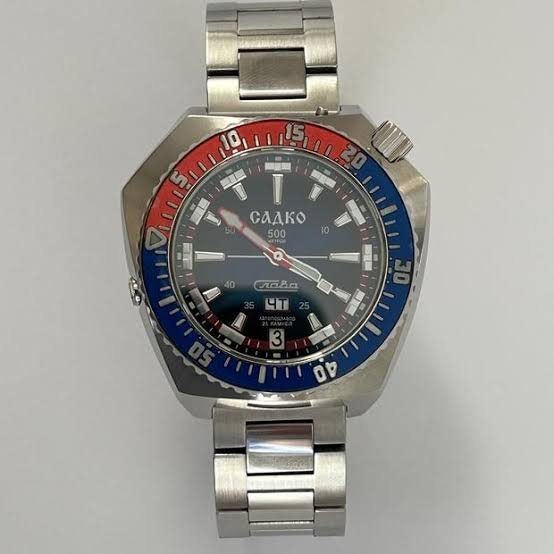
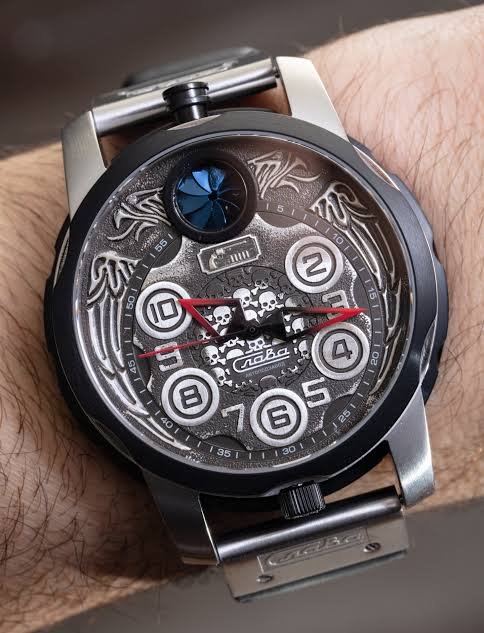
Slava’s appeal lies partly in its range. Simple three-hand watches and textured dress dials sit alongside square cases, large calendar apertures, Roman numerals, colourful sports bezels and thematic contemporary pieces. The photographs in this archive deliberately show that range; they are examples of the brand’s changing appearance rather than a single model lineage. The illustrated 21-, 26- and 27-jewel claims are dial inscriptions on particular watches, not specifications for every Slava.
For identification, start with a clear dial and case-back view, then record the case dimensions and movement markings if the watch can be opened safely. Check whether the day wheel is in Cyrillic or another language, how the date changes, and whether the dial printing, handset and case wear appear consistent. A “Made in USSR” marking supports a broad period but is not, by itself, an exact production date. Later Russian and contemporary pieces require their own attribution.
Service history matters more than a polished exterior. Keep a mechanical watch dry, avoid forcing a stiff crown or calendar, and have an experienced watchmaker assess it before regular wear. Preserve original dials, hands and case finishes where possible; document any replacements. Water-resistance labels on an older sports model should not be treated as a present-day guarantee.