Swiss design icon from 1983 to the MoonSwatch era
Swatch
Swatch made Swiss quartz watches colourful, accessible and collectible. Its catalogue expanded from simple plastic models to graphic editions, chronographs, mechanical Sistem51 watches and the Omega × Swatch MoonSwatch collaboration.
Abbady photographic archive
Swatch photographs




Origins and period
Switzerland
Launched in 1983; continuing collections
Swatch in watchmaking
Swatch made Swiss quartz watches colourful, accessible and collectible. Its catalogue expanded from simple plastic models to graphic editions, chronographs, mechanical Sistem51 watches and the Omega × Swatch MoonSwatch collaboration.
Landmark dates
1983 — Swatch launched in Switzerland.
2010s — Sistem51 automatic watches joined the catalogue.
2022 — Omega × Swatch Bioceramic MoonSwatch collaboration launched.
Known for
Expressive Swiss-made quartz watches, graphic and artist editions, accessible mechanical Sistem51, and Omega × Swatch MoonSwatch collaborations.
Movements and innovation
Early Swatch watches used simplified Swiss quartz construction. Later lines include quartz chronographs and the automated-assembly Sistem51 mechanical movement. MoonSwatch is an Omega × Swatch quartz chronograph collaboration. Check the specific reference for specifications.
Identification checklist
Record dial and case-back markings, case dimensions, strap fittings, reference and packaging. Compare colour, hands, graphics and date features with Swatch catalogues. For MoonSwatch, verify the mission or special variation using dial, case-back and strap details together.
Preservation guidance
Avoid solvents, heat and abrasive polishing on plastic and bioceramic. Use the correct battery and strap procedure for the model. Retain original accessories and paperwork, and do not rely on old water-resistance claims without testing.
Historical development
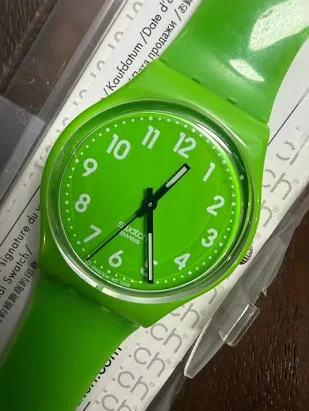
Swatch arrived in Switzerland in 1983, when inexpensive quartz watches had sharply challenged the country’s established watch industry. Its accessible price, simplified construction and distinctive plastic case made a Swiss-made watch into an object that could change with an outfit or a mood. Colour and graphic design became part of the product rather than decoration added at the end.
The name is commonly read as “second watch”: an invitation to own more than one design. Swatch’s frequent collections, artist collaborations and playful packaging helped turn individual releases into collectibles. A catalogue of the brand therefore ranges far beyond the simple three-hand plastic watch. Different families explore oversized dials, chronographs, unusual shapes, jewellery-like forms, metal cases and mechanical displays.
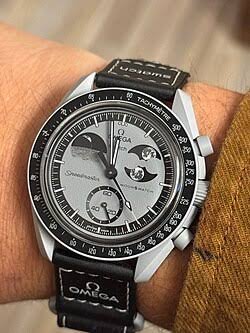
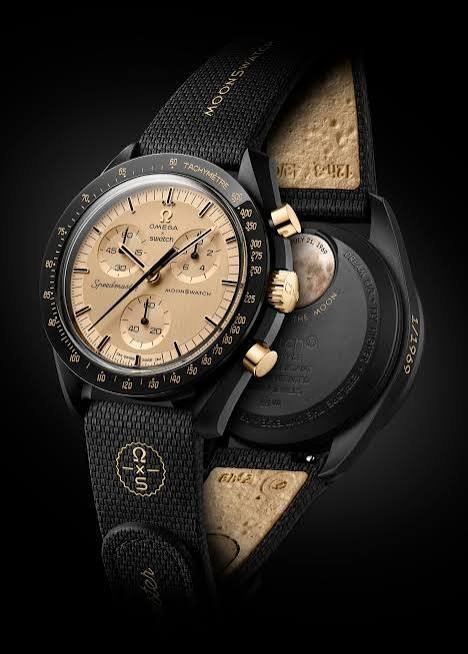
The brand also experimented with movement making. The Sistem51 line brought an automatic mechanical movement built around a notably small number of components into an accessible Swatch. In 2022, the Omega × Swatch Bioceramic MoonSwatch collaboration brought Speedmaster-inspired chronograph design to a new audience. Its dial bears both names; it belongs to the Swatch collaboration rather than Omega’s traditional Speedmaster range. Subsequent MoonSwatch variations show how the brand uses colour, themed details and limited releases to renew an established design.
Design and collecting
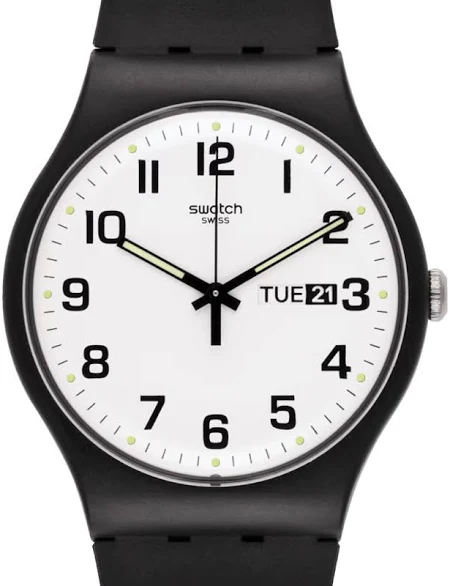
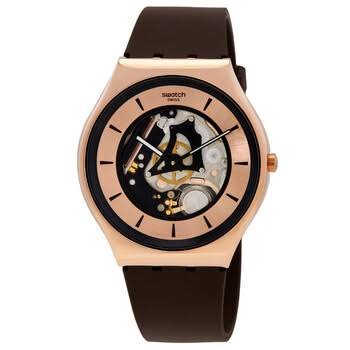
The photographs here cover bright monochrome plastic, graphic dress and novelty designs, modern chronographs and three Omega × Swatch examples. They illustrate the breadth of Swatch’s catalogue, not a chronological sequence or a set of confirmed reference numbers. In particular, the black ornamental bracelet watch needs its case-back or packaging reference before an exact model name can be assigned.
To identify a Swatch, note the dial text, case shape, dimensions, strap and its attachments, as well as any reference printed on the case back, packaging or sales paperwork. Compare these details with the relevant Swatch catalogue rather than dating by colour alone. Closely related editions may differ only in a hand, moon-phase graphic, strap or case-back detail. For a MoonSwatch, confirm the specific mission or variation from several features; a front photograph can be insufficient.
Keep plastic and bioceramic cases away from solvents, prolonged heat and abrasive polishing. Battery changes and strap replacement should follow the construction of the particular model. Avoid assuming an old watch retains its original water resistance. For a collectible example, preserve the original strap, packaging and reference information even when replacing a worn component for use.