Swiss chronographs and motorsport timing since 1860
TAG Heuer
Founded by Edouard Heuer in 1860, the firm advanced chronograph and sports timing. Carrera and Monaco became defining collections, followed by the TAG Heuer era with Formula 1, Aquaracer and continuing chronograph development.
Abbady photographic archive
TAG Heuer photographs




Origins and period
St-Imier, Switzerland
Heuer founded 1860; TAG Heuer name from the 1980s
TAG Heuer in watchmaking
Founded by Edouard Heuer in 1860, the firm advanced chronograph and sports timing. Carrera and Monaco became defining collections, followed by the TAG Heuer era with Formula 1, Aquaracer and continuing chronograph development.
Landmark dates
1860 — Edouard Heuer founded his workshop in St-Imier.
1887 — Heuer patented the oscillating pinion.
1963 — Carrera chronograph introduced.
1969 — Monaco chronograph introduced.
1980s — TAG Heuer name adopted following the TAG acquisition.
Known for
Chronographs, motorsport timekeeping, Carrera, Monaco, Formula 1, Aquaracer, and the 1887 oscillating pinion.
Movements and innovation
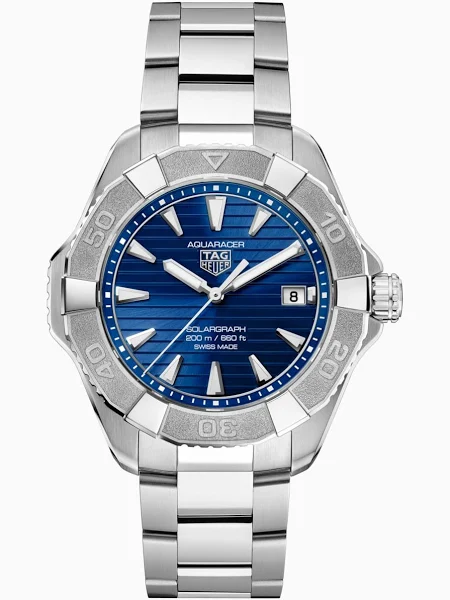
Heuer’s oscillating pinion improved chronograph coupling. The brand has used manual, automatic and quartz chronographs across different eras; Solargraph models add solar-powered quartz. Identify the actual calibre from the watch reference and movement markings.
Identification checklist
Record reference and serial, dial logo, subdial arrangement, case size, movement calibre and bracelet or strap. Compare the case back and paperwork with official catalogues. Distinguish historical Heuer examples from TAG Heuer-era models and later reissues.
Preservation guidance
Do not operate chronograph pushers under water without model-specific permission. Service seals before water use, and have chronograph function assessed by a qualified watchmaker. Retain original components and service records; document case condition before polishing.
Historical development
Edouard Heuer established his workshop in St-Imier, Switzerland, in 1860. The firm built its reputation on chronographs and precise timing instruments. Its 1887 oscillating-pinion patent became a lasting contribution to chronograph construction. Stopwatches, dashboard instruments and sports timing tied the Heuer name to competition long before the TAG Heuer name appeared.
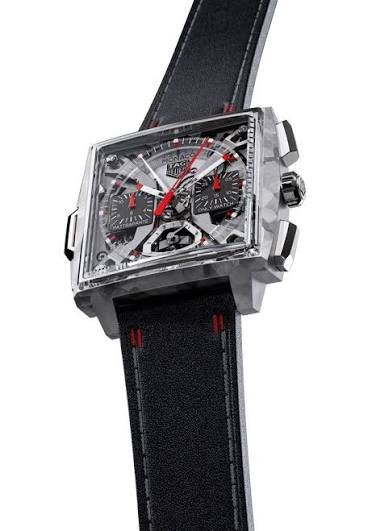
Under Jack Heuer, the Carrera arrived in 1963, named for the Carrera Panamericana road race. Its clear dial and easily read chronograph counters became a reference point for the brand. The square Monaco followed in 1969 during the development of early automatic chronographs. Heuer’s motor-racing connection extended beyond watches on wrists to equipment used to time events and teams.
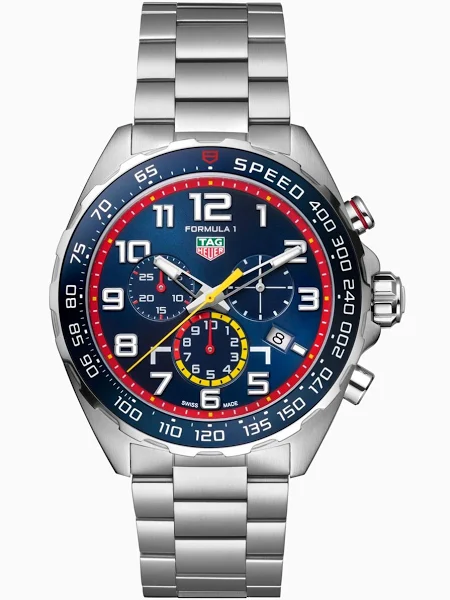
The TAG Heuer name dates from the 1980s, after Techniques d’Avant Garde acquired Heuer. The combined identity took the company into new sport-oriented designs while retaining the Carrera and Monaco legacies. Formula 1 watches brought bold bezels and accessible sports styling; Aquaracer models emphasized dive-inspired cases and legible dials. The collections have been revisited repeatedly, so a familiar name does not by itself establish a particular watch’s decade.
Chronographs and collecting
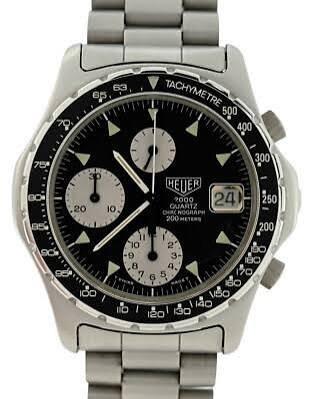
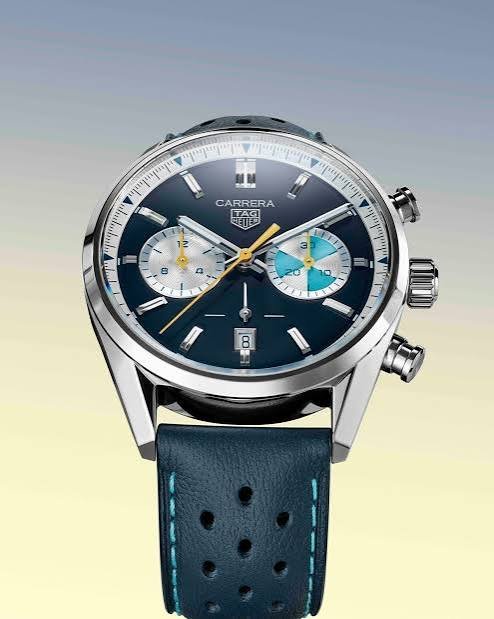
The illustrated selection spans a modern Carrera chronograph, Formula 1 time-and-date and chronograph examples, an Aquaracer Solargraph, Monaco chronographs, a vintage Heuer Carrera and an exposed movement view. It shows how the same brand combines motorsport styling, sport watches and movement finishing. The movement photograph is a separate detail image; its visible inscriptions do not establish that it belongs to any other watch in this gallery.
For identification, record the exact reference and serial number from the case, dial layout, calibre marking, bracelet or strap and any accompanying paperwork. Similar Carrera, Monaco or Formula 1 designs can have different movements, sizes and dates. Compare a candidate with TAG Heuer’s official catalogue or period documentation. A Heuer-only dial and a TAG Heuer dial generally belong to different branding periods, but exchanged parts and later reissues make a case-back and movement examination important.
Chronographs require careful service. Do not operate pushers under water unless the specific watch instructions explicitly permit it. Have seals and water resistance checked before exposing a sports watch to water; an old depth rating is no present-day guarantee. Retain original parts and service records, and avoid refinishing a historically significant case without documenting its condition first.