Soviet and Russian mechanical watches; separate Vostok Europe designs
Vostok
Vostok grew from wartime watch production in Chistopol and became known for robust, accessible mechanical watches such as the Komandirskie and Amphibia. Vostok Europe is a separate Lithuanian company founded in 2003; its early watches used modified Vostok movements, while later models developed a distinct modern sports-watch identity.
Abbady photographic archive
Vostok photographs
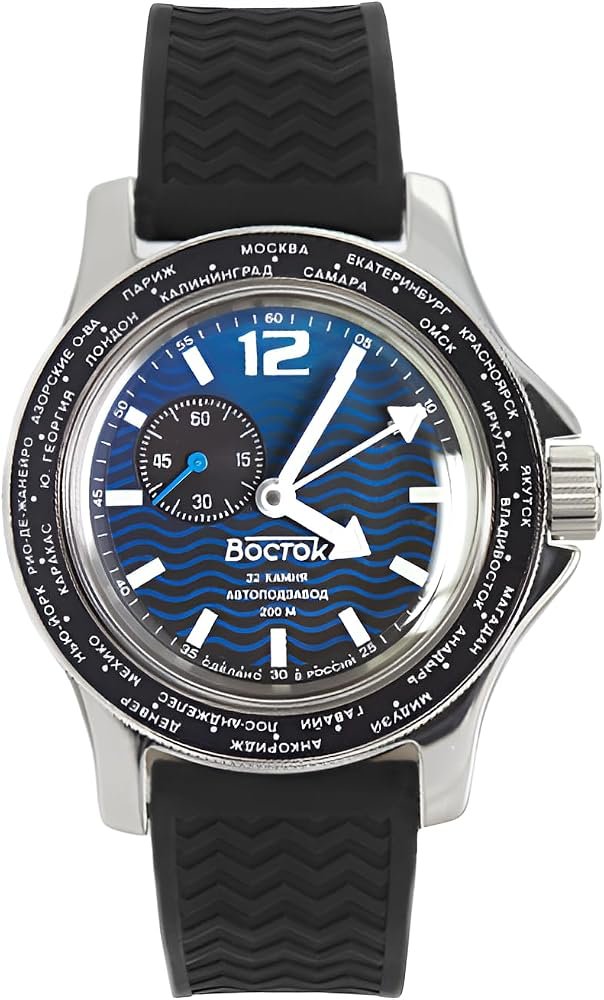

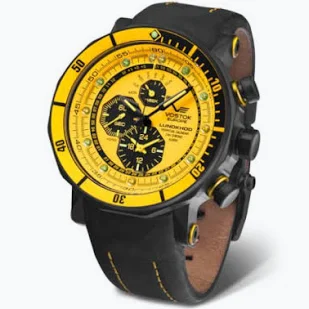
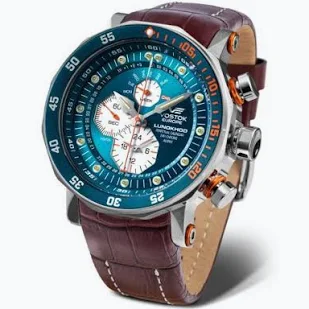
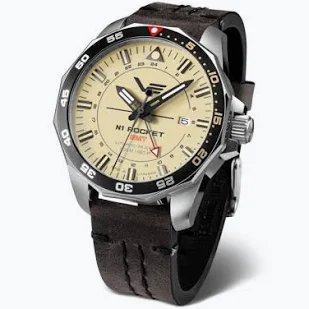


Origins and period
Chistopol, Tatarstan, Russia; Vostok Europe: Vilnius, Lithuania
Chistopol factory established during World War II; Vostok name adopted in 1969; Vostok Europe founded in 2003
Vostok in watchmaking
Vostok grew from wartime watch production in Chistopol and became known for robust, accessible mechanical watches such as the Komandirskie and Amphibia. Vostok Europe is a separate Lithuanian company founded in 2003; its early watches used modified Vostok movements, while later models developed a distinct modern sports-watch identity.
Landmark dates
1941–1942 — Watchmaking machinery and workers were evacuated east from Moscow, establishing production in Chistopol.
1943 — The Chistopol factory began manufacturing wristwatches.
1952 — The factory introduced the shock-resistant, dust- and water-protected Kama watch.
1962 — A Vostok precision watch received a gold medal at the Leipzig International Fair.
1965 — The factory became an official Soviet Ministry of Defence supplier; the Komandirskie era began.
1967 — The Amphibia diving watch was developed for 200-metre water resistance.
1969 — Vostok became the unified brand name for the factory's wristwatches.
1972 — Production began for watches based on the 24-series movement family.
2003 — Koliz Vostok was established in Vilnius to create Vostok Europe watches.
2004 — The first Vostok Europe collection was presented internationally.
Known for
Komandirskie military watches, Amphibia diving watches, 24-series mechanical calibres, distinctive pressure-assisted case construction, and the separate Vostok Europe range of oversized sports and expedition watches.
Movements and innovation
Russian Vostok is associated with durable in-house hand-wound and automatic 24-series calibres, including calendar and 24-hour variants. The Amphibia's crystal, gasket and two-piece caseback are designed so water pressure increases the seal. Early Vostok Europe watches used specially modified Russian Vostok movements; later Vostok Europe models also use Japanese and Swiss movements, including automatic and quartz chronograph calibres.
Identification checklist
Read the dial carefully: “Восток” or Vostok usually indicates the Russian brand, while “Vostok Europe” identifies the Lithuanian company. Record all dial text, jewel count and water-resistance claims. Inspect the caseback, movement calibre, crown and bezel. Compare case, dial and handset combinations with documented catalogues. Treat exact references, dates and authenticity as unverified when only a front photograph is available.
Preservation guidance
Have vintage mechanical watches serviced by a watchmaker familiar with Soviet and Russian movements. Do not assume old seals remain water-resistant; pressure-test before water exposure. Preserve original dials, hands, bezels and casebacks when possible. Avoid polishing away inscriptions. For Vostok Europe chronographs and modern high-water-resistance cases, follow the maker's service and battery-change procedures.
Historical development
Vostok traces its origins to wartime watch production established in Chistopol, in the Soviet republic of Tatarstan, after machinery and personnel were evacuated east from Moscow during the Second World War. The Chistopol factory later concentrated on mechanical watches and developed a reputation for rugged, affordable movements and tool-watch construction.
Military and diving watches
The factory became an official supplier to the Soviet Ministry of Defence in 1965, the period associated with the Komandirskie military watch. In 1967 designers Mikhail Novikov and Vera Belova developed the Amphibia, a mechanical diving watch engineered for 200 metres of water resistance. Its pressure-assisted case construction—using a thick acrylic crystal, a compressible gasket and a two-piece screw-down caseback—became one of Vostok’s most recognizable technical solutions.
The Vostok name
Vostok means “East” in Russian and was adopted as the factory’s unified watch brand in 1969. Through the 1970s and 1980s, Komandirskie and Amphibia watches were produced in many dial, bezel and case variations, while the factory expanded its 24-series mechanical movement family.
Vostok and Vostok Europe
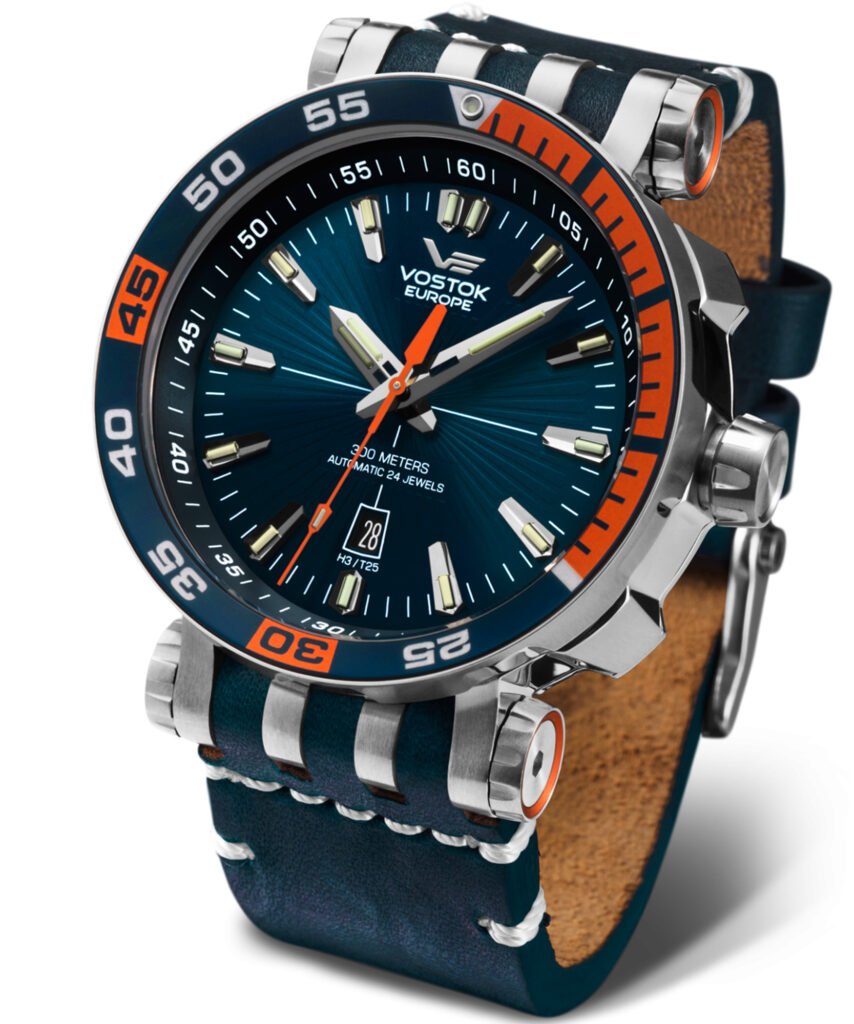
Collectors should distinguish the Russian Vostok factory in Chistopol from Vostok Europe. Vostok Europe is a separate Lithuanian company founded in Vilnius in 2003. Its early watches used modified Vostok movements, but the company subsequently developed its own identity, using other movement suppliers and producing large, modern sports and expedition watches. Several photographs in this gallery show Vostok Europe models; their captions identify them separately.
Collecting and identification
Vostok watches often appear with Cyrillic or export dials, many commemorative themes and interchangeable bezels. Because cases, dials, bezels and movements are frequently swapped, a front photograph alone is not sufficient to confirm an exact reference, production date or originality. Case-back markings and movement photographs are important for identification.